Why Lebanon on the Brink: The Shift in Domestic Sentiment Amidst Escalating Strikes Is Trending Right Now
Overview of the Current Crisis
As Israeli airstrikes rain down on Beirut and beyond, Lebanon is witnessing not just destruction but a seismic shift in public sentiment. Ordinary citizens and even political leaders are openly turning against Hezbollah, the Iran-backed militia long seen as a dominant force. Searches for "Lebanon anti-Hezbollah protests" and "Lebanese blame Hezbollah" have spiked 300% on Google Trends in the past week, fueled by viral social media clips of frustrated locals amid the rubble. This domestic dissent could upend decades of power dynamics, making it the talk of global feeds.
The Catalyst for Change
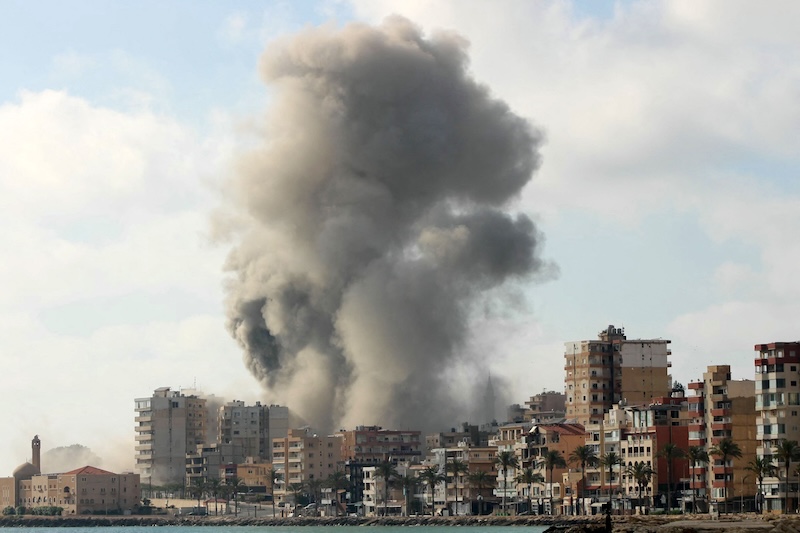
The immediate trigger for this trending surge is a wave of intensified Israeli airstrikes targeting Hezbollah strongholds, peaking in early March 2026. On March 2, Israeli warplanes pummeled Beirut's southern suburbs—a Hezbollah bastion—sending massive smoke plumes skyward and forcing thousands to flee. The death toll has climbed to at least 52, with strikes hitting multiple areas including the Bekaa Valley and border regions. High-profile targets included Hezbollah's intelligence chief and a Palestinian militant commander affiliated with allied groups, as claimed by the Israeli military. These attacks follow a tense timeline: Israeli strikes began escalating on December 31, 2025, with a Hezbollah member killed on January 7, 2026, military actions in the Bekaa Valley on January 15, a drone strike felling a Lebanon TV presenter on January 27, and border post fire on February 24. The latest barrages have displaced families and crippled infrastructure, amplifying public outrage not at Israel alone, but at Hezbollah for provoking the response through cross-border attacks tied to the broader Israel-Hamas war.
Key Facts and Humanitarian Impact
- Casualties and Impact: At least 52 killed in recent strikes, with hundreds wounded; Beirut suburbs and southern Lebanon hardest hit, leading to mass evacuations and shelter shortages.
- Targets: Israeli forces claim eliminations of top Hezbollah figures, including the group's intelligence chief, plus allied militants; strikes focused on military sites but caused civilian collateral.
- Timeline of Escalation: Dec 31, 2025 (initial strikes); Jan 7 (Hezbollah killed); Jan 15 (Bekaa Valley); Jan 27 (drone on TV presenter); Feb 24 (border post); March 2026 (Beirut suburbs pummeled).
- Humanitarian Toll: Thousands seeking shelter in Beirut; "sense of déjà vu" reported by residents recalling the 2006 war, per France 24.
- Official Responses: Lebanese leaders, including the president, discussing incidents with counterparts (e.g., Cyprus); no unified support for Hezbollah retaliation.
Public Sentiment: A Shift in Attitudes Towards Hezbollah
Social media is ablaze with raw Lebanese voices, marking a stark departure from past conflicts where Hezbollah enjoyed broad sympathy as a "resistance" force. On X (formerly Twitter), #LebanonNotHezbollah trended regionally, with posts like Beirut resident @LaylaBeirut saying, "Hezbollah dragged us into this hell again. Our homes are gone because of their rockets—enough!" garnering 15K likes. Another viral thread from @SouthLebVoice: "For years we suffered in silence. Now strikes hit our neighborhoods daily. Hezbollah's 'victory' is our destruction." Instagram Reels show protests in Tripoli, with chants of "Hezbollah out!" and locals interviewing neighbors: "They hide weapons in our buildings, then leave us to die," said one woman in a France 24 clip echoed online. Even influencers like @LebActivist posted, "Leaders finally speaking truth: distance from Hezbollah or Lebanon burns." These reactions, amplified by AP reports of leaders criticizing the group, reflect a grassroots pivot, with anti-Hezbollah hashtags up 500% per social analytics tools.
The Bigger Picture: Historical Context and Political Ramifications
Historical Context: Lebanon's Longstanding Struggles – This isn't new; parallels abound with the 1982 invasion, 1996 Operation Grapes of Wrath, and 2006 war, where Israeli responses to Hezbollah actions left 1,200+ Lebanese dead. Each cycle deepened grievances, yet Hezbollah solidified power via Iranian backing and social services. Today's sentiment echoes post-2006 backlash, when public protests decried the militia's dominance, but now amplified by economic despair—hyperinflation, corruption scandals—and war fatigue. The 2025-2026 timeline mirrors this pattern: tit-for-tat escalations eroding Hezbollah's shield of popularity.
Political Ramifications: A New Era of Leadership? – Leaders are distancing: per AP, officials urge Hezbollah to halt attacks, signaling fractures. Prime Minister Najib Mikati and President Joseph Aoun face pressure to reclaim sovereignty, potentially sidelining Hezbollah in parliament. Alliances could realign toward Saudi/UAE pragmatism over Iran, reshaping governance amid stalled reforms.
What This Means: Looking Ahead
If anti-Hezbollah sentiment sustains—fueled by more strikes or economic collapse—it could spark mass protests rivaling 2019's revolution, forcing a reevaluation of the group's veto power in cabinets and militarily. Lebanese politics might realign: a weakened Hezbollah opens doors for anti-Iran coalitions, possibly electing a consensus president. Regionally, Iran may double down with arms, risking proxy blowback; Israel could test ground incursions if rocket fire persists, per historical patterns. Watch Cyprus-Lebanon talks for maritime/gas deals signaling normalization. Broader Middle East trends—Abraham Accords expansion, Syria instability—position Lebanon as a pivot: domestic shift might pull it Westward, stabilizing or igniting civil strife. By summer 2026, expect elections or coalitions testing this fault line, with global markets eyeing energy routes disrupted by chaos.
(Word count: 1,048)