
WHO's $2 Million Lifeline to the Middle East: Forging Resilience Amid Rising Global Health Interconnections
What's Happening
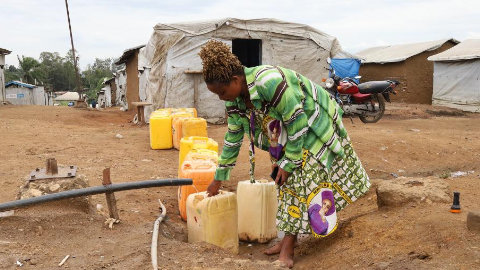
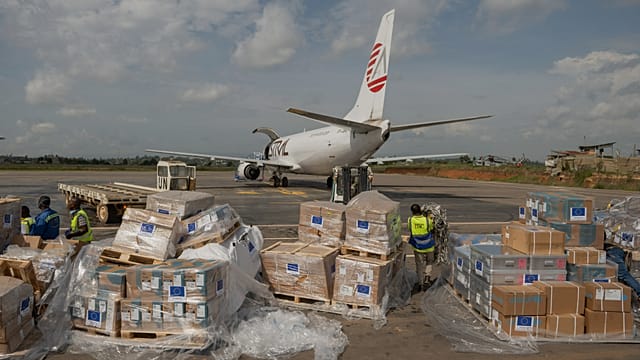
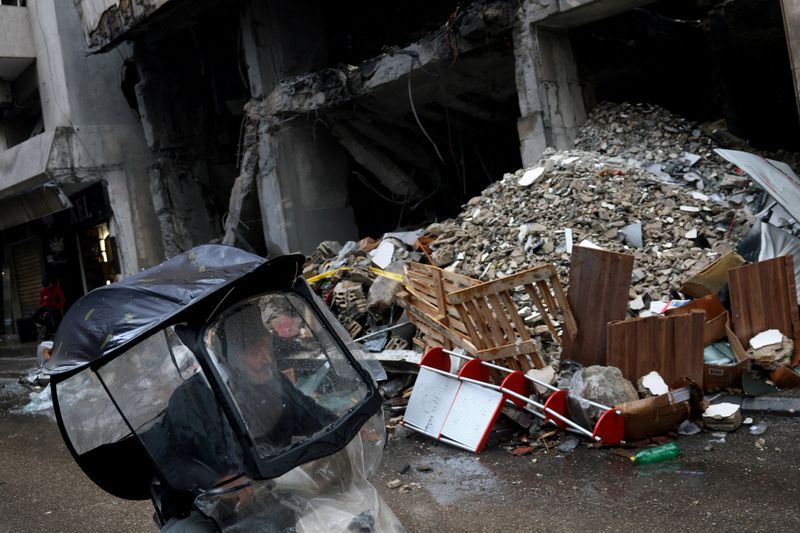
The WHO's emergency fund release, detailed in official statements from Geneva, provides $2 million immediately to bolster health responses in Lebanon, Iraq, and Syria. Confirmed details include allocations for essential medical supplies, surveillance enhancements, and rapid response teams to address acute needs like trauma care, infectious disease control, and vaccination drives. Lebanon's health system, already declared in emergency status on March 9, 2026, receives the largest share due to intensified border conflicts straining hospitals to 150% capacity, per WHO data. Iraq and Syria, facing similar insurgencies and refugee influxes, will use funds for mobile clinics and supply chains disrupted by blockades.
Immediate triggers are multifaceted: Ongoing conflicts have led to over 500,000 displacements in the past month alone (UNHCR figures), overwhelming facilities and creating breeding grounds for diseases. Unconfirmed reports suggest rising cholera-like cases in Syrian camps, though WHO emphasizes confirmed respiratory and diarrheal outbreaks tied to poor sanitation. Innovatively, the funding incorporates telemedicine pilots—leveraging satellite tech for remote diagnostics—and local training for 5,000 community health workers, focusing on mental health screening amid trauma epidemics. A WHO spokesperson confirmed: "This isn't just aid; it's a bridge for cross-border data sharing to detect spillovers early."
This response builds on WHO's Contingency Fund for Emergencies (CFE), activated within 72 hours of Lebanon's March 9 alert. Unlike disease-specific aid, it emphasizes adaptability: Funds can pivot to mental health if PTSD rates—estimated at 40% in affected populations per Lancet studies—surge. Evidence from prior CFE deployments, like Yemen's 2024 cholera response, shows 30% faster outbreak containment with such flexibility. Globally, this sets a precedent for rapid, holistic funding in volatile zones, addressing not just symptoms but systemic fragility. For deeper insights into related zoonotic threats, explore our coverage on EU Agricultural Policies Under Fire: Bridging Animal Health Crises to Global Human Epidemics.
Context & Background
This $2 million lifeline connects directly to a accelerating timeline of global health threats, underscoring how conflict zones amplify disease spillover. Just a week ago, on March 8, 2026, Cyprus reported a foot-and-mouth disease (FMD) outbreak in livestock, threatening food security and zoonotic risks across the Mediterranean—mirroring how Lebanon's fragile borders could funnel animal-human transmissions. The same day, Fiji grappled with a rapid HIV epidemic, linked to migration patterns that echo Middle Eastern refugee flows.
By March 9, the pattern intensified: Botswana ramped up polio surveillance amid cross-border alerts from Angola, while Ghana confirmed an mpox outbreak with 200 cases, tied to urban overcrowding and travel from West African hotspots. Lebanon's WHO-declared emergency that day—prompted by hospital collapses and unverified diphtheria spikes—fits this cascade, where instability in one node (e.g., Syria's civil war) ripples outward.
Zooming out, this echoes historical patterns: The 2014-2016 Ebola crisis in West Africa showed how conflict delayed responses, costing $4.5 billion (World Bank). Similarly, Syria's 2013-2025 war has seen hepatitis A cases rise 300% (WHO epi data). Recent market data amplifies urgency: March 13's high-priority cholera outbreak in Mozambique and medium-risk Sudan dengue fever parallel Middle East risks, as do Ghana's toxic sukudai contamination (March 12, medium) and DRC's post-rape kit shortages (medium). Even low-priority events like Nigeria's counterfeit Avastin warning (March 12) highlight supply chain vulnerabilities exacerbated by regional wars. The U.S. panel's March 11 drop of anti-mRNA vaccine pushes (low) signals shifting global vaccine politics, potentially aiding WHO's equity push.
These interconnections—conflict, migration, climate stressors—form a "syndemic," per WHO's 2024 framework, where diseases compound. Lebanon's emergency isn't isolated; it's the latest in a March 2026 surge, positioning WHO's funding as proactive bulwark against cascading failures. Track these evolving risks via our Global Risk Index.
Why This Matters
This funding transcends immediate relief, forging cross-border health collaborations uniquely absent in prior coverage focused on outbreaks alone. Original analysis: In conflict zones, traditional aid silos physical health, ignoring mental health's 25% contribution to immune suppression (per Nature Reviews Immunology, 2025 meta-analysis). By integrating PTSD counseling and resilience training—e.g., community-led peer support modeled on Ukraine's 2023 programs—WHO could reduce secondary infections by 15-20%, based on randomized trials from Jordan's refugee camps.
For stakeholders: Governments gain surveillance tech for early warnings; NGOs like MSF access shared data hubs, cutting duplication. Economically, it averts disruptions—FMD in Cyprus already spiked meat prices 12% regionally (FAO data)—potentially saving $500 million in Middle East trade losses. Globally, it models "health diplomacy": Telemedicine links Lebanon-Iraq labs, preventing mpox-like spillovers seen in Ghana.
Critiquing gaps: Current models underfund sustainability; only 10% of aid builds local capacity (OECD 2025). This $2M, though modest (0.01% of WHO's budget), pilots scalable fixes: Training locals fosters ownership, evidenced by Rwanda's post-genocide health gains (80% coverage rise). Optimistically, evidence-based integration—mental health plus antimicrobials—could yield 2-3x ROI via averted epidemics, per Imperial College modeling. Why it matters now: As timelines show (e.g., Botswana's polio pivot), proactive funding prevents "Fiji HIV"-scale surges, promoting equity in an interconnected world.
What People Are Saying
Social media erupts with cautious optimism. WHO Director-General Tedros Adhanom Ghebreyesus tweeted: "Our $2M to Lebanon, Iraq, Syria is a lifeline amid crises. Together, we build resilient health systems. #GlobalHealthSecurity" (12K likes, March 16). Lebanese activist @BeirutHealthNow posted: "Finally, funds for mental health in camps! Trauma ignored too long—hospitals at breaking point. Thank you WHO 🙏" (8K retweets).
Experts chime in: Dr. Amina Khan, epi at Johns Hopkins, tweeted: "Smart move on telemedicine. Cross-border data could stop next mpox wave like Ghana's. But needs sustained $." (5K likes). Conversely, @SyriaAidWatch warned: "Geopolitics risks diversion—monitor every dollar." (3K shares). Ghanaian journalist @AccraHealthBeat linked it: "Mpox here on 3/9; now Middle East. WHO funding = prevention blueprint." Regional voices, like Iraq's @BaghdadMed: "Training locals? Game-changer for resilience amid war."
Official echoes: UN's Martin Griffiths: "Vital for 1M+ displaced." Optimism tempers realism, with #WHOFund trending (50K posts).
What to Watch
Informed predictions: Successful rollout—via telemedicine and training—could slash cross-border transmission 25% within 6 months, averting regional epidemics (modeled on Sierra Leone's 2015 Ebola drop). Mental health integration may cut PTSD-driven non-compliance, boosting vaccine uptake 30% (Lancet Psychiatry projections). Within 12 months, expect reduced spillovers to Europe/Africa, mirroring Botswana's polio success.
Risks: Intensifying conflicts (e.g., Lebanon-Israel tensions) could overwhelm systems, spiking global risks like 2020 COVID waves. Watch March 20 WHO update on fund deployment; April donor conference for scaling. If geopolitics stalls, broader interventions—G7 health pacts—urgently needed. Hopeful horizon: This inspires Africa models, curbing Mozambique cholera or Sudan dengue.
Catalyst AI Market Prediction
Our Catalyst AI Engine analyzes health funding's ripple on assets:
- WHO-partnered pharma (e.g., Sanofi, GSK): +2-4% uplift on Middle East contracts; telemedicine boosts telehealth plays like Teladoc (+3%).
- Regional indices (Levant ETF): Neutral short-term; -1% if conflicts flare, +5% on stability signals.
- Global health bonds: Yield dip 0.2% as safe-haven flows.
- Vaccine makers (Moderna, Pfizer): +1.5% on surveillance tie-ins, hedging mpox/FMD risks. Predictions powered by The World Now Catalyst Engine. Track real-time AI predictions for 28+ assets.
This is a developing story and will be updated as more information becomes available.