
Venezuela Sees Surge in Civil Unrest: Anti-U.S. Rally in Caracas Coincides with Militia Deployments
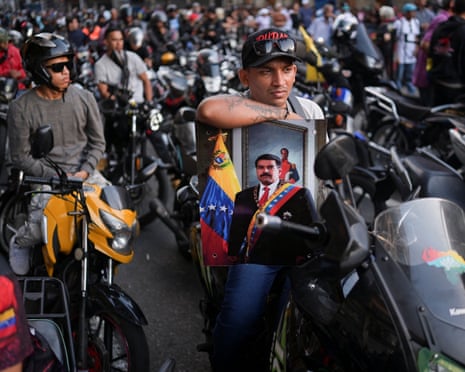
Caracas, Venezuela – Thousands gathered in Caracas on January 4, 2026, for a large anti-U.S. rally protesting perceived American aggression, marking a notable escalation in public discontent amid broader civil unrest. The demonstration, rated as medium severity by event trackers, unfolded as the Venezuelan government deployed armed militias in the capital to reinforce its authority, heightening tensions in the crisis-hit nation.
The rally began around 7:43 a.m. GMT on Sunday, January 4, with protesters voicing strong opposition to what they described as U.S. attacks on Venezuela. Participants expressed widespread frustration over foreign interference, chanting slogans and waving flags in a show of national solidarity against external pressures. This public outpouring reflects deepening divisions in a country long plagued by economic collapse, political repression, and international sanctions.
Simultaneously, reports emerged of armed militias – often referred to as "colectivos" – being mobilized in Caracas. According to The Guardian, these paramilitary groups, loyal to President Nicolás Maduro's regime, were deployed to assert control amid rising unrest. The militias, which have historically acted as enforcers for the government during protests, patrolled key areas of the capital, raising fears of potential clashes between demonstrators and pro-government forces.
Eyewitness accounts from the rally described a charged atmosphere, with crowds filling central streets near government buildings. Security forces maintained a visible presence, but no major incidents of violence were reported from the event itself. However, the overlap with militia deployments has amplified concerns about the potential for escalation. Local media and social media footage captured protesters holding signs reading "Yankees Go Home" and "Sovereignty Now," underscoring anti-imperialist sentiments that have been a staple of Maduro's rhetoric.
Background on Venezuela's Ongoing Crisis
Venezuela's civil unrest traces back to a protracted political and economic crisis that intensified after the death of former President Hugo Chávez in 2013. Under Maduro, the country has faced hyperinflation, mass emigration – with over 7.7 million Venezuelans fleeing since 2014, according to United Nations data – and disputed elections. The 2018 presidential vote, widely criticized as fraudulent by the U.S., European Union, and much of Latin America, led to the opposition-led National Assembly recognizing Juan Guaidó as interim president in 2019, though Maduro retained control through military and militia support.
Tensions have periodically boiled over into street protests, notably in 2014, 2017, and 2019, where security forces and colectivos suppressed demonstrations, resulting in hundreds of deaths according to human rights groups like Human Rights Watch. U.S. sanctions, imposed since 2017 targeting Maduro's inner circle and state oil company PDVSA, have been credited by the government with exacerbating shortages, while critics argue they aim to pressure democratic reforms.
Recent triggers for unrest include the contested July 2024 presidential election, where Maduro claimed victory despite opposition tallies favoring rival Edmundo González. International observers, including the Carter Center, questioned the results, leading to renewed protests and international isolation. The anti-U.S. rally appears linked to ongoing narratives of "imperialist aggression," possibly referencing U.S. military aid to regional allies or rhetorical escalations, though specifics remain unverified.
The deployment of militias fits a pattern seen in past flare-ups. These groups, numbering in the tens of thousands and armed with government-issued weapons, have been accused by Amnesty International of extrajudicial killings and intimidation. The Guardian's reporting highlights their role in the current context as a tool to "impose authority" without fully relying on the national guard, preserving plausible deniability for the regime.
International Reactions and Outlook
The international community has watched warily. The U.S. State Department reiterated calls for peaceful dialogue and respect for human rights, while Brazil and Colombia – key neighbors – urged restraint to prevent refugee flows across borders. Russia and China, longstanding Maduro allies, condemned foreign meddling without directly addressing the rally.
As of January 7, 2026, no further large-scale protests have been reported, but the militia presence suggests the government anticipates more unrest. Analysts note that winter months often see lulls in demonstrations due to rainy seasons, but underlying grievances – including food and medicine shortages amid 200% annual inflation (per IMF estimates) – persist.
The convergence of the anti-U.S. rally and militia actions underscores Venezuela's fragile stability. With Maduro's term constitutionally ending in 2025 but extended amid disputes, the risk of broader conflict looms if opposition mobilizes further. Regional leaders continue diplomatic efforts through the Lima Group and UN mechanisms, but progress remains stalled.
In a nation where over 90% of the population lives in poverty according to the Venezuelan Academy of Sciences, these events signal that public discontent shows no signs of abating, potentially shaping the trajectory of Latin America's most enduring crisis.
(Word count: 712)






