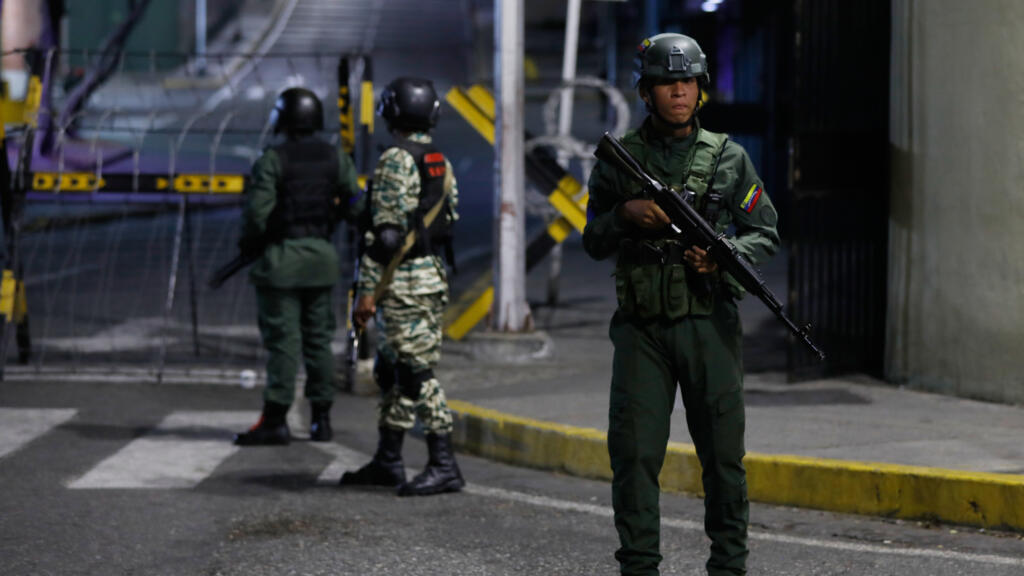

Venezuela Reports Critical Explosions in Caracas Amid Claims of US Military Strike Killing 100, Injuring Maduro
Caracas, Venezuela – Venezuelan authorities reported at least seven explosions rocking the capital Caracas early on Saturday, January 3, 2026, coinciding with observations of low-flying aircraft over the city. The government has accused the United States of launching a direct military attack, claiming it resulted in 100 deaths and injuries to President Nicolás Maduro and his wife, Fabiana Rosales.
The incidents unfolded at approximately 07:22 GMT, marking a dramatic escalation in tensions between Venezuela and the United States. Venezuela's Interior Minister Diosdado Cabello publicly stated that the assault "removed President Nicolás Maduro from power," though subsequent reports indicate Maduro survived with injuries. Cabello's remarks, covered in a live update by France 24, described the event as a US raid that caused widespread casualties. "100 people died in the US attack," Cabello asserted, framing it as an act of aggression against the socialist government.
Eyewitness accounts and initial reports highlighted the chaos in Caracas, with low-flying aircraft spotted in the pre-dawn hours, suggesting aerial involvement. The explosions were classified as critical in severity by monitoring services, prompting immediate alerts across the region. No independent verification of the aircraft or strike origins has been confirmed, and details on the precise targets—potentially government buildings, military sites, or infrastructure—remain unclear from available reports.
The Venezuelan government's narrative comes amid heightened US actions against the country's oil trade. Just days earlier, on Wednesday, January 7, 2026, US authorities seized a Russian-flagged oil tanker in the North Atlantic. Officials described the vessel as part of Venezuela's "shadow fleet," a network of ships used to evade American sanctions on Venezuelan crude exports. These sanctions, imposed since 2019 under the Trump and Biden administrations, aim to pressure Maduro's regime over human rights abuses, election irregularities, and ties to Iran and Russia. The tanker incident underscores ongoing economic warfare, with the US Coast Guard and Treasury Department routinely targeting such operations to disrupt illicit oil revenues funding Maduro's government.
Historical Context of US-Venezuela Tensions
Relations between Washington and Caracas have deteriorated sharply since the early 2000s under late President Hugo Chávez and his successor, Maduro. The US has not recognized Maduro's 2018 reelection as legitimate, instead backing opposition leader Juan Guaidó as interim president in 2019—a stance later softened but not abandoned. Economic sanctions have crippled Venezuela's oil-dependent economy, exacerbating a humanitarian crisis with hyperinflation, mass emigration (over 7 million Venezuelans have fled since 2014), and widespread shortages.
Military rhetoric has intensified periodically. In 2020, amid disputed National Assembly elections, the US deployed naval assets near Venezuelan waters, prompting Maduro to allege invasion plots. Venezuela has deepened military alliances with Russia, China, and Iran, acquiring advanced weaponry including Su-30 fighter jets and S-300 air defenses. US officials have repeatedly warned of Maduro's destabilizing activities in the region, including alleged assassination plots against President Donald Trump (as claimed by US authorities in 2024).
The shadow fleet has become a flashpoint. Dozens of tankers, often aging and uninsured, transport sanctioned Venezuelan oil to buyers in Asia and Europe. The January 7 seizure marks the latest in a series of US enforcement actions, with similar operations against Iranian and Russian vessels. Venezuela views these as acts of piracy, while the US frames them as lawful interdictions under international sanctions regimes.
Government Response and Regional Fallout
Following the alleged strike, Venezuelan officials rallied supporters, with Cabello using state media to decry the attack. Maduro, despite reported injuries, has not made a public appearance as of the latest updates. The France 24 liveblog continues to track developments, noting no immediate US comment on the Caracas explosions or casualty claims.
Neighboring countries expressed alarm. Colombia, hosting millions of Venezuelan refugees, closed border crossings temporarily, while Brazil bolstered military patrols along its frontier. The Organization of American States (OAS) called an emergency session, with Secretary General Luis Almagro urging de-escalation. Russia condemned the purported US action, vowing support for Caracas, while the US State Department has yet to respond directly to the strike allegations.
Internationally, oil markets reacted nervously, with Brent crude spiking 3% on fears of supply disruptions from the OPEC member's instability. The events coincide with global energy volatility, including Red Sea shipping attacks and renewed Russia-Ukraine hostilities.
Outlook Amid Uncertainty
The situation in Venezuela remains fluid, with the France 24 live coverage providing real-time updates. Confirmation of the strike's perpetrators, full casualty figures, and Maduro's status await independent investigations. US officials may address the claims in coming hours, potentially dismissing them as propaganda amid the tanker seizure.
This incident risks broader regional instability, potentially drawing in allies on both sides. Diplomatic channels, including UN Security Council discussions, could intensify, as the world watches whether Saturday's explosions herald a new phase in the long-running Venezuela crisis or prove to be an isolated, unverified event.
(Word count: 712)






