Venezuela Grapples with Power Vacuum and Civil Unrest After Maduro's Fall, as State of Emergency Fuels Tensions

Latest from X
Venezuela Grapples with Power Vacuum and Civil Unrest After Maduro's Fall, as State of Emergency Fuels Tensions
Caracas, Venezuela – In the wake of Nicolás Maduro's ouster, Venezuela has descended into deepening chaos marked by a declared state of emergency, heavy-handed security crackdowns, and sharp political divisions, as rival factions vie for control amid fears of escalating violence.
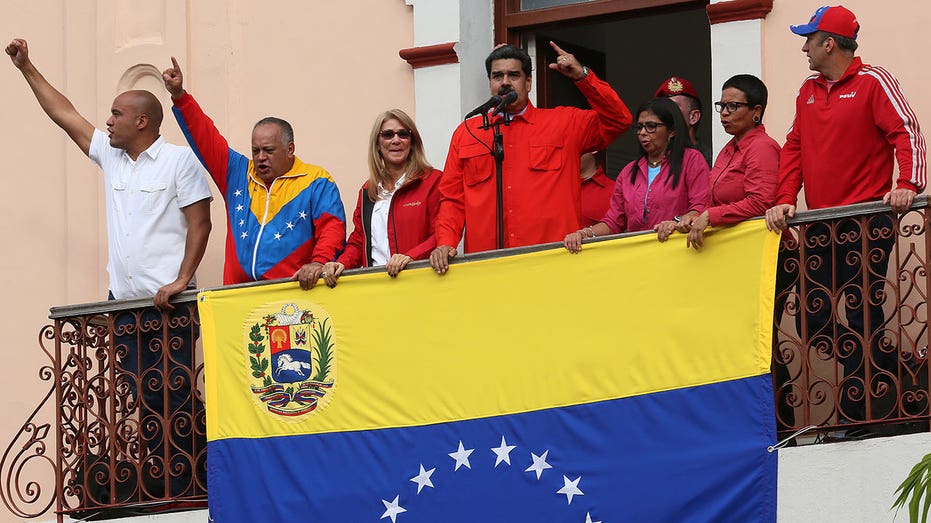
On January 3, 2026, the Venezuelan government proclaimed a state of emergency, framing it as a response to recent U.S. military strikes. Officials called on supporters to take to the streets in protests against what they described as an "imperialist attack," urging widespread mobilization. This declaration, which carries high severity implications, has intensified an already volatile atmosphere, with armed police patrolling major cities and reports of journalists being detained.
The power vacuum left by Maduro's fall has exposed fractures within the former regime's inner circle, according to experts cited in recent analyses. Fox News reports highlight warnings from specialists that the splintered leadership—now potentially under figures like Maduro's deputy, Delcy Rodríguez—could resort to even greater brutality than during Maduro's 11-year rule. "Venezuela faces deeper chaos," the article notes, pointing to "brutal insiders and enforcers" who may unleash repression to consolidate power. Street protests, initially sparked by economic collapse and disputed elections, have morphed into clashes between pro-regime loyalists and opposition groups demanding a full democratic transition.
Security forces have ramped up operations, detaining at least 14 media workers in recent days, as detailed by the BBC. Venezuelans interviewed expressed profound fear of reprisals, with armed police conducting checks on individuals' social media activity and patrolling urban areas. "People are afraid to speak out," one resident told the BBC anonymously, underscoring a climate of intimidation that has stifled dissent and independent reporting. These measures coincide with the state of emergency, which grants authorities broad powers to curb gatherings and communications.
Opposition leader María Corina Machado has emerged as a central figure in the unrest, vowing to return to Venezuela and explicitly rejecting the authority of Delcy Rodríguez. In statements covered by The Guardian, Machado, who has been a key voice against Maduro's socialist government since leading the opposition's challenge to his 2024 election victory, declared her intent to challenge the interim power structure. Banned from running for office in 2023 on corruption charges she denies as politically motivated, Machado represents a broad coalition backed by millions who view her as the legitimate path to transition. Her announcement signals potential for further mobilization, as supporters rally worldwide—evident in posts on X celebrating global demonstrations in over 30 countries as harbingers of change.
Background: A Decade of Crisis Culminating in Collapse
Venezuela's turmoil traces back to the death of Hugo Chávez in 2013, when Maduro assumed power amid plummeting oil prices, hyperinflation, and U.S. sanctions. Mass protests in 2014, 2017, and 2019 were met with lethal force, resulting in hundreds of deaths. The 2024 presidential election, marred by fraud allegations, saw opposition candidate Edmundo González claim a landslide victory based on tally sheets, while Maduro clung to power with military backing. International recognition of the opposition grew, with the U.S. under President Donald Trump's second term imposing escalating pressures, including reported military actions in early 2026 that reportedly precipitated Maduro's downfall.
The current unrest builds on this history. Maduro's exit—details of which remain murky—has not quelled demonstrations but amplified them. Pro-regime militias, known as "colectivos," and security apparatus loyalists patrol alongside calls for counter-protests, while opposition encampments demand free elections. Economic woes persist: shortages of food, medicine, and electricity have driven over 7.7 million Venezuelans to flee since 2014, per United Nations data.
Posts on X from opposition figures like Machado reflect buoyant sentiment among exiles and supporters, with mentions of global rallies thanking U.S. leadership for advancing a transition. However, such online claims remain inconclusive amid conflicting narratives.
Outlook: Fragile Transition or Escalating Conflict?
As Delcy Rodríguez's faction consolidates amid the emergency decree, the risk of intra-regime violence looms large. Analysts warn that without unified international mediation—potentially from the U.S., Brazil, and Colombia—the power struggle could devolve into civil war. Machado's planned return adds urgency, potentially galvanizing protests but inviting crackdowns.
International observers, including the UN and OAS, have called for restraint and dialogue. With armed patrols and media blackouts intensifying, Venezuela's immediate future hinges on whether fractured loyalists yield to popular will or double down on repression. The world watches as a nation on the brink teeters between renewal and ruin.
(Word count: 712)
Track this story live
Original Sources
- •
- •
- •
Editorial process: This article was synthesized from the original sources cited above using The World Now's AI editorial system, with byline accountability from our editorial team. We grade every story for source grounding, factual coherence, and on-topic match before publication. Read more about our editorial standards and contributors. Spot something inaccurate? Let us know.
Last updated: January 12, 2026