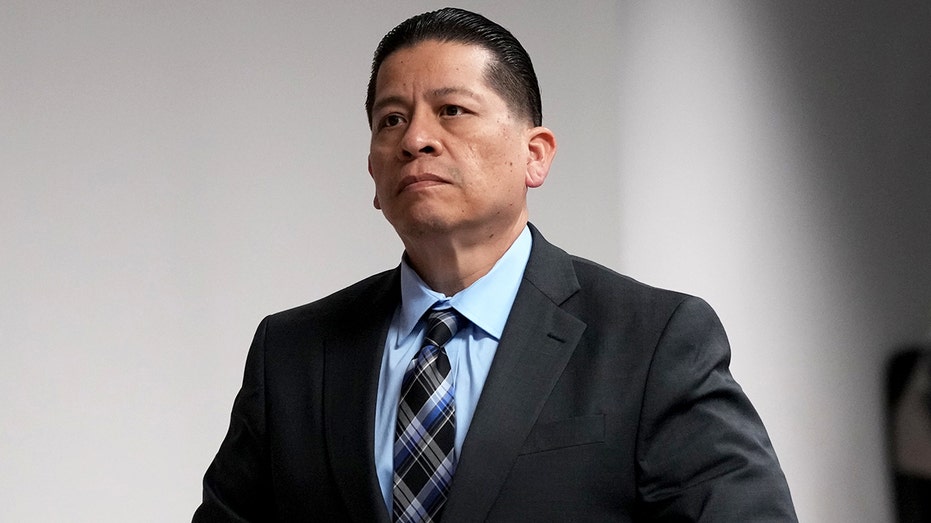

Uvalde Shooting Trial Halted After Key Witness Changes Testimony on Officer's Location
UVALDE, Texas — The trial of a former Uvalde school police officer accused of failing to protect students during the deadly 2022 Robb Elementary School shooting was dramatically halted this week after a key witness reportedly altered their testimony regarding the defendant's location at the time of the attack. The development came just one day after emotional testimony featuring frantic 911 calls left families of the victims sobbing in the courtroom.
The proceedings, which began earlier this week around January 5, 2026, center on former Uvalde Consolidated Independent School District Police Chief Adrian Gonzales. He faces charges of child endangerment and abandonment stemming from his response—or lack thereof—to the massacre that claimed the lives of 19 children and two teachers. On the first day of testimony, January 7, prosecutors played harrowing audio recordings of 911 calls from students trapped inside the school, prompting audible distress among grieving relatives in attendance.
According to reports, families of the victims were overcome with emotion as they listened to the desperate pleas captured during the May 24, 2022, rampage carried out by 18-year-old gunman Salvador Ramos. The calls underscored the chaos and fear inside Robb Elementary as law enforcement delayed breaching the classroom where Ramos had barricaded himself with victims. This testimony marked a poignant start to the trial, highlighting the human cost of what has been widely criticized as one of the most botched police responses in U.S. history.
The trial took an unexpected turn shortly thereafter when a key witness changed their account of Gonzales' whereabouts during the critical moments of the shooting. Details remain limited, but the shift in testimony prompted the judge to suspend proceedings, leaving the case in limbo as of January 7, 2026. Legal observers note that such recantations or modifications can significantly impact the prosecution's narrative, potentially affecting the strength of evidence against Gonzales.
Background on the Uvalde Tragedy and Response Failures
The Robb Elementary School shooting remains a stark symbol of America's ongoing struggle with gun violence in schools. On May 24, 2022, Ramos entered the school undetected despite prior warnings and an initial confrontation with officers outside. He proceeded to fire indiscriminately, killing 19 fourth-graders and two educators in classrooms 111 and 112. The attack lasted 77 minutes from the first 911 call until Ramos was killed by a Border Patrol tactical team.
Investigations by the Texas Department of Public Safety, the U.S. Department of Justice, and independent reviews painted a damning picture of the law enforcement response. Nearly 400 officers from local, state, and federal agencies responded, yet there was no clear command structure, hesitation to engage the shooter, and failure to prioritize rescuing trapped children. Gonzales, as the school's police chief, was among those singled out for not directing officers to the threat immediately.
A 600-page Justice Department report released in January 2024 concluded that "cascading failures" at every level of leadership contributed to the prolonged agony inside the school. Gonzales was indicted in 2024 on 29 counts of child endangerment for allegedly instructing officers to stand down and not treating the incident as an active shooter scenario. He has pleaded not guilty, with his defense arguing that he followed protocols amid confusion.
This trial is one of several stemming from the incident. Uvalde County District Attorney Christina Mitchell has pursued criminal charges against other officers, though progress has been slow. Civil lawsuits against law enforcement and the school district have also proliferated, with settlements exceeding $2 million already reached in some cases.
Broader Context of U.S. School Shootings and Accountability
The Uvalde case unfolds against a backdrop of heightened scrutiny on police responses to mass shootings. Since Columbine in 1999, active shooter training has emphasized rapid neutralization of threats, yet Uvalde exposed persistent gaps in execution. The event has fueled national debates on gun control, school safety, and officer training, with Texas enacting laws for armed school staff and faster police responses post-Uvalde.
Families have remained vocal advocates for accountability. Groups like the Uvalde Strong advocacy organization have pushed for transparency, criticizing delays in releasing records and video footage. The emotional weight of the trial was evident from the outset, as relatives confronted the lingering trauma of losing loved ones.
As the trial remains paused, no rescheduling has been announced. Prosecutors may seek to reconcile the witness's revised statement, while the defense could leverage it to challenge the case's foundation. The outcome could set precedents for holding commanders accountable in future crises, offering a measure of justice—or further frustration—to a community still healing.
The World Now will continue monitoring developments in this high-profile case.
(Word count: 682)






