US Strikes Iran for Third Night as Trump Reimposes Hormuz Blockade
The United States conducted a third consecutive night of strikes on Iran, killing at least three people, while President Donald Trump announced the reimposition of a naval blockade on Iranian shipping in the Strait of Hormuz and a 20 percent levy on cargo passing through the waterway amid Iran strikes. [2] At least three people have been killed in overnight strikes as the US hit Iran for a third night in a row. [2] The US released footage of the attacks after saying its forces completed a new wave of strikes against Iran on Tuesday. [2]
Latest US Strikes on Iran
The US military said its five-hour mission hit targets across Iran including coastal Bushehr and Bandar Abbas to degrade Iran's ability to attack commercial shipping. [3] Iranian state television on Tuesday reported that five explosions were heard around the port city of Bandar Abbas, near the Strait of Hormuz. [2] Renewed US attacks since last week have killed at least 28 people in Iran, according to an AFP tally based on Iranian media and official announcements. [3] The US released footage of the attacks after saying its forces completed a new wave of strikes against Iran on Tuesday. [2] Trump formally notified Congress last week that the United States had resumed the conflict giving the Pentagon an additional 60 days to operate in the region without congressional approval. [2]
Trump's Hormuz Blockade and Levy Announcement
Trump said a deal with the Islamic republic was still possible even as fighting surged to a scale unseen since an April ceasefire. [3] Trump declared on Truth Social that the United States would be known as THE GUARDIAN OF THE HORMUZ STRAIT and levy a 20 percent fee on all cargo shipped through the waterway. [3] US Central Command said Iran's ports on the waterway would be blockaded from 2000 GMT on Tuesday. [3] Trump said the Strait of Hormuz would remain open with or without Iran but said the US would start charging fees on ships transiting through the waterway. [2] A 20 percent fee would also be levied for any and all costs necessary to provide security and safety for vessels. [2] In addition to the moves in Hormuz, the US president has also threatened to destroy Pickaxe Mountain, a deeply buried nuclear site near Natanz where western intelligence claims an undeclared nuclear enrichment facility is being built. [2] Trump said Monday that the United States was taking over the strait and would slap a levy of 20 percent on all cargo shipped through it. [3]

US strikes hit targets in Iran for a third consecutive night, killing at least three people. — Source: middleeasteye
Iranian Retaliation and Regional Attacks
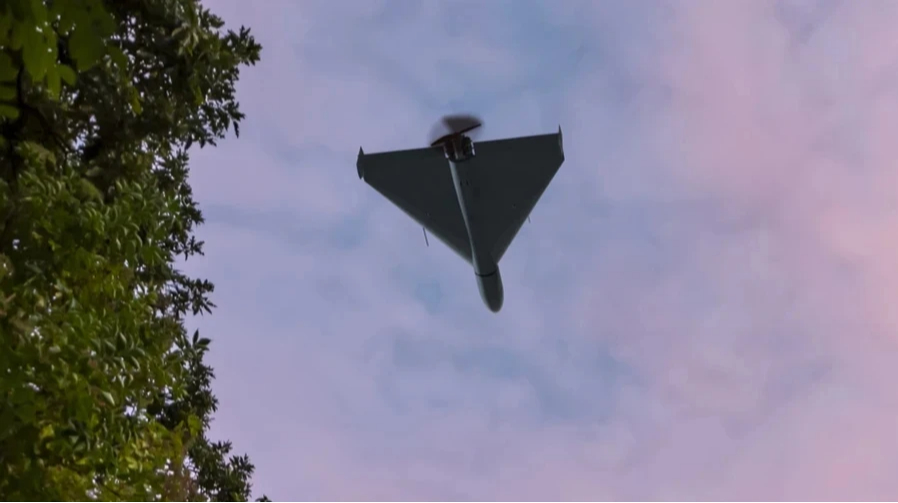
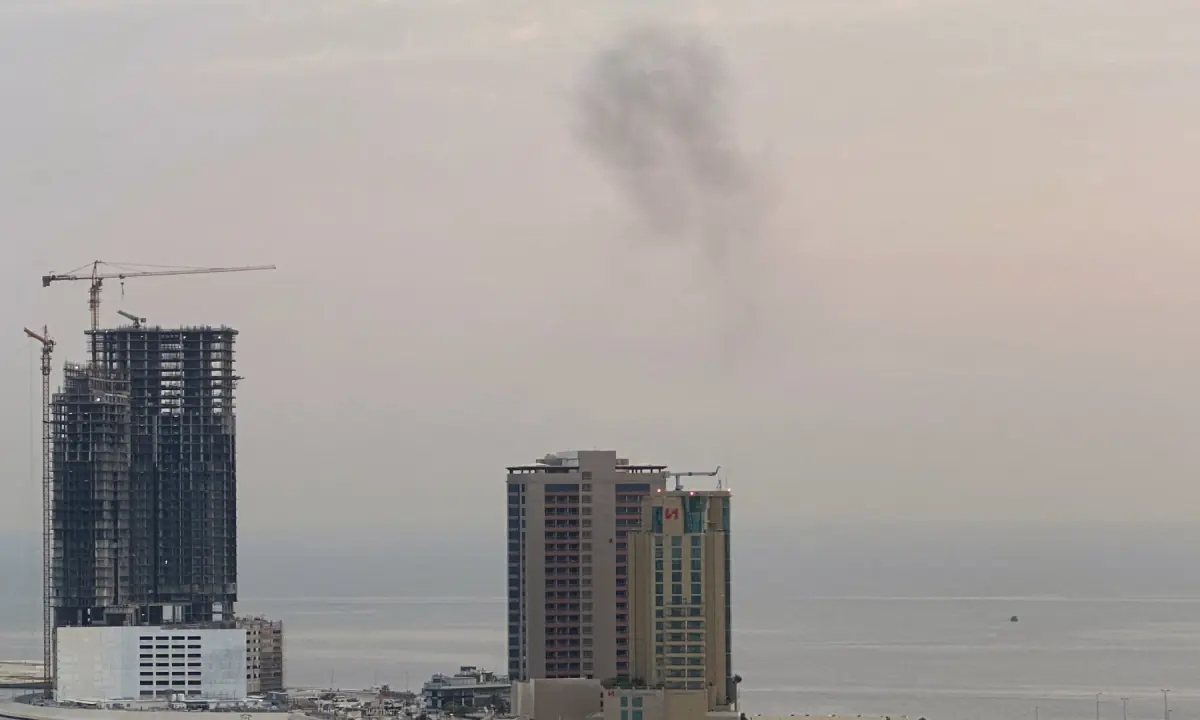
After the strikes, Iran's Revolutionary Guards announced they had in turn fired missiles and drones on Bahrain, targeting a residential building for US forces and other facilities. [3] Bahrain said its forces intercepted multiple Iranian attacks on Sunday, accusing Tehran of continuing what it described as a campaign of aggression against the Gulf kingdom. [2] In a statement, the Bahrain Defence Force said Iran had carried out attacks using missiles and drones, alleging that civilians and private property were targeted. [2] The deliberate use of missiles and drones to target civilians and private property constitutes a flagrant violation of international humanitarian law, the statement said. [2] On Tuesday, the head of the Iranian Parliament’s National Security Committee Ebrahim Azizi indicated that a bill aiming to ensure the security of the waterway was formally introduced in parliament. [2] Last night, coinciding with the downing of US drones, the Strategic Action for the Security and Sustainable Progress of the Strait of Hormuz and the Persian Gulf bill was formally introduced in Iran’s Parliament, Azizi wrote in a post on X. [2] He added that Tehran remains steadfast in defending our red lines, particularly with regards to the management of the waterway. [2] Iran's parliament has meanwhile begun work on a bill on the management of the Strait of Hormuz, the head of the security committee said on Tuesday. [3] Iran insists it only targets US interests in the Gulf, but its military command spokesman said any collaboration by Gulf countries with the United States would be considered an act of war. [3]
Attacks on Commercial Tankers in the Strait
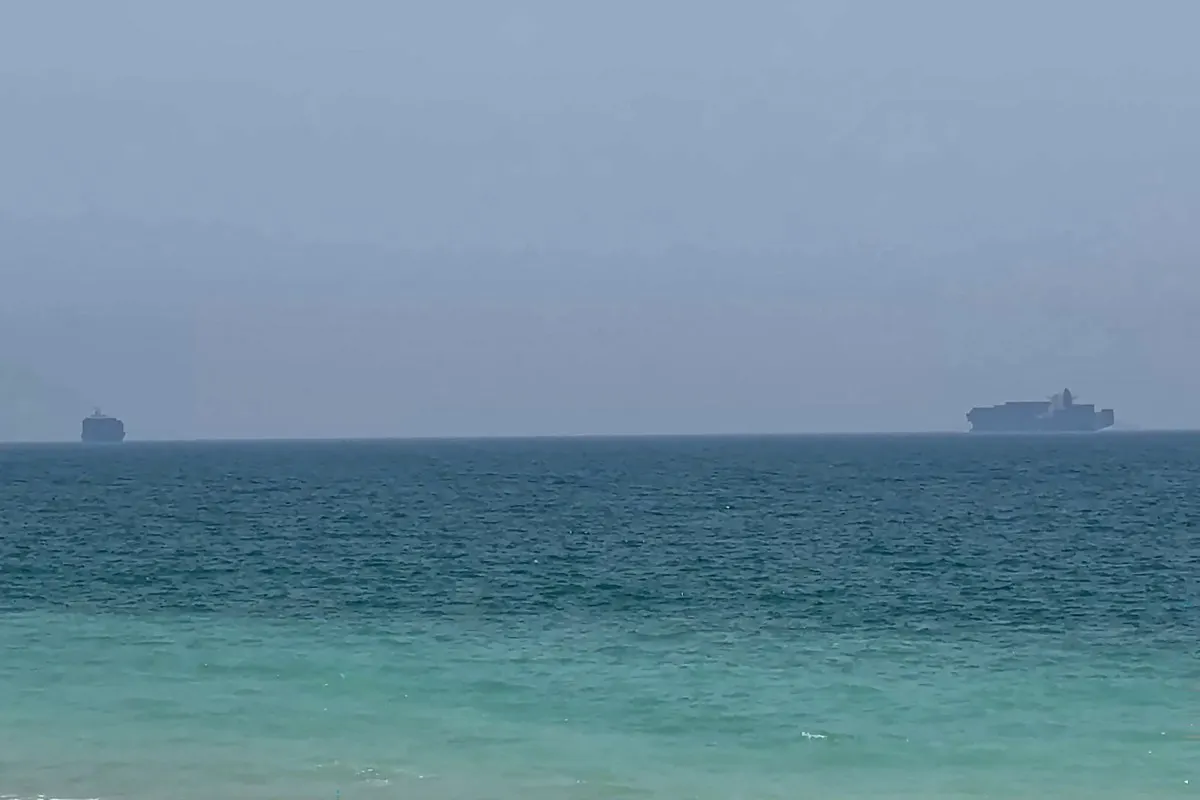
Iran's Islamic Revolutionary Guard Corps struck two Emirati oil tankers, Mombasa B and Al Bahyah, in the Strait of Hormuz. [1] The very large crude carriers Mombasa B and Al Bahyah, operated by the shipping arm of Abu Dhabi state oil company ADNOC, sustained significant damage after fires broke out while they were transiting the southern lane of the Strait in Omani territorial waters. [1] The fires were subsequently brought under control, while Iran’s Islamic Revolutionary Guard Corps claimed responsibility for striking two tankers that it said had ignored repeated warnings. [1] One Indian seafarer was killed and eight others were injured, four of them seriously. [1] UK maritime security agency UKMTO on Tuesday reported yet another tanker struck by a missile while transiting Hormuz near Oman's coast. [3] Iran struck two ships in the strategic waterway and killing one crew member, according to the United Arab Emirates. [3] The two vessels had a total of 46 crew members, including 30 Indians, one of whom has tragically lost his life. [5] India summoned Iran’s senior diplomat in New Delhi on Tuesday to protest against attacks on two commercial vessels in the Strait of Hormuz that killed an Indian seafarer and wounded several others. [5] The Indian foreign ministry said it had summoned the deputy chief of mission of the Iranian embassy in the capital to register a strong protest against the attacks reported early on Tuesday. [5]
Impact on Shipping, Seafarers and Global Trade
Cypriot shipping executive Thomas Kazakos, Secretary General of the International Chamber of Shipping, has called for an immediate end to attacks on commercial vessels in the Strait of Hormuz, warning that seafarers are once again paying the price for a conflict in which they have no involvement. [1] Once again seafarers have, through no fault of their own, been placed in harm’s way and sadly another seafarer has lost their life, Kazakos said. [1] These unjustified attacks on commercial shipping must stop, he added. [1] Shipping conditions have remained highly volatile since the conflict began on February 28. [1] Tanker and gas carrier traffic has fallen sharply as shipowners assess the risks facing their vessels and crews. [1] Hundreds of ships and around 6,000 seafarers remain stranded in the Persian Gulf, according to the IMO. [1] Around 20 million barrels of oil per day passed through the Strait in 2024, equivalent to approximately 20 per cent of global petroleum liquids consumption and more than one-quarter of worldwide seaborne oil trade. [1] Around one-fifth of global liquefied natural gas trade also passed through Hormuz, primarily from Qatar. [1] Kazakos said the principle of freedom of navigation has been sidelined during the war, hindering global trade and crucial energy supply routes. [1] There is no legal mechanism by which a toll or restrictions can be placed on vessels passing through the strait, he said. [1] The IMO Council has taken a similar position, reaffirming that passage through the Strait must remain free from tolls and charges under international law. [1] Everyone must now focus on a permanent return to vessels being able to pass through the Strait of Hormuz unimpeded without paying a toll or other clearance mechanism, Kazakos said. [1]
Broader Conflict Context and Diplomatic Fallout
The renewed attacks signal a further breakdown in negotiations between the US and Iran despite sporadic talks to end the military operation against the country that began in February. [2] Iran's Foreign Ministry spokesman Esmaeil Baqaei said earlier Monday that the June memorandum of understanding that formed the basis for the negotiations was in crisis. [3] Baqaei said Iran would ignore its obligations under the deal if the Washington did the same, but added that Tehran was continuing talks with mediators from Qatar, Pakistan and Oman to prevent further escalation. [3] Oil prices shot up more than nine percent Monday over fears of renewed conflict and rose again Tuesday, piling on more than one percent. [3] Iranian Foreign Minister Abbas Araghchi responded mockingly on X that Trump was absolutely right that whoever guarantees safe passage should be compensated, but that Tehran would charge less, noting that 20% is of course too much. [3]
What to watch next: Trump formally notified Congress last week that the United States had resumed military conflict against Iran, giving the Pentagon an additional 60 days to operate in the region without congressional approval, while Iran’s parliament advanced its bill on managing the Strait of Hormuz and officials vowed to defend their red lines. [2][3]