US Strikes Hit Bandar Abbas and Southern Iran in Retaliation for Ship Attacks
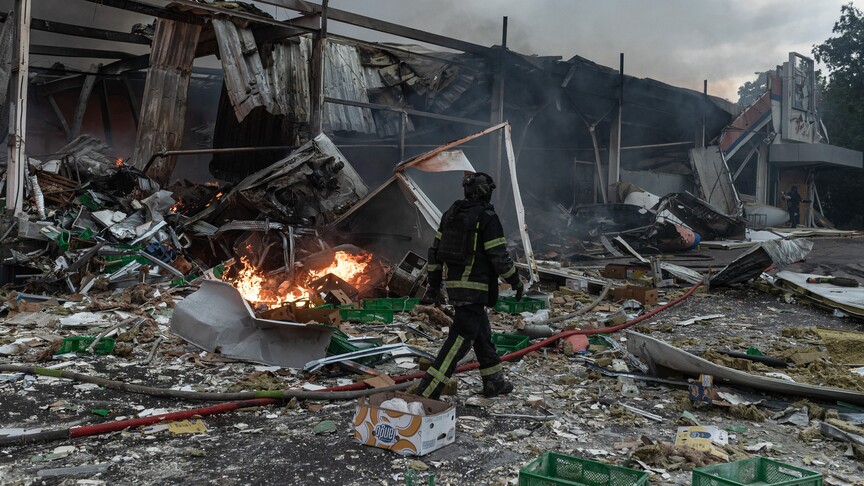
The latest Iran strikes targeted locations along Iran's southern coast on the evening of July 8, 2026, as US Central Command conducted additional operations to degrade Iran's capacity to threaten shipping routes. [1] Explosions were reported in multiple cities, and the actions followed Iranian attacks on merchant vessels. [3] US officials described the moves as accountability measures for aggression against commercial traffic in a key waterway. [2]
US Launches Fresh Strikes on Iran
US Central Command stated that forces began conducting additional strikes against Iran to further degrade their ability to threaten freedom of navigation in the Strait of Hormuz. [1] The command noted that the United States is holding Iran accountable for recent unjustified aggression against commercial shipping and civilian crews. [1] Reports indicated that the ongoing strikes would exceed the number carried out on the previous day, according to a US official. [5] Explosions were heard in Bandar Abbas, Sirik, Konarak, and Chabahar, with Iranian semi-official news agency Mehr reporting activation of air defenses in southern Iran. [5] State media reported power cuts in parts of Chabahar, and shrapnel from the attacks struck a hospital in that city. [5] Open-source accounts claimed strikes occurred on Bandar Abbas, a coastal port city with a population of around 500,000 that serves as a regional capital and hosts an Iranian naval base. [1] The Associated Press reported several explosions rocking Iran as the US launched new strikes. [1]
Trump Declares Ceasefire Memorandum Over
US strikes target Iranian coastal sites including Bandar Abbas in retaliation for ship attacks. — Source: mercopress President Donald Trump, speaking from the NATO summit in Ankara, said that Iran was not being serious in the talks on the Memorandum of Understanding. [1] He described the memorandum signed on June 17 as over and stated that he did not want to deal with Iran. [3] Trump warned that the bombing of Iran would increase significantly if Tehran continued to attack ships in the Strait of Hormuz, posting on social media that the actions were in retribution for the previous day's bombing of ships by Iran. [3] At a news conference, Trump indicated that the new strikes would end very soon and that he did not expect the war to start again. [2] He added that if a deal were made with Iran, he was not sure it would stick, describing the counterpart as dishonourable. [3]
Iranian Attacks on Shipping Trigger Retaliation
The strikes followed Iranian attacks on at least three merchant ships linked to Saudi, Emirati, and Qatari interests as they crossed the Strait of Hormuz. [2] US Central Command confirmed the operation aimed to degrade Iran's ability to threaten freedom of navigation through the waterway, which carries close to a fifth of the world's oil. [2] The escalation came after Iran attacked ships on Monday, prompting Washington to withdraw authorization for international sales of Iranian oil. [2] On Tuesday night, the US struck more than eighty targets inside Iran. [2] Analysts noted that Tehran uses such actions on shipping to create leverage during negotiations for a long-term deal. [3] Control of the strait, through which a fifth of global oil supplies pass, has given Tehran immense leverage. [3]
Iran Vows Massive Retaliation
Iran responded to prior US strikes by attacking US military sites in Bahrain and Kuwait. [3] Iran's state news agency reported sounds of explosions in several areas on the southern coast. [3] The speaker of Iran's parliament, Mohammad Bagher Ghalibaf, accused the United States of violating the truce through the military strikes and the reinstated ban on oil sales, writing on social media that Iran would not bow. [2] Nour News, affiliated with Iran's top security body, cited an Iranian military source as saying that Iran was planning to soon launch a massive attack on US Army bases in the region in retaliation. [3] Iranian officials vowed further action while accusing Washington of breaking the truce. [2]
Impact on Regional Stability and Markets
Trump's remarks had an immediate market impact, with stock exchanges falling and the price of oil jumping by around 6 percent after energy assets had recovered to pre-war levels in recent weeks. [2] The escalation is the most serious since the two countries signed a memorandum last month to end their war. [2] The latest round of attacks rattled several cities along Iran's southern coast and left some areas without power. [3] This week's statements cast doubt on the viability of turning the memorandum of understanding signed on June 17 into a permanent peace deal. [3] The memorandum set a sixty-day window until August 21 to reach a definitive peace deal addressing Iran's nuclear program and the future of the Strait of Hormuz. [2]
Background to the Escalation
The conflict began with US and Israeli airstrikes on Iran on February 28, which killed Supreme Leader Ayatollah Khamenei. [1] The Iranian navy was largely destroyed by the US in the conflict that started on that date. [1] Iran's regime had counted on the US refraining from strikes during the funeral for Supreme Leader Ayatollah Khamenei, whose body is now in Iraq as part of a week-long series of events linked to the funeral. [1] The escalation followed an earlier round on July 7 that hit more than 80 targets. [1] Iran claimed dozens of strikes in response, while the US claimed it hit 80 targets overall. [1]
What to watch next: Iran may launch new rounds of attacks on the Gulf or on ships, or mobilize militias in Iraq or the Houthis in Yemen, as the regime seeks to bolster the Houthis in recent weeks. [1]