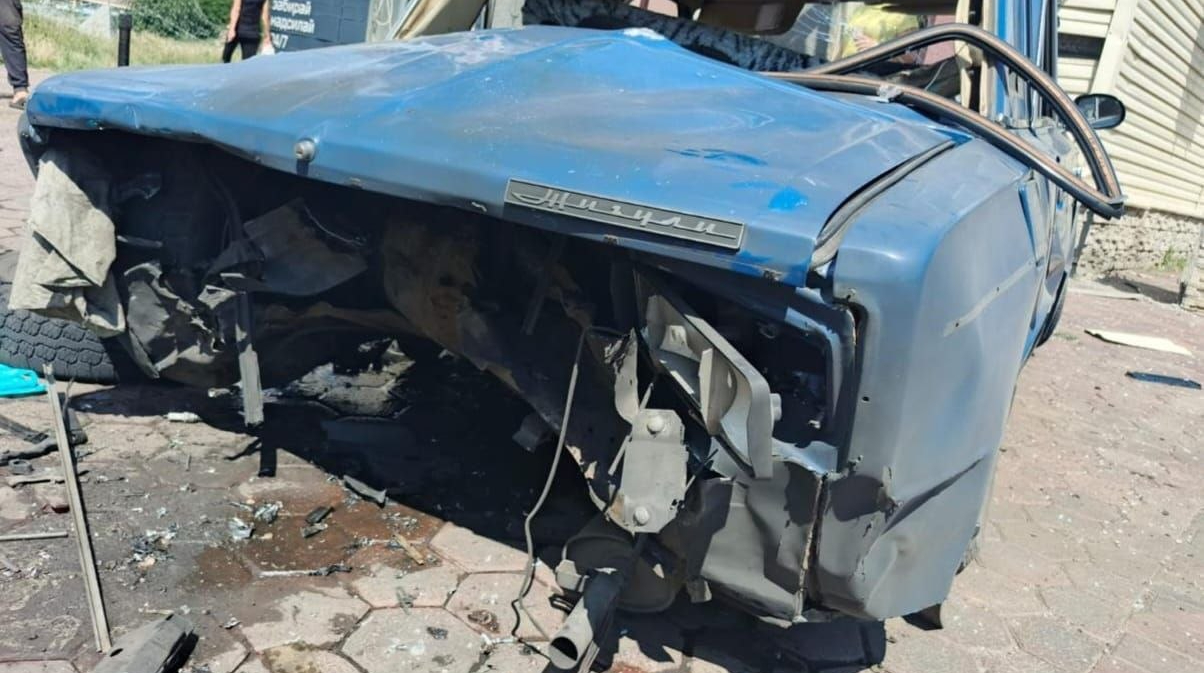
US Strikes Hit 90 Iranian Targets Near Strait of Hormuz
The latest Iran strikes were announced by US Central Command as a fresh wave targeting missile and drone sites, naval assets, and coastal defenses to degrade Iran's ability to attack commercial shipping in the Strait of Hormuz. [2] The operation involved US fighter aircraft, drones, naval vessels, and one-way sea attack drones. [3]
US Launches New Wave of Strikes
US Central Command announced that the United States launched a new wave of strikes against Iran on Wednesday. [3] The strikes are aimed at reducing Iran's military capabilities, specifically in attacks against commercial shipping in the Strait of Hormuz, CENTCOM said. [3] The US completed seven hours of strikes against Iran early on Wednesday morning, involving aircraft, drones and naval vessels. [3] According to CENTCOM, the strikes targeted missile and drone sites, naval assets, and coastal defenses to similarly reduce Iran’s ability to threaten commercial shipping. [3] The operation lasted approximately seven hours and involved US fighter aircraft, drones, naval vessels, and one-way sea attack drones, hitting around 90 Iranian military targets. [4] CENTCOM asserted that US forces are postured and prepared to ensure the Strait of Hormuz remains open for commercial shipping, “despite Iran’s continued unwarranted aggression, harassment, threats, and arbitrary declarations.” [3] The US military says attacks aim to further degrade military capabilities Iranian forces have used to attack commercial shipping in Strait of Hormuz. [2] Američka Centralna komanda (CENTCOM) saopštila je da je cilj napada dalje slabljenje sposobnosti Teherana da ugrožava trgovačke brodove i pomorski saobraćaj kroz jednu od najvažnijih energetskih ruta na svetu. [4] Sedam sati udara iz vazduha i sa mora prema objavljenim informacijama, operacija je trajala približno sedam sati, a u njoj su učestvovali američki borbeni avioni, bespilotne letelice i ratni brodovi naoružani preciznim projektilima. [4] Napadi su bili usmereni na objekte raspoređene uz iransku obalu i oko Ormuskog moreuza, uključujući mesta za skladištenje raketa i dronova, položaje protivvazdušne odbrane, sredstva za nadzor obale, pomorske kapacitete i infrastrukturu za snabdevanje iranskih snaga. [4] CENTCOM je u svom zvaničnom saopštenju naveo da je tokom poslednjeg talasa pogođeno oko 90 iranskih vojnih ciljeva. [4] Američka vojska tvrdi da su napadi izvedeni kako bi Iran imao manje mogućnosti za udare na komercijalnu plovidbu i posade civilnih brodova. [4]
Iranian Reports of Explosions and Air Defenses
CENTCOM's announcement came minutes after Iranian media reported explosions in the city of Shiraz in southern Iran, though no further details were provided about the incident. [3] Iran's semi-official Mehr news agency said earlier on Wednesday that air defenses around the Bushehr nuclear power plant in southern Iran had been activated. [3] Mehr news agency said there had been no official comment so far. [3] Mehr attributed sounds of explosions in Iran's Sirik and eastern Hormozgan to clashes in the Gulf of Oman and Strait of Hormuz, shortly after Iran's official IRNA News Agency reported US strikes on the Iranian island of Hengam. [3] Iranian state media reported explosions near the port city of Bandar Abbas, on the island of Qeshm and on Bandar Imam Khomeini. [5] It later said fresh US strikes hit the southern port city of Bushehr, home to the country's only civilian nuclear plant. [5] Iranian media reported explosions in Shiraz, Sirik, eastern Hormozgan, the island of Hengam, Bandar Abbas, Qeshm, Bandar Imam Khomeini, and near the Bushehr nuclear power plant where air defenses were activated. [3]
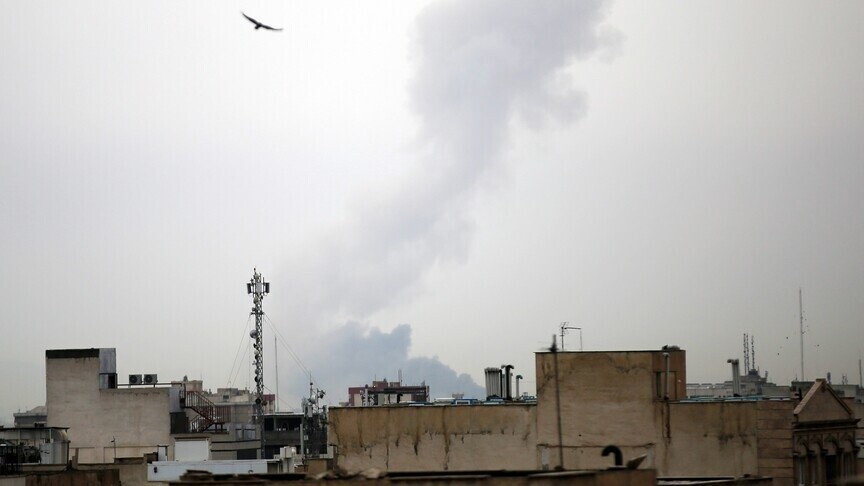
US fighter aircraft and naval vessels strike Iranian military targets near the Strait of Hormuz. — Source: anadolu
Context of Prior Strikes and Total Impact
The US strikes have been ongoing, with CENTCOM stating on Monday that they had hit dozens of targets across multiple cities, including Iranian military air defense systems, radar sites, small boats, and missile and drone capabilities. [3] US one-way sea attack drones were used for the first time in the July 13 strikes, CENTCOM added, saying that precise munitions, fighter aircraft, aerial drones, and naval vessels were all utilized in the operation. [3] This follows previous US strikes that hit more than 80 targets including air defense systems, radar sites, small boats, and missile capabilities, bringing the total to about 170 targets across two operations. [4] Najnoviji udari usledili su neposredno posle prethodne američke akcije, tokom koje je, prema CENTCOM-u, pogođeno više od 80 ciljeva. [4] Među metama prethodnog napada bili su iranski sistemi protivvazdušne odbrane, komandne i komunikacione mreže, obalski radari, protivbrodske rakete i više od 60 manjih plovila Korpusa čuvara Islamske revolucije. [4] Vašington tvrdi da je taj napad bio odgovor na iranske udare na tri trgovačka broda koja su prolazila kroz Ormuski moreuz. [4] Američka strana te incidente predstavlja kao kršenje primirja i direktnu pretnju slobodi plovidbe. [4] Posle približno 170 pogođenih ciljeva u dve uzastopne operacije, američki pritisak više nije ograničen na pojedinačne odmazde, već se pretvara u sistematski udar na iransku vojnu infrastrukturu uz Ormuski moreuz. [4]
Naval Blockade and Strait of Hormuz Dispute
The US has reimposed a naval blockade on Iranian ports in the Persian Gulf and Gulf of Oman while asserting forces are prepared to keep the Strait of Hormuz open for commercial shipping. [4] Nova serija udara izvedena je ubrzo nakon što su Sjedinjene Američke Države obnovile pomorsku blokadu brodova koji ulaze u iranske luke ili ih napuštaju. [4] Američka vojska navodi da se blokada odnosi na saobraćaj prema iranskim lukama u Persijskom i Omanskom zalivu, dok brodovima koji prolaze kroz Ormuski moreuz prema lukama drugih država formalno ne bi trebalo da bude ometana plovidba. [4] Takva odlacija dodatno povećava rizik od novih sukoba na moru. [4] Svaki pokušaj iranskih brodova da probiju blokadu mogao bi da izazove nova presretanja, a eventualni odgovor Teherana otvorio bi prostor za još šire američke napade duž iranske obale. [4] Vašington tvrdi da brani plovidbu. [4] Američka administracija operaciju predstavlja kao pokušaj da se smanji sposobnost Irana da raketama, dronovima i manjim ratnim čamcima ugrožava brodove u moreuzu. [4] Teheran, međutim, američke napade i blokadu smatra vojnom agresijom i pokušajem gušenja iranske trgovine. [4] Zbog toga završetak ove operacije ne znači i kraj udara. [4] CENTCOM je poručio da američke snage ostaju u pripravnosti i spremne za nove akcije po naredbi predsednika SAD Donalda Trampa. [4] At the heart of the resumption of hostilities has been the dispute over the Strait of Hormuz, a waterway that is crucial for global oil and gas flows. [5] Iran blockaded Hormuz after the US and Israel launched their massive attack on the country on Feb 28, using it for leverage against its foes for months before briefly reopening it, and then again vowing it would be closed “until the US ends its aggression”. [5] The US, in turn, has reimposed its own blockade of Iran's ports, though Trump has backed down on a planned 20% levy on ships using the strait. [5] Deputy Foreign Minister Kazem Gharibabadi said the renewed US blockade “has, in a way, dismantled the Islamabad memorandum”, referring to the interim deal reached last month to halt hostilities and pursue peace talks. [5] Five days after the return to war, US Central Command (CENTCOM) said it struck dozens of Iranian military targets near the strait and elsewhere along the country's coast to “degrade Iran's ability to threaten commercial shipping and civilian crews”. [5] Admiral Brad Cooper, head of CENTCOM, said on Tuesday that over the past week, “Iran has intentionally targeted civilians across the region by attacking seven commercial ships resulting in nearly a dozen civilian crew members killed, missing, or injured.” [5] “US forces are holding Iran accountable for unwarranted aggression that continues to endanger innocent lives,” he added. [5] A Norwegian tanker was hit by an explosion caused by an unidentified device off the Omani coast early Tuesday, the crisis response company MTI Network said. [5] And Kuwait said one of its naval vessels was struck during an Iranian missile and drone barrage, wounding four crew members. [5] Trump meanwhile said he was scrapping a planned levy on ships passing through the Strait of Hormuz that he announced Monday, replacing the fee with trade deals with Gulf allies. [5] “I have decided to replace the 20% United States Reimbursement Fee with Trade and Investment Deals that the various Gulf States will be making into the United States,” Trump said in a post on his Truth Social network. [5]
Casualties, Regional Reactions, and Statements
Iran's Revolutionary Guards stated retaliatory operations will continue and the Strait of Hormuz will remain closed until the US ends its aggression; at least 30 people have been killed in Iran from renewed US attacks. [5] Since last week, renewed US attacks have killed at least 30 people in Iran, government spokesman Fatemeh Mohajerani said. [5] Separately, the military announced that seven of its personnel were killed in Wednesday's strikes on the southeast. [5] Iran's Revolutionary Guards said they targeted the US Fifth Fleet in Bahrain, where the military said it had intercepted attacks against civilian targets, while Jordan's armed forces said they had downed three missiles from the Islamic republic. [5] US President Donald Trump warned, meanwhile, threatened to widen strikes next week to hit power plants and bridges unless Tehran returns to the negotiating table. [5] “Next week it gets really bad for them,” he told Fox News. [5] Despite a return to hostilities, mediated talks between the two sides have not formally ended. [5] In the capital Tehran, there was no sign of a return to conflict, with ordinary Iranians thronging cafes to watch the France-Spain World Cup semi-final in huge crowds, Agence France-Presse (AFP) journalists saw. [5] But in Kuwait, repeatedly targeted throughout the war, locals were anxious. [5] “Every day, I wake up wondering whether the situation will de-escalate or worsen,” said Mustafa Mohamed, a 39-year-old Sudanese accountant in the Gulf country. [5] “It has become difficult to feel at ease or plan anything because uncertainty grips everyone.” [5] George Atef, a 38-year-old Egyptian civil servant in Kuwait, said: “What exhausts me most is not knowing when this situation will end -- the waiting itself has become draining.” [5] Israeli Prime Minister Benjamin Netanyahu, whose country has not so far rejoined the war, warned Iranian leaders on Tuesday that Israel would deal a heavy blow if they launched an attack on his country. [5] Speaking from Dimona, a southern town widely believed to house Israel's undeclared nuclear arsenal, he told them: “Do not count on things remaining quiet if you attack us.” [5]
What to watch next: Mediated talks between the two sides have not formally ended even as hostilities resume, and US President Donald Trump has threatened to widen strikes next week to hit power plants and bridges unless Tehran returns to the negotiating table.