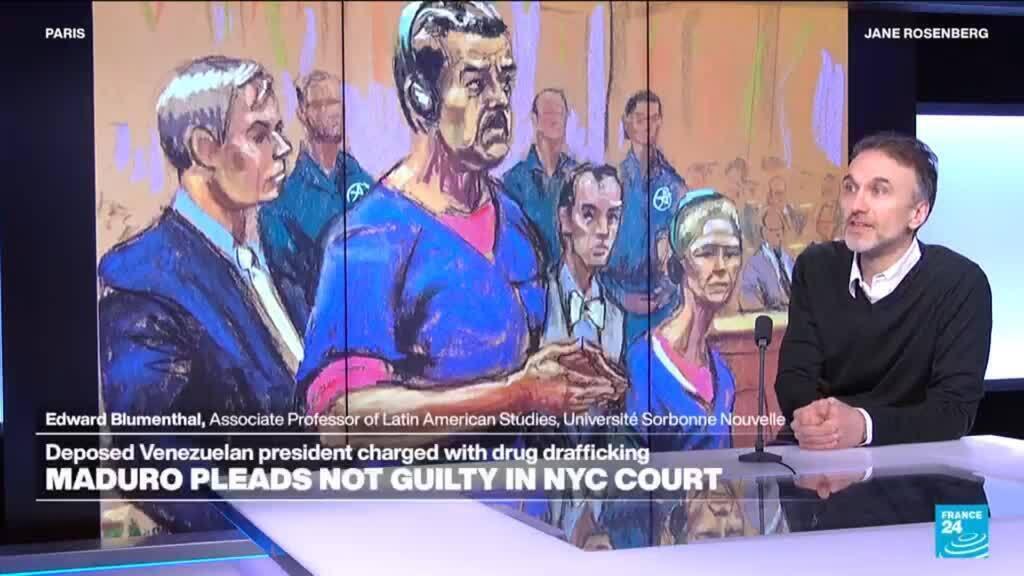

U.S. Forces Capture Venezuelan President Nicolás Maduro in Military Operation, Drawing UN Condemnation
Caracas, Venezuela – U.S. military forces captured Venezuelan President Nicolás Maduro on January 3, 2026, in a high-stakes operation that has ignited global controversy. According to statements from U.S. President Donald Trump, the raid resulted in few injuries and no American deaths, marking a dramatic escalation in long-standing tensions between Washington and Caracas.
The operation, which began around 1:20 p.m. GMT, has been described by critics as an "abduction" and a violation of international law. The United Nations swiftly condemned the U.S. action, urging the international community to unite against what it called an undermining of a "fundamental principle of international law." This response underscores the divisive fallout from the raid, which unfolded amid Venezuela's protracted political and economic crisis.
Details of the capture remain limited, with U.S. officials emphasizing its success and minimal casualties. President Trump highlighted the operation's precision in public remarks, framing it as a necessary response to Maduro's regime. However, Venezuelan authorities and international observers have labeled it an act of aggression, evoking comparisons to historical interventions in Latin America.
International Backlash and Expert Warnings
The UN's condemnation came rapidly, with the world body calling for global solidarity to reject the operation. In a France 24 interview aired on January 6, host Genie Godula discussed the implications with Dr. Edward Blumenthal, Professor of Latin American Studies at Université Sorbonne Nouvelle. Blumenthal described the U.S. move as reminiscent of "19th-century gunboat diplomacy," a reference to era-era U.S. naval interventions in the region to enforce political change.
Dr. Blumenthal issued a stark warning: "If the Venezuelan state were to collapse, in the context of an armed occupation, something similar to what happened in Iraq could evolve." His comments highlight fears of prolonged instability, sectarian violence, and a power vacuum, drawing parallels to the 2003 U.S.-led invasion of Iraq, which led to years of insurgency and state fragility.
Reactions from regional powers have been mixed. Allies of Maduro, including Russia and Cuba, have decried the raid as imperialistic, while some opposition figures in Venezuela expressed cautious support for Maduro's removal. Brazil and Colombia, key neighbors, have called for dialogue to prevent broader regional spillover.
Historical Context of U.S.-Venezuela Tensions
Venezuela's crisis traces back to the death of President Hugo Chávez in 2013, after which Maduro assumed power amid disputed elections and economic collapse. Hyperinflation peaked at over 1 million percent in 2018, driving mass emigration—estimated at over 7 million Venezuelans by 2024, according to the UN. U.S. sanctions, imposed progressively since 2017 under both Trump and Biden administrations, targeted Maduro's inner circle and state oil company PDVSA, aiming to pressure democratic transitions.
The U.S. recognized opposition leader Juan Guaidó as interim president in 2019, a move that deepened the rift but failed to dislodge Maduro. Recent years saw fragile détente attempts, including partial sanctions relief in 2023 tied to electoral promises, which unraveled after the July 2024 presidential election marred by fraud allegations. Maduro's disputed victory prompted mass protests and international isolation.
This military operation represents the most direct U.S. intervention since the 1989 Panama invasion, shifting from economic pressure to kinetic action. Legal questions swirl around its basis: the U.S. has not publicly invoked the Monroe Doctrine explicitly, but critics argue it echoes unilateralism rejected by modern international norms.
Current Situation and Regional Implications
As of January 6, Maduro's capture has left Venezuela's military leadership in disarray. Loyalist forces clashed with opposition groups in Caracas, though no large-scale war has erupted. U.S. forces reportedly secured key sites, but the extent of any ongoing occupation remains unclear.
The operation's severity—rated "HIGH" in initial reports—raises risks of refugee surges into Colombia and Brazil, straining already burdened neighbors. Oil markets dipped briefly on news of potential disruptions to Venezuela's 800,000 barrels-per-day production, vital to global supply.
Dr. Blumenthal's Iraq analogy looms large: post-Saddam Hussein Iraq saw insurgency, ISIS emergence, and over 200,000 civilian deaths. Venezuela's ethnic diversity, armed militias (colectivos), and foreign proxies (Russian Wagner remnants, Iranian advisors) could amplify such risks.
Outlook Amid Uncertainty
The international community faces a pivotal moment. The UN's call for unity suggests potential sanctions or resolutions against the U.S., though enforcement remains elusive given Washington's Security Council veto. European nations, historically critical of Maduro but wary of unilateralism, may push mediation.
For Venezuelans, Maduro's fall offers hope for relief from authoritarianism but dreads chaos. Transitional governance, if achieved, will test opposition cohesion long fractured by infighting. As Dr. Blumenthal noted, the path forward hinges on avoiding occupation pitfalls.
This event reshapes hemispheric dynamics, compelling leaders to balance sovereignty, human rights, and stability. Updates are expected as world powers convene.
(Word count: 712)






