
US Drone Strike on Venezuelan Drug Facility Ignites Global Tensions and Questions Over Sovereignty
Washington, DC – In a bold military action announced by the US president on December 31, 2025, the United States conducted a drone strike on a facility in Venezuela allegedly linked to drug trafficking. Described as a CIA-operated operation targeting high-severity threats, the strike has drawn sharp international scrutiny, with critics framing it as a direct challenge to Venezuelan sovereignty and echoes of historical US interventions in Latin America.
The operation, which began at 09:45 GMT on Wednesday, December 31, 2025, targeted a site purportedly involved in illicit narcotics activities. US officials have not released detailed operational specifics beyond the announcement, but the move has been linked to longstanding accusations against Venezuelan leadership for facilitating drug cartels. This incident marks a significant escalation in US-Venezuela relations, strained for years by sanctions, disputed elections, and migration crises.
International Reactions Highlight Divisions
The strike prompted immediate global responses, testing alliances and raising questions about unilateral military actions in the post-Cold War era. British Prime Minister Keir Starmer, during a press interaction on January 5, 2026, declined to condemn the US operation outright. When pressed by journalists to compare it to his strong denunciations of Russia's invasion of Ukraine, Starmer stated, "I don't shy away," but emphasized the rapidly evolving situation. "We need all the facts," he said, adding that the UK had no involvement in the strike. Starmer's measured tone contrasts with his previous rhetoric against Russian President Vladimir Putin, underscoring perceived inconsistencies in Western responses to military interventions.
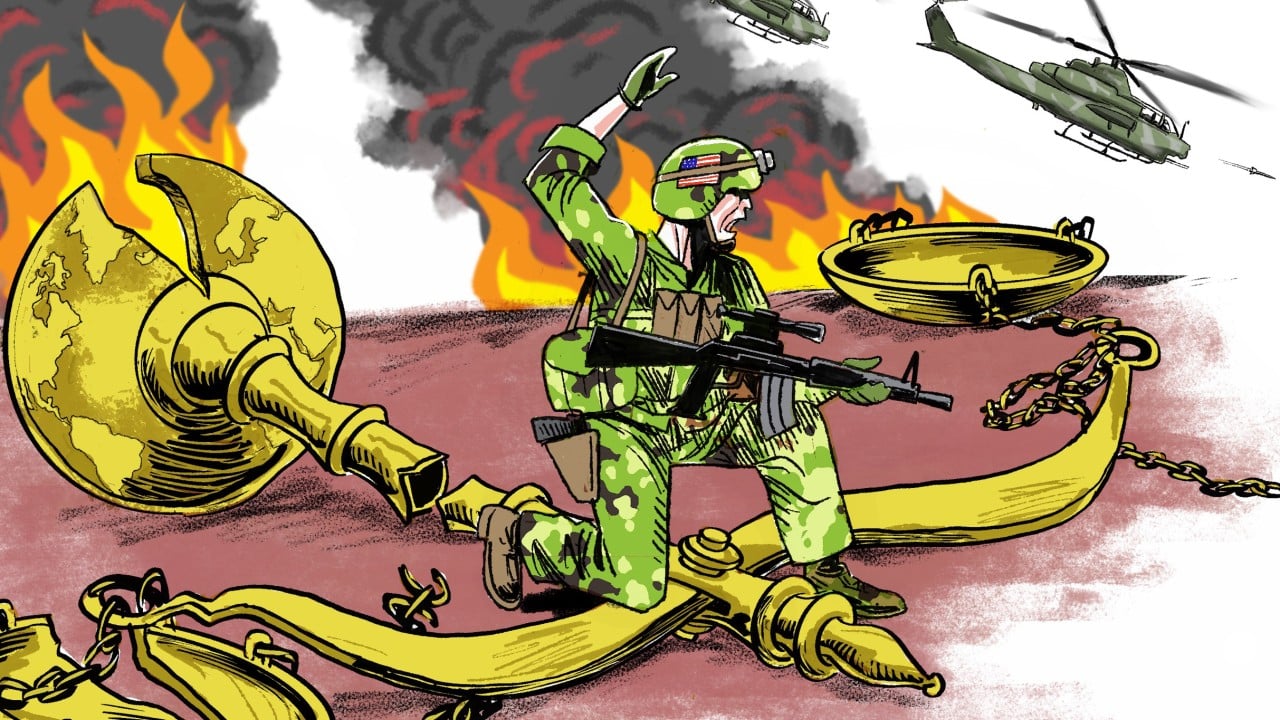
In Asia, commentary from the South China Morning Post (SCMP) framed the event as a revival of the Monroe Doctrine—a 19th-century US policy asserting dominance in the Western Hemisphere. The SCMP opinion piece, published on January 5, 2026, drew parallels to the 1989 US invasion of Panama to arrest dictator Manuel Noriega on drug trafficking charges, over 36 years prior. It described the Venezuela strike as "Washington launching a military operation to seize the sitting president of a sovereign Latin American country," suggesting it enforces US hegemony through force rather than international law. The analysis warned of broader implications, signaling US willingness to bypass multilateral institutions amid shifting global power dynamics.
Operational Details and Venezuelan Context
While US sources confirm the strike's focus on a drug-related facility, Venezuelan officials have condemned it as an act of aggression. The operation's high severity rating aligns with intelligence reports tying Venezuelan territory to cocaine routes bound for the US and Europe. President Nicolás Maduro's government, in power since 2013, has faced repeated US designations of officials as narcotics kingpins, including sanctions under both Trump and Biden administrations.
Historically, Venezuela has been a transit point for South American drug flows, exacerbated by economic collapse, hyperinflation, and political instability. The 2019 US recognition of opposition leader Juan Guaidó as interim president intensified tensions, leading to oil sanctions that crippled the economy. Recent years saw millions flee as refugees, with the US citing humanitarian concerns alongside security threats.
The drone strike evokes memories of targeted killings in counterterrorism campaigns, such as those against ISIS or al-Qaeda leaders, but occurs within a sovereign state not formally at war with the US. Legal experts note potential violations of international law, including the UN Charter's prohibitions on force except in self-defense or with Security Council approval.
Broader Geopolitical Ramifications
The incident arrives amid a volatile international landscape. Incoming US President Donald Trump, whose administration is implied in the timing, has historically advocated aggressive stances on Latin America, including threats of military invasion during his first term. Allies like the UK appear cautious, prioritizing transatlantic ties over immediate criticism.
Latin American nations, including Brazil and Colombia—key regional players—have yet to issue unified statements, though past forums like the Organization of American States have debated Venezuelan human rights abuses. China and Russia, longstanding Maduro supporters, may leverage the event to criticize US "imperialism," potentially deepening Venezuela's isolation or prompting counter-sanctions.
As investigations continue, the strike's success in disrupting drug networks remains unverified. Casualty figures and facility damage are undisclosed, fueling speculation. Starmer's call for facts reflects a broader demand for transparency, with the UN and human rights groups likely to probe compliance with proportionality principles.
In outlook, this event could redefine US engagement in its "backyard," straining hemispheric relations while bolstering domestic narratives on border security. Whether it deters trafficking or escalates conflict depends on diplomatic fallout in the weeks ahead.
(Word count: 682)






