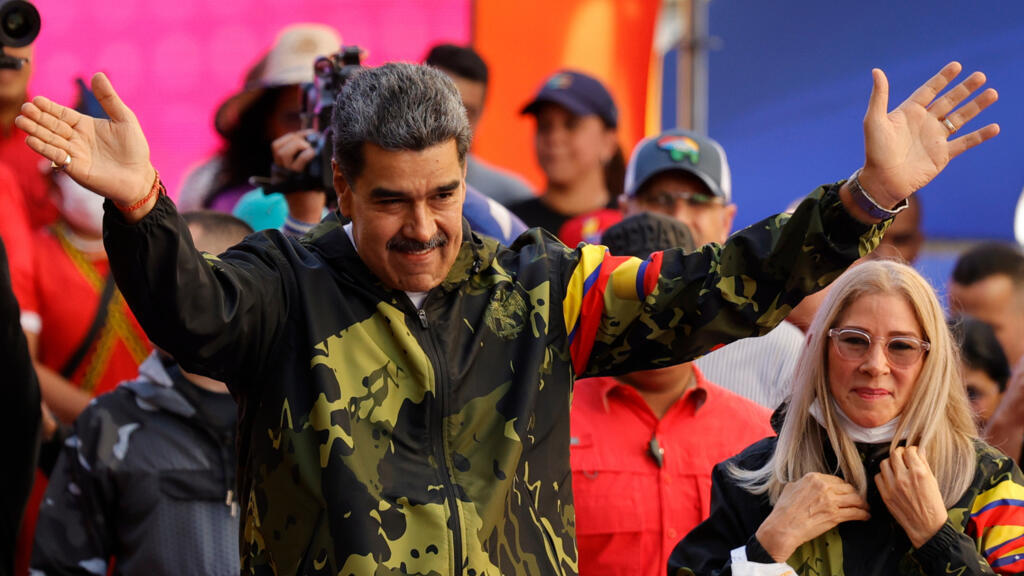
U.S. Captures Venezuelan President Maduro in Dramatic Military Strike, Indicts Him for Drug Trafficking and Corruption

Latest from X
U.S. Captures Venezuelan President Maduro in Dramatic Military Strike, Indicts Him for Drug Trafficking and Corruption
In a stunning turn of events, U.S. authorities have captured Venezuelan President Nicolás Maduro and his wife, Cilia Flores, in a large-scale military operation in Venezuela, followed by the unsealing of a superseding indictment accusing them of narco-terrorism, corruption, and trafficking thousands of tons of cocaine into the United States. The operation, announced by President Donald Trump on January 3, 2026, marks a significant escalation in U.S. efforts to combat drug trafficking and corruption linked to the Venezuelan government, raising questions about the future of the South American nation.
According to the indictment unsealed on January 3, Maduro and his associates are accused of abusing their positions of power for over 25 years to facilitate the importation of vast quantities of cocaine into the U.S. The charges, which include narco-terrorism conspiracy and drug trafficking, allege that Maduro sat at the "forefront of corruption," using his roles as president and previously as minister of foreign affairs to enrich himself, his family, and Venezuela's political and military elite. Prosecutors claim that Maduro and Flores leveraged state-sponsored gangs to protect their drug trafficking operations, further destabilizing the country.
The military strike that led to Maduro’s capture was described by Trump as a "large-scale" operation, though specific details about the mission remain limited. During a press conference, Trump stated that Maduro and his wife would face "the full might of American justice" and stand trial on U.S. soil, with the couple reportedly being transported to New York. The U.S. president also controversially remarked that the U.S. would "run the country" for now, sparking immediate concerns about sovereignty and the potential for further geopolitical tensions in the region.
Details of the Indictment
The four-count superseding indictment, which also names other Venezuelan officials and allies, paints a damning picture of systemic corruption within Maduro’s government. It alleges that the regime protected and promoted criminal activities, including drug trafficking and terrorism, for personal gain. “This cycle of narcotics-based corruption lines the pockets of Venezuelan officials and their families while also benefiting violent narco-terrorists who operate with impunity on Venezuelan soil,” the indictment states, as reported by The Hill. While the document ties Maduro to six different criminal organizations, it provides limited specifics on some of these connections.
The accusations build on earlier charges against Maduro, who was first indicted by the U.S. in 2020 for similar crimes. That initial indictment included a $15 million reward for information leading to his arrest, signaling long-standing American intent to hold him accountable. The latest charges, however, come in the wake of his dramatic capture, amplifying their impact.
Background of Crisis in Venezuela
Venezuela has been mired in political and economic turmoil for over a decade under Maduro’s leadership. Since assuming power in 2013 following the death of Hugo Chávez, Maduro has faced accusations of authoritarianism, election fraud, and human rights abuses. The country’s economy has collapsed due to mismanagement, corruption, and U.S. sanctions, leading to hyperinflation, widespread poverty, and a mass exodus of millions of citizens. Amid this chaos, allegations of drug trafficking and state-sponsored crime have persisted, with the U.S. repeatedly accusing Maduro’s regime of turning Venezuela into a hub for narco-terrorism.
The U.S. has long sought to pressure Maduro’s government through sanctions and diplomatic isolation, but direct military action and the capture of a sitting head of state represent an unprecedented step. This operation follows years of failed attempts at dialogue and international efforts to broker a resolution to Venezuela’s crisis.
International and Domestic Reactions
The capture of Maduro has elicited mixed reactions globally. While some view it as a necessary move to dismantle a corrupt regime, others warn of the potential for increased instability in Venezuela and the broader Latin American region. Trump’s statement about the U.S. taking control of the country, even temporarily, has drawn criticism from international observers concerned about violations of Venezuelan sovereignty.
On social media platforms like X, discussions about Maduro’s indictment and capture are gaining traction, with posts from various users highlighting the historical context of U.S. charges against him dating back to 2020. These posts reflect a range of sentiments, from support for holding foreign leaders accountable to skepticism about U.S. intentions in Venezuela.
Outlook
As Maduro and his wife await trial in the United States, the immediate future of Venezuela remains uncertain. Questions linger about who will fill the power vacuum in Caracas, the role of the U.S. in any transitional government, and the potential for further conflict in a nation already on the brink. The international community will be watching closely as this historic case unfolds, with implications for global efforts to combat drug trafficking and corruption.
For now, the capture and indictment of Nicolás Maduro stand as a bold statement of U.S. resolve—but at a cost that may yet be fully realized.
Track this story live
Original Sources
- •
- •
- •
Editorial process: This article was synthesized from the original sources cited above using The World Now's AI editorial system, with byline accountability from our editorial team. We grade every story for source grounding, factual coherence, and on-topic match before publication. Read more about our editorial standards and contributors. Spot something inaccurate? Let us know.
Last updated: February 28, 2026






