
Ukraine Strikes Russia's Largest Oil Refinery in Omsk 2,500 Kilometers Away
Ukraine strikes on Russian energy infrastructure reached deep into the country overnight, hitting the Omsk oil refinery nearly 2,500 kilometers from the border while Russia maintained its own campaign against Ukrainian civilian areas and Naftogaz facilities. [4]
Ukrainian Strikes Hit Russian Oil Infrastructure
Ukrainian forces struck an oil refinery in Omsk, nearly 2,500 kilometers from Ukraine's border, overnight, the General Staff said on July 6. [4] The Omsk refinery was the last of Russia's 11 largest gasoline producers to be hit by Ukrainian forces, according to the military. [4] A fire broke out at the site following the strike, and the extent of the damage is still being assessed. [4] Preliminary information indicates that the ELOU-AVT-11 primary oil refining unit was hit. [4] The unit has a design capacity of 8.4 million metric tons of crude oil per year, according to the General Staff. [4] The Omsk oil refinery is Russia's largest by refining capacity, processing more than 21 million metric tons of crude oil per year. [4] It produces a wide range of fuels, lubricants, and petrochemical products and is involved in supplying the Russian military, the General Staff said. [4] According to the military, the facility has a refining depth of around 99%, one of the highest rates in Russia, and produces a wide range of petroleum products. [4] The Omsk refinery was not the only Russian oil facility targeted overnight. [4] Ukraine's Security Service, together with other branches of the Defense Forces, carried out a series of strikes against Russian energy infrastructure and military targets in occupied Crimea, the agency said. [4] Ukrainian drones struck the Yaroslavl oil refinery and the Yaroslavl oil pumping and dispatch station, with explosions and smoke reported near the refinery, according to the SBU. [4] The agency also confirmed a strike on an oil terminal at the port of Vysotsk in Russia's Leningrad Oblast. [4] The attack disabled two oil loading arms and hit three petroleum product storage tanks, the SBU said. [4] Drones also targeted the First Plant oil refinery in Kaluga Oblast, where a fire broke out following explosions at the facility. [4] These actions form part of Ukraine strikes that have systematically addressed Russian energy nodes linked to military supply lines.
Attacks on Occupied Crimea Fuel and Military Sites
Ukraine’s Unmanned Systems Forces struck two Russian shadow fleet tankers in the Sea of Azov that were carrying a combined 7,000 metric tons of fuel to occupied Crimea, Commander Robert "Madyar" Brovdi said. [4] The volume was equivalent to roughly 200 rail tank cars, according to Brovdi. [4] The strikes come as occupied Crimea faces severe fuel shortages following continued Ukrainian attacks on Russian energy infrastructure. [4] The authorities suspended fuel sales entirely on June 21 amid the worsening shortages. [4] The SBU also reported a separate operation against military and energy targets in occupied Crimea. [4] Ukrainian drones struck three aircraft hangars at the Hvardiiske airfield, as well as a Pantsir-S2 air defense system near Simferopol and a mobile fire group in Kerch, according to the agency. [4] A petroleum storage tank and a pumping station at the TES-Terminal-1 oil depot were also hit. [4] Separately, Brovdi said that between July 1 and 5, drones operated by the Unmanned Systems Forces struck 37 energy nodes across occupied Crimea and other Russian-occupied territories in southern Ukraine. [4] "We are doing everything to ensure that Russia pays every day for its crimes. While the enemy shells peaceful Ukrainian cities, its military and fuel infrastructure will continue to suffer significant losses," SBU chief Yevhenii Khmara said. [4]
NATO Condemns Russian Attack on Kyiv as Indiscriminate
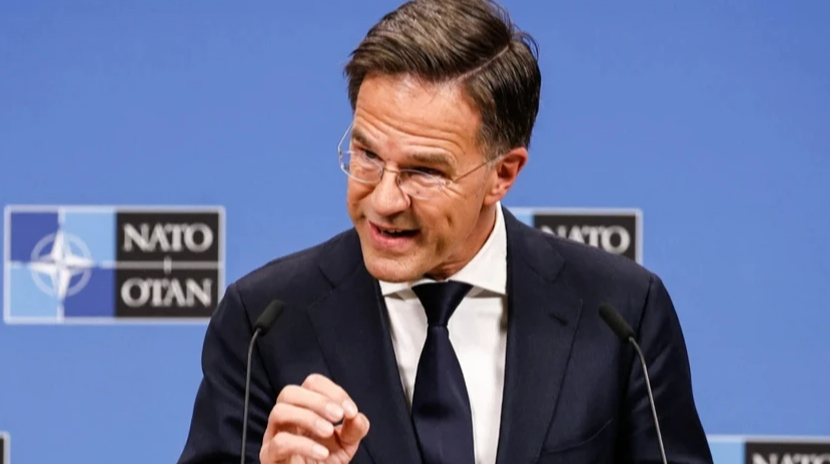
NATO Secretary General Mark Rutte, speaking ahead of the Alliance summit, stated that Russia's "indiscriminate" missile attack on Kyiv and Kyiv Oblast was planned specifically to harm civilians. [1] Rutte stressed that the Russian ballistic attack on the night of 5-6 July 2026 was "indiscriminate" and not directed at military targets, contrary to claims from Russia. [1] "This is an indiscriminate attack on innocent civilians, on infrastructure and cities in Ukraine." [1] Rutte, however, expressed confidence that this tactic would not succeed, as "Russia will never be able to win this war in this way." [1] "Of course, this is terrible for the people at the epicentre of the events, for the residents of Kyiv and other cities who had to endure this. But the facts are that [on the battlefield] Ukraine has been achieving even better results in recent months," he added. [1] In Rutte's view, the latest strike once again demonstrated how Putin is "losing control due to Ukraine's successes on the battlefield." [1] Rutte also praised Ukraine's defence forces for their "deep strikes" on Russian rear positions, including energy infrastructure, as well as for their successes along the battlefield. [1] "The situation is generally at a stalemate now," he added. [1] Following the attack, Rutte stated that allies must ensure Ukraine receives everything it needs. [1]
Russian Strikes Target Naftogaz Gas Facilities
Russian forces have been carrying out large-scale strikes on gas production facilities of the Naftogaz Group in Kharkiv Oblast since early morning on 6 July. [3] As a result of the strike, a fire broke out at one of the facilities. [3] One worker was injured. [3] He was given first aid and then hospitalised. [3] After some time, Russian forces launched a second strike on the same facility, attempting to cause even greater destruction. [3] Operations at the attacked facility have been suspended. [3] An assessment of the damage will be carried out after an all-clear is given in the oblast. [3] On 5 July, Russian forces once again deliberately attacked the extraction assets of the Naftogaz Group. [3] Several facilities in Poltava, Kharkiv and Sumy oblasts came under attack simultaneously. [3] On the morning of 4 July, Russian drones attacked one of the Naftogaz Group's gas production assets in Poltava Oblast, causing a fire and forcing the suspension of operations. [3]
Civilian Injuries from Russian Attacks in Southern Ukraine
Russian forces attacked Kherson and struck the Odesa district in Odesa Oblast with a cruise missile on 6 July. [2] Three people were injured in the attacks, including a three-year-old boy. [2] At about 13:30, the Russians attacked Kherson's Dniprovskyi district. [2] A 61-year-old man sustained a blast injury and is undergoing further medical examination. [2] At around 17:20, Kherson's Korabelnyi district came under Russian attacks. [2] Police officers transported a 58-year-old woman to hospital with a blast injury. [2] In Odesa Oblast, Russian forces struck the Odesa district with a cruise missile. [2] A boy aged three years and 11 months was injured in the attack. [2] "Sadly, a child was injured – a boy aged three years and 11 months. He has been admitted to a children's hospital. Doctors assess his condition as moderate." [2] On 6 July, the Russians struck the village of Zelenivka in the Kherson district with guided aerial bombs, injuring four people, including two girls aged 17 and 11. [2]
Context of Escalating Strikes
The strikes came as Russia launched another massive overnight attack on Kyiv on July 6, the second large-scale assault on the Ukrainian capital in just four days that killed at least 19 people and injured dozens more. [4] NATO Secretary General Mark Rutte described the attack as indiscriminate and aimed at civilians. [1] Ukrainian officials have linked their deep strikes to Russia's ongoing assaults on civilian targets. [4] "We are doing everything to ensure that Russia pays every day for its crimes," SBU chief Yevhenii Khmara said. [4] Rutte praised Ukraine's defence forces for their deep strikes on Russian rear positions while calling for continued allied support to meet Ukraine's needs. [1]
What to watch next: Further Ukrainian deep strikes on Russian energy infrastructure and continued NATO emphasis on supplying Ukraine amid ongoing Russian attacks on Naftogaz facilities and southern regions.