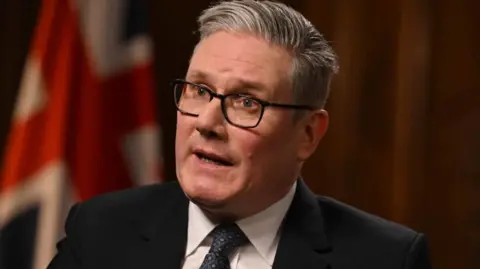
UK Prime Minister Starmer Signals Shift Towards Closer EU Alignment

Latest from X
UK Prime Minister Starmer Signals Shift Towards Closer EU Alignment
London, January 4, 2026 – In a significant policy shift, UK Prime Minister Sir Keir Starmer has signaled a willingness to pursue closer alignment with the European Union, emphasizing that such a move would be in the "national interest." This development, articulated in recent statements, marks a departure from the post-Brexit stance of previous administrations and suggests a potential reshaping of Britain’s relationship with Brussels.
Speaking on BBC's "Sunday With Laura Kuenssberg," as reported by multiple outlets including the BBC and The Guardian, Starmer expressed openness to deepening ties with the EU single market. He explicitly rejected a return to the customs union or the reintroduction of freedom of movement, but left the door ajar for enhanced cooperation on trade and regulatory frameworks. "If alignment with the EU single market serves our national interest, we are prepared to pursue it," Starmer stated, highlighting a pragmatic approach to post-Brexit relations.
This announcement comes amid ongoing discussions about the economic challenges facing the UK since its departure from the EU in 2020. Starmer’s comments are the clearest indication yet that the Labour government is seeking to rebuild bridges with Europe in a broader range of areas, including trade, border checks, and possibly security cooperation. The Guardian notes that the Prime Minister’s focus appears to be on reducing friction in trade while maintaining sovereignty over key policy areas.
However, the proposal has not been without controversy. As reported by the Daily Mail, Starmer’s stance has sparked internal dissent within the Labour Party, with some MPs and party figures expressing concern over a perceived reversal of Brexit principles. Additionally, Health Secretary Wes Streeting’s recent call for a "deeper trading relationship with the EU" has further fueled debates, with critics accusing the government of undermining the 2016 referendum result. Despite these tensions, Starmer has maintained that any alignment would be carefully calibrated to avoid full reintegration into EU structures.
Background: Post-Brexit Challenges and Opportunities
The UK’s relationship with the EU has remained a contentious issue since the Brexit referendum, which saw 51.9% of voters opt to leave the bloc. The subsequent years have been marked by complex negotiations, trade disruptions, and economic uncertainty, particularly in sectors reliant on seamless cross-border operations. The 2020 Trade and Cooperation Agreement provided a framework for UK-EU relations but left many areas unresolved, including regulatory alignment and border processes.
Starmer’s Labour government, which came to power in 2024, has consistently emphasized economic recovery and stability as core priorities. Closer alignment with the EU single market could potentially ease trade barriers and boost business confidence, but it risks reigniting political divisions over Britain’s independence from European governance. Analysts suggest that Starmer is walking a fine line, attempting to balance economic pragmatism with the sensitivities of a post-Brexit electorate.
Public and Political Sentiment
The announcement has also stirred reactions on social media platforms, with posts on X reflecting a polarized public response. Some users, including updates shared by verified accounts like the Daily Mail, have framed Starmer’s comments as a move to "rip up Brexit," highlighting concerns over sovereignty and immigration controls. These sentiments underscore the challenges Starmer faces in navigating domestic opinion while pursuing international cooperation.
Outlook: A New Chapter in UK-EU Relations?
As discussions unfold, the specifics of any proposed alignment remain unclear. Starmer has stressed that any agreements would be tailored to benefit the UK, with a focus on economic gains rather than political integration. Upcoming talks with EU leaders will likely test the feasibility of this approach, as Brussels has historically insisted on adherence to certain standards for market access.
For now, Starmer’s overture represents a pivotal moment in the UK’s geopolitical strategy. Whether this shift will lead to tangible improvements in trade and diplomacy, or further domestic friction, remains to be seen. As the government charts this new course, the eyes of both the UK and Europe will be watching closely.
Track this story live
Live World Map
Monitor global events in real time with a live activity map and hotspot summaries.
Markets
Connect live events to Catalyst market signals across crypto, commodities, indices, and forex.
Geopolitical Risk
Live geopolitical risk index tracking conflict zones, sanctions, and global threat levels.
Original Sources
- •
- •
- •
Editorial process: This article was synthesized from the original sources cited above using The World Now's AI editorial system, with byline accountability from our editorial team. We grade every story for source grounding, factual coherence, and on-topic match before publication. Read more about our editorial standards and contributors. Spot something inaccurate? Let us know.
Last updated: January 26, 2026






