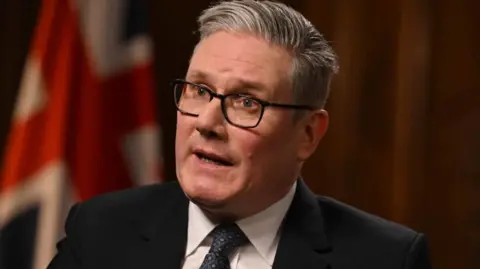
UK Prime Minister Starmer Signals Shift Toward Closer EU Alignment

Latest from X
UK Prime Minister Starmer Signals Shift Toward Closer EU Alignment
London, January 4, 2026 – In a significant shift in post-Brexit policy, UK Prime Minister Keir Starmer has signaled a readiness to pursue closer alignment with the European Union, describing such a move as being "in the national interest." This development, articulated in recent statements, marks the clearest indication yet of the Labour government's intent to deepen ties with Brussels across a range of areas, potentially reshaping the UK's geopolitical stance just years after its exit from the EU.
Starmer's comments, reported by the BBC, suggest a pragmatic approach to mending and strengthening relations with Europe. While specifics remain under discussion, the Prime Minister has emphasized that closer cooperation could benefit the UK economically and politically. According to The Guardian, Starmer has expressed a preference for aligning more closely with the EU's single market over a customs union, indicating a focus on reducing trade barriers and harmonizing regulations while maintaining certain sovereign controls. This nuanced position aims to balance economic advantages with the political sensitivities surrounding Brexit.
Details of the Proposed Alignment
The Prime Minister's vision for closer EU ties includes revisiting rules governing border checks and exploring deeper cooperation in trade and security. This approach comes as the UK seeks to address lingering economic challenges post-Brexit, including supply chain disruptions and reduced market access. Starmer has been clear, however, that any alignment would not mean a full return to pre-Brexit arrangements, such as free movement of people, a point of contention for many Brexit supporters.
As reported by the BBC, Starmer stated, "We must look at what serves our national interest, and that includes working more closely with our European partners." This statement reflects a broader strategy to reposition the UK as a collaborative player on the European stage, even as it navigates domestic political divisions over the Brexit legacy.
Background: Post-Brexit Challenges and Labour's Approach
Since the UK officially left the EU on January 31, 2020, and following the end of the transition period on December 31, 2020, the country has grappled with the economic and political fallout of Brexit. Trade frictions, particularly with the EU—its largest trading partner—have contributed to inflation and slowed growth. The Northern Ireland Protocol, part of the Brexit agreement, has also been a persistent source of tension, with ongoing disputes over border checks between Northern Ireland and the rest of the UK.
Under Starmer's leadership, the Labour government, which came to power in 2024, has sought to reset relations with the EU. Unlike the previous Conservative administrations that often prioritized divergence from EU rules, Starmer's approach appears to focus on pragmatic cooperation. This shift is seen as an attempt to stabilize the economy and strengthen the UK's global standing amid other geopolitical pressures, including tensions with Russia and economic competition with China.
Domestic and International Reactions
Starmer's comments have sparked a mix of reactions within the UK. Supporters argue that closer EU alignment could unlock economic benefits and improve diplomatic relations at a time of global uncertainty. Critics, particularly hardline Brexit advocates, fear a dilution of the UK's sovereignty and a betrayal of the 2016 referendum result. Posts on X from various users reflect this divide, with some expressing skepticism about the government's intentions and others viewing it as a necessary step toward economic recovery.
Internationally, EU leaders have cautiously welcomed the prospect of closer cooperation. While no formal agreements have been announced, Starmer's overtures could pave the way for negotiations on trade, security, and climate initiatives, areas where both sides have expressed mutual interest.
Outlook: A Delicate Balancing Act
As Starmer's government moves forward with this policy shift, it faces the challenge of balancing domestic political pressures with the potential benefits of EU alignment. Any formal agreements will likely require careful negotiation to avoid alienating key voter bases, particularly in Brexit-supporting regions. Additionally, the government must address concerns about sovereignty and ensure that closer ties do not compromise the UK's ability to forge independent trade deals globally.
For now, Starmer's statements signal a new chapter in UK-EU relations, one that could redefine the country's geopolitical strategy in the coming years. As discussions progress, the world will be watching to see how this alignment unfolds and whether it can deliver on the promise of serving the "national interest."
Track this story live
Live World Map
Monitor global events in real time with a live activity map and hotspot summaries.
Markets
Connect live events to Catalyst market signals across crypto, commodities, indices, and forex.
Geopolitical Risk
Live geopolitical risk index tracking conflict zones, sanctions, and global threat levels.
Original Sources
- •
- •
Editorial process: This article was synthesized from the original sources cited above using The World Now's AI editorial system, with byline accountability from our editorial team. We grade every story for source grounding, factual coherence, and on-topic match before publication. Read more about our editorial standards and contributors. Spot something inaccurate? Let us know.
Last updated: March 7, 2026






