
Uganda Opposition Leader Alleges Government Plot to Block Internet During 2026 Elections Amid Rising Tensions
KAMPALA, Uganda — As Uganda gears up for its 2026 general elections, main opposition candidate Bobi Wine has accused the government of planning to impose an internet blackout to disrupt his supporters' mobilization efforts, reigniting fears of civil unrest and echoing tactics used in past polls.
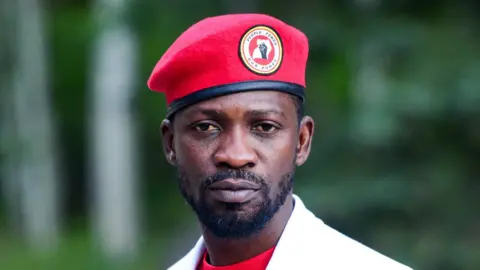
The claim, voiced on January 5, 2026, comes from Robert Kyagulanyi, popularly known as Bobi Wine, the former pop star and leader of the National Unity Platform (NUP). Wine warned that such a move would prevent real-time coordination among his base, potentially tilting the scales in favor of President Yoweri Museveni's long-ruling National Resistance Movement (NRM). The allegation has heightened political friction in the East African nation, where digital tools have become central to opposition campaigns.
"This is a deliberate strategy to silence the people's voice," Wine stated in a public address, according to reports circulating on social media platforms. He urged supporters to prepare alternative communication methods, framing the purported shutdown as an assault on democratic freedoms. The government's communications ministry has not yet responded to the claims, but officials have in the past justified internet restrictions as necessary for national security during periods of instability.
Historical Context of Internet Shutdowns and Political Repression
Uganda has a documented history of internet disruptions during electoral periods, which have often coincided with opposition activities and sparked widespread protests. In the lead-up to the 2021 presidential election, authorities throttled internet access and imposed a near-total blackout for nearly six days following Wine's arrest on January 18, 2021. The shutdown, which affected mobile data and social media, was criticized by human rights groups like Amnesty International and Access Now as a tool to suppress information flow and protest coordination.
That election saw Museveni secure a sixth term with 59% of the vote, amid allegations of fraud and violence that left dozens dead. Wine, who came second with 35%, rejected the results and called for mass demonstrations, which security forces quelled harshly. The BBC has detailed Wine's ongoing challenges, portraying him as "hounded and harassed," with numerous arrests since entering politics in 2017. These include a high-profile 2018 incident where he was shot in the leg during by-elections and a 2021 assault by security personnel captured on video.
Wine's rise from musician to politician has galvanized Uganda's youth, who make up over 75% of the population under 30. His campaigns leverage music, social media, and grassroots rallies, making internet access critical. The 2026 polls, scheduled for early February, pit him again against Museveni, 80, who has held power since 1986 through a mix of military control, constitutional changes, and crackdowns on dissent.
Broader Climate of Civil Unrest Risks
The internet block claim emerges against a backdrop of escalating tensions. Recent weeks have seen sporadic protests in Kampala and other urban centers over economic hardships, including soaring inflation and youth unemployment, exacerbated by global factors like the Russia-Ukraine war's impact on fuel prices. Security forces have dispersed several gatherings with tear gas, arresting dozens, according to local rights monitors.
Opposition figures, including those from the NUP, report intensified surveillance, arbitrary detentions, and restrictions on campaign travel. In December 2025, Wine's convoy was blocked from entering eastern Uganda, prompting accusations of state-orchestrated sabotage. Analysts note that Museveni's government has invested heavily in cybersecurity laws, such as the 2022 Computer Misuse Act amendments, which critics say enable broad internet controls under vague "public order" pretexts.
International observers, including the European Union and United States, have called for unfettered access to information ahead of the vote. The African Union has deployed a pre-election assessment team, emphasizing the need for transparent digital infrastructure. NetBlocks, a UK-based internet observatory, has flagged Uganda as one of Africa's most frequent shutdown perpetrators, with over 20 major incidents since 2016.
Implications for the Election and Stability
If realized, an internet blackout could severely hamper voter turnout monitoring, live-streamed rallies, and crowdfunding for campaigns—tactics that propelled Wine's 2021 bid. It might also fuel unrest, as seen in 2021 when blackouts preceded riots that caused at least 54 deaths, per Human Rights Watch.
Uganda's economy, reliant on agriculture and remittances, could suffer further from disrupted e-commerce and banking apps. Regional neighbors like Kenya and Tanzania, which faced their own shutdowns in recent years, offer cautionary tales of prolonged instability.
As the election nears, stakeholders urge dialogue. Wine has vowed peaceful resistance, but the stakes remain high in a country where power transitions have historically been violent. The Electoral Commission insists preparations are on track, promising technological safeguards like biometric voter verification.
With less than a month until voting, the internet claim underscores Uganda's fragile democratic space. Whether it materializes could define not just the election's fairness, but the nation's path toward stability or deeper division.
(Word count: 682)