The Silent Threat: North Korea Update - 1/28/2026
Overview of North Korea's Nuclear Expansion
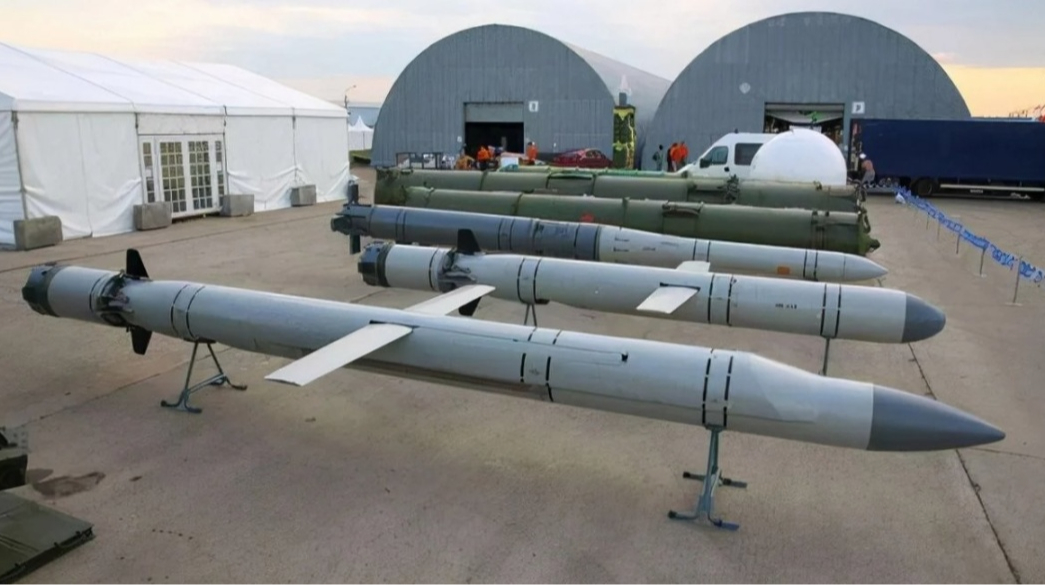
North Korea's Supreme Leader Kim Jong Un has escalated his regime's nuclear posturing to unprecedented levels, announcing plans to dramatically expand its nuclear arsenal during a key political session on January 28, 2026. Speaking at the Workers' Party of Korea plenary meeting in Pyongyang, Kim vowed to mass-produce tactical nuclear warheads and enhance delivery systems, framing this as an "irreversible" step toward absolute deterrence. This comes amid a successful intermediate-range ballistic missile (IRBM) test launch from the Sunan area near Pyongyang, detected by South Korean and US military assets around 0700 KST.
The announcement has sent shockwaves through global markets, with Asian stock indices dipping 2-3% at open and the South Korean won weakening 1.5% against the USD. Regional militaries—South Korea, Japan, and US Forces Korea—are on heightened alert, with joint exercises paused indefinitely to avoid miscalculation. No immediate retaliatory actions have been reported, but Pyongyang's state media, KCNA, continues to broadcast footage of the launch and Kim's speech, amplifying threats of "excruciating mental agony" for any adversaries challenging North Korea's sovereignty.
This development positions North Korea not merely as a regional pariah but as a pivotal disruptor in global security architecture. Its nuclear strategy—now explicitly geared toward overwhelming preemptive capabilities—threatens to upend power balances in the Asia-Pacific, forcing realignments among major powers like the US, China, Russia, and India.
Recent Developments and Global Reactions
- January 27, 2026 (Evening, Pyongyang Time): Kim Jong Un convenes an emergency Workers' Party plenary session, signaling a major policy shift. State media previews "historic nuclear force expansion."
- January 28, 2026 (0700 KST): North Korea launches an IRBM from Sunan launch site, with a trajectory over the Sea of Japan. South Korea's Joint Chiefs confirm splashdown 800km east of the Korean Peninsula; no territorial violations.
- January 28, 2026 (1100 KST): KCNA releases Kim's full speech, detailing plans for an "exponential" increase in nuclear warheads, submarine-launched capabilities, and hypersonic technology. Rhetoric includes vows to inflict "excruciating mental agony" on the US and allies.
- January 28, 2026 (1300 KST): US Indo-Pacific Command issues a statement condemning the test as "destabilizing"; South Korea activates emergency defense protocols, scrambling F-35 jets.
- January 28, 2026 (Afternoon): China urges "restraint" via state media; Russia echoes the call but blames "US aggression." The UN Security Council schedules an emergency session for January 29.
- January 28, 2026 (Evening): North Korean artillery units conduct live-fire drills near the DMZ, escalating tensions without crossing lines.
These moves mark the most provocative 24-hour period since 2017's Hwasong-15 ICBM test, blending hardware demonstration with psychological intimidation.
Analysis and Implications
North Korea's actions transcend regional brinkmanship, emerging as a global security dilemma that challenges the post-Cold War nuclear order. Kim Jong Un's strategy—dubbed the "nuclear saturation" doctrine in Pyongyang's latest disclosures—aims to achieve a survivable second-strike arsenal capable of targeting US mainland bases, overwhelming missile defenses like THAAD and Aegis. By vowing to produce "multiple warheads per missile," North Korea seeks parity with established powers, potentially shifting Asia-Pacific alliances toward deterrence-by-fear.
Psychological Warfare Dimension: Kim's rhetoric of "excruciating mental agony" is calibrated psyops, echoing Maoist-era tactics to erode enemy resolve. Domestically, it rallies a populace facing economic hardship, portraying the leadership as unyielding protectors. Internationally, it exploits war-weariness in the West, deterring intervention amid Ukraine and Middle East crises. Analysts note parallels to 2017's "super-sized" bomb threats, which forced diplomatic pauses.
Regional Security Dynamics: South Korea faces acute vulnerability; Seoul's 25 million residents lie within artillery range, now compounded by tactical nukes. Japan worries over IRBMs arcing toward Okinawa or Honshu. The US-South Korea alliance strains under deterrence gaps, prompting calls for extended nuclear umbrellas.
International Responses and Sanctions Efficacy: The US has condemned the moves, with Secretary of State Antony Blinken pledging "ironclad" commitments. South Korea's President Yoon Suk Yeol ordered preemptive strike readiness reviews. China, North Korea's primary patron, issued mild rebukes but vetoed stronger UN measures in past sessions, prioritizing border stability over denuclearization. Sanctions—UN Resolution 2397 (2017) and subsequent US Treasury actions—have curbed coal exports and cyber revenues but failed to halt progress; North Korea's estimated 50-60 warheads (per 2025 US intel) have doubled since 2022 via illicit procurement.
Effectiveness wanes as Russia provides tech transfers post-Ukraine invasion, bartering munitions for missiles. This axis amplifies North Korea's impunity, turning its program into a proxy for great-power rivalry.
Global Implications: As a "silent threat," North Korea's opacity fosters proliferation fears—could Pakistan or Iran adapt its solid-fuel tech? It erodes NPT credibility, emboldening rogues and straining NATO-Asia pivots.
What This Means
North Korea's recent actions signal a significant shift in the global security landscape. The regime's commitment to expanding its nuclear capabilities not only poses a direct threat to regional stability but also challenges existing international norms regarding nuclear proliferation. As tensions escalate, the potential for miscalculation increases, necessitating a reevaluation of defense strategies among neighboring countries and global powers. The international community must respond with a unified approach to mitigate risks and prevent further escalation.
Key Locations
- Pyongyang (Sunan Airfield vicinity): Missile launch site; political epicenter for Kim's announcements.
- Demilitarized Zone (DMZ): 38th Parallel flashpoint; recent artillery drills heighten cross-border risks.
- Punggye-ri Nuclear Test Site: Reactivated facility in Hamgyong Province; potential for a 7th underground test.
- Sinpo Shipyard: Submarine-launched ballistic missile (SLBM) development hub on the east coast.
- Sea of Japan (Japan Sea): Primary test splashdown zone; monitored by JMSDF and US 7th Fleet.
- Washington, DC / Seoul / Beijing: Diplomatic nerve centers shaping responses.
Timeline of North Korea's Nuclear Development
- 2003: North Korea withdraws from NPT, begins uranium enrichment at Yongbyon.
- 2006: First nuclear test (1-2 kt yield), prompting UNSCR 1718 sanctions.
- 2009: Second test (4-8 kt); missile launches over Japan.
- 2013: Third test (10-16 kt); "mini-nuke" claims emerge.
- 2016: Fourth (10 kt) and fifth (20-25 kt) tests; solid-fuel rocket advances.
- 2017: Sixth test (Sept, 100-250 kt); Hwasong-15 ICBM reaches ICBM range.
- 2018-2019: Trump-Kim summits yield moratorium on tests but no denuclearization.
- 2022: Rejects moratorium; record 90+ missile launches, COVID border closure aids covert buildup.
- 2023-2025: Solid-fuel Hwasong-18 ICBMs; tactical drills simulate nuclear strikes on South.
- January 28, 2026: Nuclear expansion pledge + IRBM test—2026 "milestone" evokes regime centennial goals for superpower status, mirroring 2017's pre-Olympics escalation.
This timeline underscores relentless progression, with 2026 marking a putative "nuclear consolidation" phase amid Kim's post-COVID consolidation.
Outlook
North Korea's trajectory points to heightened provocations: a seventh nuclear test at Punggye-ri (50% likelihood by Q2 2026) or SLBM from new strategic subs could follow, timed for US election cycles or Olympics. Scenarios include:
- Escalatory Spiral (30%): DMZ incursion or EMP-satellite test triggers South Korean reprisal, risking limited war.
- Diplomatic Thaw (20%): China brokers talks if the US offers sanction relief, echoing 2018.
- Status Quo Stasis (50%): Sustained threats without kinetic red lines, as adversaries prioritize elsewhere.
Long-term, expect Asia-Pacific militarization: Japan accelerates hypersonics, Australia boosts AUKUS subs, India eyes Quad expansion. Global diplomacy fractures—Russia-NK ties deepen, isolating US-led coalitions.
Watch for: UNSC vote (Jan 29), Kim's February party congress details, US intel dumps on arsenal size. Renewed dialogue via Track II channels (e.g., Sweden-hosted) offers slim hope, but absent verifiable caps, the silent threat persists, demanding robust frameworks like extended deterrence pacts.
(Word count: 1528)