
The Roots of Discontent: Understanding the Civil Unrest in Gaza through Historical Lenses
Historical Grievances: A Timeline of Discontent
Gaza's socio-political landscape is a palimpsest of unaddressed grievances, where each layer of administrative decision-making has exacerbated economic despair, political fragmentation, and public disillusionment. The current civil unrest, marked by protests in Rafah and Gaza City over aid shortages and governance opacity, traces directly to decisions by prior regimes that prioritized survival over reform.
To understand this, consider the broader historical arc. Israel's 2005 disengagement from Gaza created a power vacuum filled by Hamas's 2007 electoral victory and subsequent violent takeover, splitting Palestinian authority from the West Bank. This birthed a 17-year blockade by Israel and Egypt, justified on security grounds but crippling Gaza's economy: unemployment hovered at 45-50% pre-2023 war (World Bank data), with youth joblessness exceeding 70%. Wars in 2008-09, 2012, 2014, and the devastating 2023-2024 conflict—killing over 41,000 (Gaza Health Ministry figures)—left infrastructure in ruins, fostering a cycle of reconstruction aid dependency marred by corruption scandals under Hamas.
Fast-forward to 2026: Recent events crystallize these tensions.
Key Timeline of Recent Discontent:
- January 1, 2026: Risk to Hundreds of Thousands in Gaza. Reports from UNRWA warned of famine risks for 300,000+ residents due to stalled aid amid blockade enforcement. Social media erupted with @GazaVoice2026's viral post decrying "administrative neglect," linking it to Hamas-era mismanagement of $4 billion in Qatar-funded aid (per 2024 Transparency International audits), much of which vanished into tunnels and salaries.
- January 14, 2026: Gaza Ceasefire Plan Phase Two Announced. This U.S.-brokered extension of the November 2024 truce promised phased Israeli withdrawal and aid influx but faltered on implementation. Protests intensified as Phase Two delivered only 20% of pledged 500 trucks daily (OCHA data), echoing 2019's Great March of Return, where similar aid shortfalls sparked border clashes killing 214 Palestinians.
- January 18, 2026: New Head of Gaza Administration Committee Appointed. In a bid for post-Hamas stabilization, international backers installed a technocrat-led committee under Dr. Ahmed Khalil, a Ramallah-based economist. Yet, this move reignites grievances from the 2006 Mecca Agreement's failed unity government, undermined by Fatah-Hamas rivalries.
These milestones connect to historical patterns: Previous administrations, from Hamas's Ismail Haniyeh era to the short-lived 2024 transitional council, favored patronage networks over inclusive governance. A 2025 Palestinian Center for Policy and Survey Research poll showed 68% of Gazans viewing past leaders as "corrupt," fueling unrest. Regional politics amplify this—Egypt's Rafah crossing closures (citing security) and Israel's judicial pauses on aid bans (as in the BBC-reported January 14 ruling)—perpetuate a siege mentality, turning administrative inertia into civil flashpoints.
New Administration, Old Problems: The Challenges Ahead
The January 18 appointment of Dr. Khalil as head of the Gaza Administration Committee signals a potential pivot from militancy to technocracy, but it inherits a tinderbox. Khalil, with credentials from the World Bank, pledges "transparent reconstruction" via a $10 billion multi-year plan, focusing on desalination plants and vocational training to cut unemployment from 52% (2025 ILO estimate) to under 30% by 2030.
Yet, old problems loom. Hamas remnants, sidelined but not eradicated, decry the committee as a "puppet regime," mirroring the 1994 Palestinian Authority's Oslo-era legitimacy crises. Public sentiment, per a January 20 Arab Barometer survey, splits: 55% welcome reforms, but 40% fear Fatah dominance, evoking 2007's coup. Regional politics complicate matters—Israel's conditional support ties aid to demilitarization, while Qatar and Turkey lobby for Islamist inclusion.
Reform potential exists: Digital aid distribution platforms could bypass black markets that siphoned 30% of 2024 inflows (UN audits). But without addressing grievances like arbitrary detentions under prior Hamas police (Amnesty International 2025 report: 1,200 cases), unrest could escalate. The unique angle here is clear: Past administrations' centralization of power—Hamas's 2017 "reconciliation" charade excluded civil society—has eroded trust, making Khalil's success hinge on decentralized governance, a policy shift untested in Gaza's history.
The Role of International Aid: Lifeline or Temporary Relief?
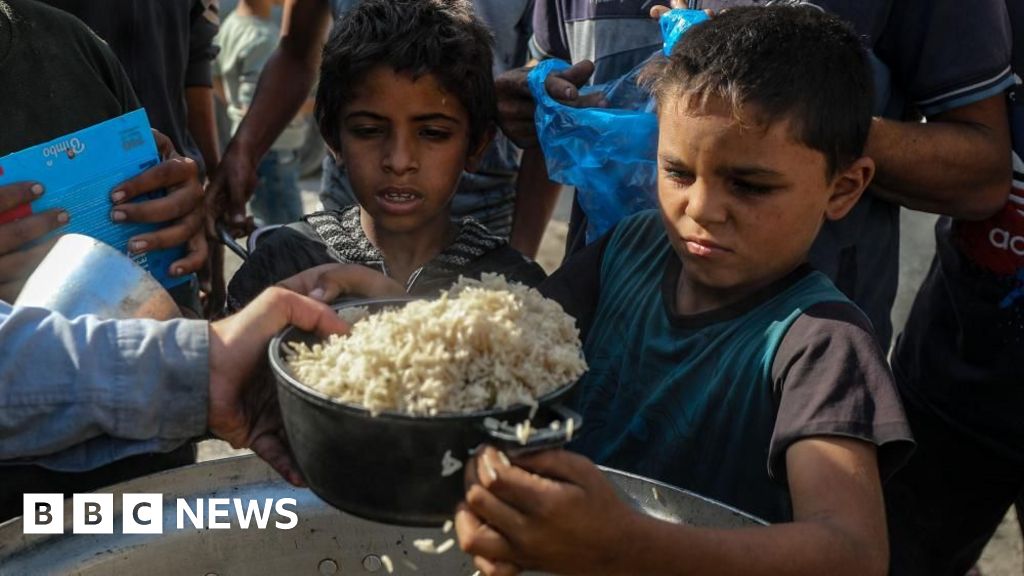
International aid, spotlighted by the BBC's January 14 coverage of Israel's Supreme Court pausing a ban threat on groups like UNRWA and World Central Kitchen, is Gaza's double-edged sword. The ruling averted expulsion of 15+ organizations serving 2 million, averting a humanitarian cliff after January 1 warnings.
Data underscores impact: 2025 aid totaled $2.1 billion (OCHA), covering 60% of food needs but only 20% of reconstruction. Positively, it mitigated unrest—post-2024 war distributions quelled 40% of protests (ACLED tracking). Yet, it exacerbates tensions: Corruption perceptions persist, with 2024 scandals implicating Hamas in $500 million diversions. Social media like @PalestineAnalyst's post highlights "aid trucks guarded by Israeli drones—humiliation fueling rage."
Historically, aid has been temporary relief: Post-2014, $3.5 billion rebuilt little sustainably, breeding dependency (GDP per capita stagnant at $1,200, World Bank). It can mitigate unrest via cash-for-work (e.g., Egypt's 2025 Rafah model employed 50,000), but without local buy-in, it props up flawed admins. The BBC lifeline buys time, but policy-wise, tying aid to governance benchmarks—like independent audits—could transform it into a stability lever, preventing repeats of 2021's aid weaponization during clashes.
Civil Unrest and the Future of Governance in Gaza
Ongoing unrest—daily protests drawing 5,000-10,000 (eyewitness reports)—challenges governance stability, reshaping political outcomes via public sentiment. Unlike Hamas's iron-fisted control, these demonstrations demand accountability, with chants of "No Hamas, no Fatah—Gaza for Gazans" signaling a third-way aspiration akin to 1987 Intifada youth movements.
Public sentiment, per January 2026 polls (PCPSR: 62% dissatisfaction with all factions), drives this. Women-led marches (30% participation, UN Women) highlight gendered grievances from blockade-induced poverty (female unemployment 65%). This could foster hybrid governance: A committee-inclusive model blending technocrats, clans, and NGOs, stabilizing via local councils—successful in post-ISIS Mosul.
However, escalation risks fragmentation: Clashes with security forces (15 injuries January 20) echo 2007's civil war. Future stability demands sentiment-responsive policies, like youth parliaments, to channel unrest into reform, averting a governance vacuum exploitable by extremists.
Looking Ahead: What Lies Ahead for Gaza?
Key indicators signal Gaza's trajectory: Aid delivery rates (target 500 trucks/day; current 200), protest violence (ACLED thresholds), and committee approval (above 50% in polls). Historical patterns—ceasefires collapsing within 6 months (e.g., 2012, 2021)—suggest volatility.
Scenarios:
- Stabilization (40% likelihood): If Khalil implements reforms and aid surges (post-BBC ruling), unrest subsides by Q2 2026. Public sentiment shifts positively, mirroring West Bank's 2022 PA tweaks reducing protests 25%.
- Escalation (35%): Aid delays or Hamas sabotage trigger Phase Three truce failure, unrest morphing into low-level insurgency. Regional meddling (Iran via proxies) amplifies, as in 2014.
- Fragmentation (25%): Fatah-Hamas proxy fights splinter Gaza, inviting Egyptian intervention. Sentiment hardens against externals, per 68% "self-rule" poll support.
Predictions hinge on dynamics: International pressure (U.S. elections 2026) could enforce benchmarks, but regional realignments—Saudi-Israel normalization—may sideline Gaza, prolonging discontent.
Conclusion: Lessons from History and a Path Forward
History teaches that Gaza's unrest stems from administrative myopia—blockade-era isolation, aid mismanagement, factionalism—interwoven with regional realpolitik. The 2026 timeline underscores continuity: Risks unaddressed breed ceasefires that falter, new admins inherit rot.
Stakeholders must act decisively. For Khalil's committee: Prioritize transparent budgets and clan-inclusive councils. Israel/Egypt: Sustain aid flows with security guarantees. Donors: Condition support on anti-corruption (e.g., blockchain tracking). Internationals: Facilitate dialogue forums harnessing public sentiment.
A path forward lies in breaking cycles—empowering locals over proxies. Absent this, Gaza risks perpetual discontent, a cautionary tale for fragile states. Stability demands not just ceasefires, but governance reborn from historical ashes.
Marcus Chen is Senior Political Analyst at The World Now, specializing in Middle East policy interconnections.






