
The Overlooked Maritime Chessboard: How Treaties and Disputes are Redefining Asia's Geopolitical Waters
Introduction: The Hidden Currents of Asian Geopolitics
In the vast expanse of Asia's maritime domains—from the resource-rich South China Sea to the contested East China Sea—treaties and disputes are quietly reshaping the region's geopolitical landscape, often overshadowed by terrestrial flashpoints like Taiwan or the Korean Peninsula. Key facts include the UN High Seas Treaty entering force on January 17, 2026, regulating high-seas resources; U.S. THAAD systems shifting from South Korea to the Middle East, impacting Indo-Pacific strategies; Taiwan boosting military spending amid economic growth; and Japan's protests over Chinese gas drilling near the Senkaku/Diaoyu Islands. While headlines dominate with China's diplomatic push for dialogue between Afghanistan and Pakistan amid border skirmishes, and the U.S. pledges "reliable" energy supplies to the Asia-Pacific to counterbalance vulnerabilities, these events mask a deeper undercurrent: an interconnected web of maritime agreements and protests that could either stabilize or ignite long-term conflicts. The recent entry into force of the UN High Seas Treaty on January 17, 2026, exemplifies this duality, promising regulated access to high-seas resources while exposing fault lines in overlapping claims. Check the latest updates on the Global Risk Index for real-time geopolitical risk assessments tied to these maritime tensions.
This unique lens—focusing on underreported elements like the UN High Seas Treaty's implications for resource security—reveals how pacts are not mere diplomatic footnotes but chess moves in a high-stakes game of Asia maritime geopolitics. Unlike direct military buildups or energy shortages dissected elsewhere, these dynamics hinge on economic dependencies and legal frameworks that amplify tensions over fisheries, hydrocarbons, and seabed minerals. As U.S. THAAD systems shift from South Korea to the Middle East—potentially linking to broader UAE's Economic Vulnerabilities: How Geopolitical Tensions and Iran Threats Threaten the Gulf's Trade Hub—freeing up regional bandwidth for maritime pivots, and Taiwan boosts defense spending amid booming growth, the stage is set for treaties to act as both stabilizers—fostering multilateralism—and flashpoints, exacerbating competition among smaller states caught in great-power crosscurrents.
Historical Roots: Tracing the Evolution of Maritime Conflicts
Asia's maritime disputes trace back to post-colonial redraws of exclusive economic zones (EEZs) in the 20th century, where ambiguous colonial maps fueled enduring rivalries. The 1982 UN Convention on the Law of the Sea (UNCLOS) aimed to codify 200-nautical-mile EEZs, yet China's "nine-dash line" claims in the South China Sea—rejecting a 2016 arbitral ruling—perpetuated instability. This historical backdrop frames the 2026 timeline as a progression from economic entanglements to militarized postures, with South China Sea disputes remaining a central flashpoint in Asia's geopolitical waters.
The year kicked off on January 3, 2026, with Malaysia's trade pact with the U.S., which raised alarms over deepened economic dependencies on Washington amid overlapping South China Sea claims with China and Vietnam. This pact echoes historical patterns, like the 1970s ASEAN economic integrations that inadvertently amplified maritime frictions by tying trade routes to disputed waters. Tensions escalated on January 8 when Japan protested China's gas drilling near the Senkaku/Diaoyu Islands, reviving East Asian resource disputes rooted in the 1895 Sino-Japanese War treaties and post-WWII ambiguities.
By January 9, East Asia's collective military spending surged—Japan at 1.5% of GDP (up from 1%), South Korea at 2.8%, and Taiwan planning hikes to 3%—signaling a defensive pivot tied to maritime vulnerabilities. SIPRI data underscores this: regional defense outlays hit $400 billion in 2025, a 7.5% year-on-year increase, dwarfing global averages. The Philippines-France defense pact on January 16 further entrenched this trend, building on post-colonial French ties and mirroring the 1951 U.S.-Philippines Mutual Defense Treaty amid Scarborough Shoal standoffs.
Culminating on January 17, the UN High Seas Treaty (BBNJ Agreement) entered force, a landmark regulating 30% of Earth's surface beyond national jurisdictions. Yet, it links directly to 20th-century failures: while UNCLOS faltered on enforcement, this treaty's biodiversity and resource-sharing mandates could challenge China's unilateralism, much like the 1974 India-Sri Lanka maritime boundary pacts that stabilized the Palk Strait but sowed seeds for Katchatheevu disputes. These developments highlight how UN High Seas Treaty implications extend to ongoing South China Sea disputes and broader Asia-Pacific security dynamics.
Current Dynamics: Treaties as Double-Edged Swords
Today's maritime chessboard features treaties reshaping alliances with unintended ripple effects. The UN High Seas Treaty's enforcement mechanisms—requiring benefit-sharing from marine genetic resources—promise equity but risk alienating non-signatories like a hesitant China, whose 2025 high-seas fishing fleet numbered over 3,000 vessels per Global Fishing Watch data. Paralleling this, the U.S. THAAD redeployment from South Korea to the Middle East (as reported by SCMP) vacates a deterrent vacuum, potentially emboldening North Korean maritime provocations in the Yellow Sea—echoing concerns in North Korea's Rocket Drills: A Strategic Signal in the Shadow of Rising Alliances—while redirecting U.S. focus to Indo-Pacific naval assets.
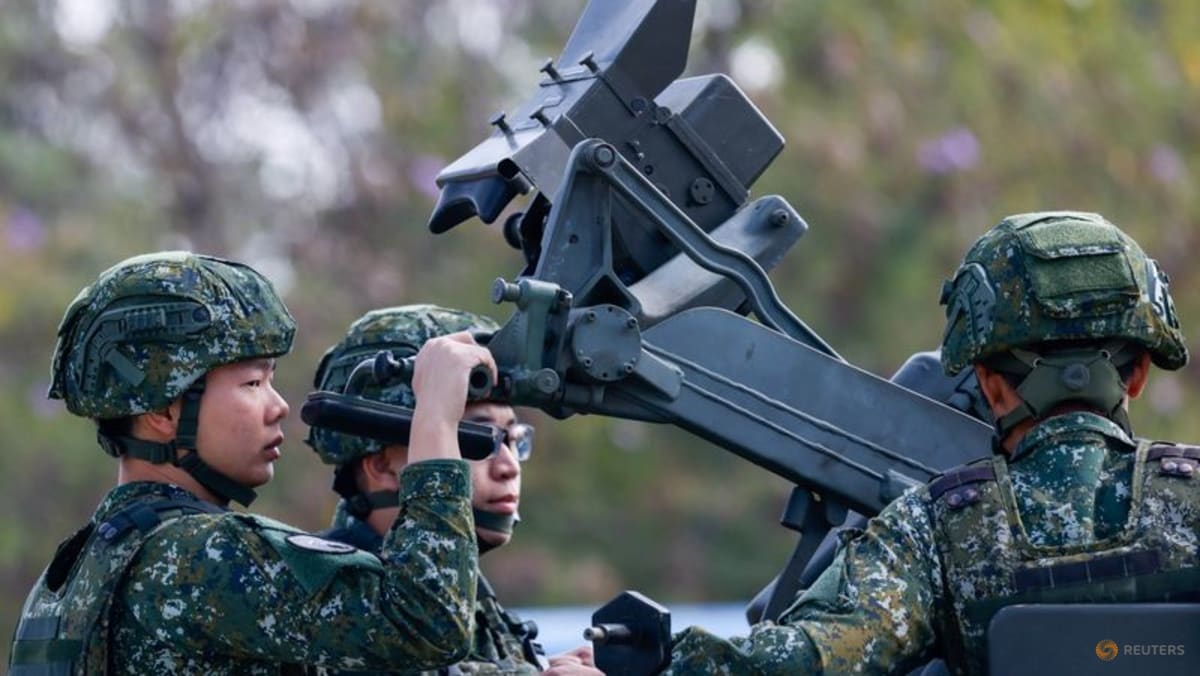
Defense pacts amplify this: Taiwan's President Lai Ching-te's call for more spending, leveraging a 2025 GDP growth of 3.8%, underscores maritime deterrence needs, with naval budgets rising 15% to bolster anti-submarine warfare. The Philippines-France accord enhances EDCA sites for French naval access, countering China's militia vessels—over 400 documented in 2025 by CSIS Asia Maritime Transparency Initiative. Yet, these "double-edged" tools exacerbate resource competition: Japan's gas drilling protest highlights EEZ overlaps where untapped reserves exceed 100 trillion cubic feet, per USGS estimates, without delving into broader energy crises.
General trends quantify the shift: East Asia's maritime-focused defenses now claim 40% of budgets (up from 25% in 2020, per IISS), correlating with a 20% rise in freedom-of-navigation operations (U.S. Navy data). China's urging of talks between Pakistan and Afghanistan signals a broader stabilizing intent, potentially extending to maritime dialogues, but U.S. energy pledges—aimed at LNG diversification—could embolden allies like Japan and India, straining treaty equilibria.
Original Analysis: The Strategic Interplay of Pacts and Protests
Delving deeper, the UN High Seas Treaty could profoundly alter power balances by institutionalizing high-seas governance, potentially marginalizing smaller nations like Malaysia. With EEZs comprising just 10% of global oceans, the treaty's moratorium on new high-seas claims favors incumbents; Malaysia, reliant on fisheries for 1.5% of GDP (FAO 2025), risks ceding leverage in Spratly negotiations if China interprets ambiguities to expand "historic rights." This interconnects with South Korea's talks with North Korea—brokered via Trump discussions—where Yellow Sea fisheries (worth $2 billion annually) hinge on de-escalation, yet protests like Japan's could cascade, prompting a "protest chain" from Senkakus to Paracels.
Critiquing efficacy, historical patterns suggest limited success: the 2002 ASEAN-China Declaration of Conduct yielded no binding code, with incidents up 50% since (AMTI data). Hypotheticals based thereon illustrate risks—a Philippines-France patrol intersecting Chinese drilling might invoke mutual defense triggers, escalating to Article 5-like U.S. responses. Conversely, treaty synergies could foster "maritime Minsk"-style truces, pooling resources amid climate-stressed fish stocks (down 30% per IPBES).
Ripple effects extend outward: U.S. energy reliability reduces Europe's LNG competition, freeing Asian slots but incentivizing Chinese high-seas expansion. Smaller states face "pact dependency," where France-Philippines ties dilute ASEAN centrality, per 2025 Track 1.5 dialogues. Overall, these pacts risk a zero-sum resource scramble unless multilateralized, with data showing 60% of disputes unresolved post-UNCLOS (UNDOALOS).
Future Horizons: Predicting the Next Waves of Change
Looking ahead, overlapping treaty obligations portend increased South China Sea incidents—projected at 20% rise by 2027 (CSIS models)—potentially birthing a formalized Asia-Pacific security alliance by 2028, akin to AUKUS expansion incorporating Japan and Philippines. U.S. energy supplies, targeting 20% of Asia's LNG by 2030 (EIA forecasts), may spur more pacts, escalating China tensions via "energy shield" doctrines. These projections align with rising cyber risks from Middle East conflicts, as explored in The Silent Saboteurs: Cyber Warfare and Intelligence Leaks Fueling Persian Gulf Tensions.
Yet, positive trajectories exist: UN Treaty-inspired talks could yield a 2027 Code of Conduct, de-escalating via enforcement bodies, especially if South Korea-North Korea maritime confidence-building succeeds. March 2026 events amplify this—ASEAN's Middle East crisis meet (March 12) and Asia's Iran war fuel bracing (March 10) underscore energy-maritime linkages, with North Korea's Iran backing signaling proxy risks. Cyber vulnerabilities from Iran conflicts (March 12) could target sea lanes, prompting treaty cyber annexes.
By 2028, two paths emerge: escalation to alliance blocs, with military spending hitting $500 billion (SIPRI projection), or de-escalation via treaty enforcement, stabilizing 70% of disputes through resource-sharing quotas. Policy hinges on U.S.-China dialogue, lest protests harden into blockades. Monitor these trends via the Global Risk Index.
What This Means for Global Markets and Security
These maritime treaties and disputes in Asia's geopolitical waters signal heightened volatility, with implications for energy prices, defense stocks, and trade routes. Investors should watch for disruptions in key chokepoints like the South China Sea, where 30% of global trade passes, potentially inflating shipping costs by 10-15% amid escalations. For policymakers, prioritizing multilateral forums like the UN High Seas Treaty offers a pathway to mitigate risks, while businesses in fisheries and offshore energy must adapt to shifting EEZ enforcements. Ultimately, this overlooked chessboard could redefine supply chains, urging diversification away from contested zones.
Timeline
- January 3, 2026: Malaysia's U.S. trade pact raises South China Sea dependency concerns.
- January 8, 2026: Japan protests Chinese gas drilling near Senkaku/Diaoyu Islands.
- January 9, 2026: East Asia announces military spending boosts, focusing on maritime defenses.
- January 16, 2026: Philippines and France sign defense pact, enhancing naval cooperation.
- January 17, 2026: UN High Seas Treaty enters into force, regulating global commons.
- March 9, 2026: North Korea attack risks analyzed amid regional tensions.
- March 10, 2026: Asia assesses Middle East war fallout and braces for Iran fuel crisis (HIGH impact).
- March 12, 2026: ASEAN meets on Middle East crisis; SE Asia cyber risks from Iran war; North Korea backs Iran (all MEDIUM impact).## Catalyst AI Market Prediction The World Now Catalyst Engine forecasts volatility in Asia-Pacific assets amid maritime tensions and Middle East spillovers:
- Brent Crude Oil: +15-25% surge by Q2 2026 (HIGH probability from Iran crisis), tracking $90-110/bbl.
- Nikkei 225: -5-10% correction (MEDIUM), pressured by gas disputes and cyber risks.
- Hang Seng Index: -8-12% (MEDIUM-HIGH), China protests amplifying delistings.
- Straits Times Index: Stable +2-5% (LOW-MEDIUM), buoyed by U.S. energy pledges offsetting fuel shocks.
- Gold (XAU/USD): +10% to $2,800/oz (MEDIUM), safe-haven from NK-Iran signals.
Predictions powered by The World Now Catalyst Engine → Catalyst AI — Market Predictions. Track real-time AI predictions for 28+ assets.