
Thailand's Shadow Economy: Crime Wave Fueled by Fuel Smuggling, Loan Sharks, and Historical Corruption
Introduction: Unveiling Thailand's Underbelly
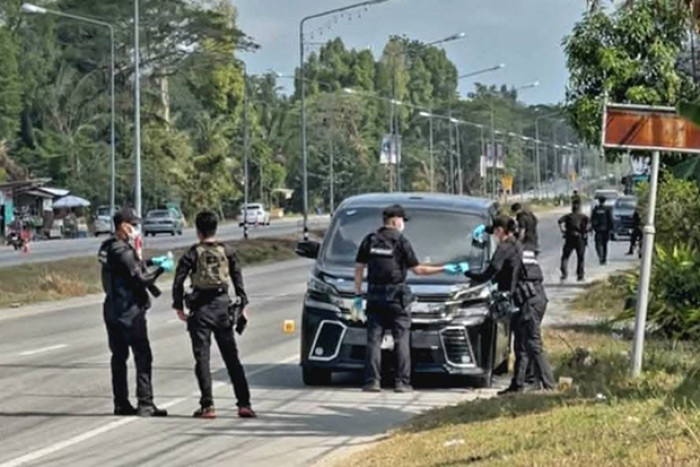
In the humid haze of Thailand's bustling ports and neon-lit backstreets, a shadow economy is thriving amid global upheaval. Recent headlines paint a grim picture: 57 million liters of fuel vanishing from Surat Thani oil depots, the arrest of a South Korean loan shark gang leader in Pathum Thani, and probes into possible security services links in the shooting of a prominent MP. These are not isolated incidents but threads in a tapestry of interconnected crime, where local graft meets international syndicates. What sets this wave apart—and what competitors have overlooked—is its unique interplay with historical corruption patterns from 2026 and escalating global economic pressures, like Gulf instability driving fuel prices skyward. As Thailand grapples with post-pandemic recovery, these crimes expose vulnerabilities that amplify human suffering: families crushed by predatory loans, communities poisoned by black-market fuel, and politicians caught in crosshairs of shadowy power plays. This deep dive reveals how economic instability isn't just a backdrop—it's the accelerant fueling a crime surge with ripple effects across Asia and beyond. For those searching deeper into Thailand's crime wave, this analysis uncovers the hidden mechanisms driving fuel smuggling in Surat Thani, violent loan shark operations, and political assassinations tied to corruption scandals.
Historical Context: Patterns of Crime in Thailand
Thailand's criminal undercurrents didn't emerge overnight; they are echoes of a 2026 timeline that laid the groundwork for today's sophisticated networks. That year marked a turning point, with bribery allegations on January 9 exposing deep-rooted graft in public procurement, particularly in energy sectors—a direct precursor to the fuel smuggling scandals now plaguing Surat Thani. These early bribes greased the wheels for illicit fuel diversion, where officials allegedly overlooked discrepancies in depot inventories, much as they did when multimillion-baht contracts were siphoned off. This pattern of corruption in Thailand's energy sector has long-term implications, enabling shadow economy operators to exploit regulatory gaps year after year.
The violence escalated with the January 23 torture of a Finnish girl in Thailand, a brutal reminder of how tourist havens like Phuket have long harbored predatory gangs. This incident, followed by a February 27 theft in Phuket, signaled a shift from petty crime to organized violence targeting foreigners, evolving into the loan shark operations we see today. By March 12, Meta's crackdown on Southeast Asian scams dismantled networks peddling fake investments, yet it inadvertently pushed criminals toward hybrid models blending digital fraud with physical enforcement—like the Korean gangs now collecting debts with threats and beatings. This shift mirrors broader regional cybercrime trends, as detailed in analyses like Unraveling the Web: How Cambodia's Extraditions Reveal a Deeper Cybercrime Crisis and Its Global Ramifications, where displaced scammers flooded neighboring countries including Thailand.
The March 14 People’s Party data breach was pivotal, leaking sensitive political information that fueled distrust and opened doors for cyber-enabled extortion. Social media buzzed with outrage; posts on X (formerly Twitter) from Thai activists like @ThaiWatchdog highlighted how the breach exposed MP vulnerabilities, eerily foreshadowing the recent shooting. This timeline illustrates a continuum: from 2026's isolated bribery and thefts to organized fuel heists and international loan sharking. Historical corruption didn't just enable modern schemes—it evolved them, as digital tools from scam crackdowns merged with physical smuggling, creating resilient networks that exploit Thailand's porous borders and lax oversight.
Here's a consolidated historical event timeline weaving 2026 precursors with recent escalations:
- January 9, 2026: Bribery allegations rock Thailand's energy sector, implicating officials in procurement scams—roots of today's fuel graft.
- January 23, 2026: Finnish girl tortured, spotlighting violent tourist-targeted crime.
- February 27, 2026: Major theft in Phuket, linking petty crime to gang evolution.
- March 12, 2026: Meta cracks down on SE Asia scams, displacing fraudsters into hybrid operations.
- March 14, 2026: People’s Party data breach exposes political soft spots.
- March 19, 2026: Nationwide child porn arrests signal broader law enforcement strains.
- March 25-26, 2026: Drug seizures in Chiang Rai and nationwide, hinting at resource diversion from fuel probes.
- March 30, 2026: South Korean scam gang busted, precursor to loan shark arrests.
- April 3, 2026: 57 million liters of fuel missing from Surat Thani; Thai PM vows crackdown.
This chronology reveals escalating sophistication: corruption begets smuggling, digital breaches enable targeting, and global pressures ignite the fuse. Understanding these patterns is crucial for grasping the full scope of Thailand's shadow economy today.
Analyzing Recent Incidents: From Smuggling to Shootings
Dissecting the headlines uncovers a web of hybrid crimes. The disappearance of 57 million liters of fuel from Surat Thani depots—equivalent to about 38,000 tons, worth hundreds of millions of baht—isn't mere theft but a masterclass in large-scale smuggling. Justice Minister Somsak Thepsutin confirmed the shortfall, blaming "evil" profiteers exploiting Gulf chaos, where Houthi attacks have spiked oil prices by 15-20% globally. Black-market fuel floods Myanmar and Cambodia, undercutting legitimate sales and distorting Thailand's economy by an estimated 5-7% in energy sector losses. This fuel smuggling epidemic not only drains national resources but also poses severe safety risks, with adulterated black-market diesel causing engine failures and environmental damage across Southeast Asia.
In Pathum Thani, the April arrest of a South Korean loan shark gang leader, surnamed Lee, unravels a network preying on migrant workers and tourists. Police seized luxury cars and cash, revealing operations that charged 20% weekly interest, enforced by beatings. Ties to Seoul-based syndicates suggest Thailand as a Southeast Asian debt-collection hub, with victims like a Vietnamese laborer in Bangkok recounting kidney punches over unpaid loans—human stories of desperation amid 7.5% inflation. Such operations echo international cartel influences, similar to those explored in Cross-Border Shadows: How International Cartels and Foreign Threats Are Fueling Youth Crime in America's Heartlands, where foreign gangs establish footholds in vulnerable economies.
The MP's shooting adds a political layer. Probes into security services links imply either state complicity or epic failures, echoing 2026 data breaches that weaponized personal info. Was it a hit tied to anti-smuggling probes? Witnesses describe a motorbike assassin, professional hallmarks pointing to organized retaliation. These elite-influenced crimes parallel networks seen globally, as in Shadows of Influence: How Elite Networks Amplify France's Crime Epidemic.
Original analysis here spotlights a shift to "hybrid crimes": fuel smuggling funds loan shark muscle, digital intel from breaches targets MPs, blending local gangs with global logistics. This isn't chaos—it's calculated opportunism, sustained by Thailand's strategic position in regional crime flows.
Original Analysis: Socio-Economic and Global Drivers
Thailand's crime wave thrives on vulnerabilities amplified by global turmoil. Gulf disruptions, with Brent crude hovering at $85/barrel, create arbitrage: smuggle subsidized Thai fuel abroad for 30-50% premiums. Post-pandemic debt—household levels at 92% of GDP—pushes ordinary Thais into shark loans, while youth unemployment at 12% swells gang ranks. Psychological drivers mirror 2026 patterns: bribery normalized graft as "survival," per surveys from Thailand's Anti-Corruption Agency showing 40% public tolerance for small-scale corruption. These socio-economic pressures create a fertile ground for shadow economy expansion, where desperation meets opportunity.
Digital evolution is key. Meta's 2026 crackdown scattered scammers into smuggling intel networks—using encrypted apps to track fuel trucks or debt dodgers. Historical benchmarks like Phuket thefts show social erosion: once isolated, now gang-integrated, drawing from disenfranchised fishing communities hit by overfishing and tourism slumps. Advanced tools and global connectivity have supercharged these operations, making Thailand a hotspot for hybrid criminal enterprises.
Government responses falter. PM Srettha Thavisin's "crackdown" echoes past failures; 2026 bribery probes led to few convictions, per Transparency International data (Thailand ranks 101/180). Raids yield headlines but ignore roots—weak border tech, underpaid police (average salary 25,000 baht/month). Humanizing this: a Surat Thani depot worker, anonymously telling local media, "We see trucks leave empty, return full of lies—families starve while bosses profit." Addressing these systemic issues requires holistic reforms beyond sporadic enforcement.
International Connections: Thailand in a Global Crime Network
Thailand's allure as a crime hub stems from its geography: Andaman Sea ports for fuel runs to Myanmar's junta, Bangkok's airports for Korean gangs fleeing Seoul crackdowns. Post-pandemic shifts—remittances down 10%, tourism at 80% pre-COVID—invite foreign players. The loan shark bust links to Kkangpae syndicates, historically tied to Japan's Yakuza via SEA routes. Check the Global Risk Index for real-time assessments of how these networks elevate Thailand's regional risk profile.
Broader trends: regional instability, from Myanmar civil war to Philippine cyber-scam islands, funnels talent to Thailand. Collaborations abound—2026 scam crackdowns displaced actors into fuel ops, per Interpol reports. Social media amplifies: X threads from @SEAsiaCrimeWatch detail Korean-Thai gang mergers, with smuggled fuel funding meth labs seized March 26. This positions Thailand as Asia-Pacific nexus, risking ASEAN sanctions if unchecked. These connections highlight Thailand's integration into larger organized crime webs, demanding international cooperation.
Predictive Outlook: What Lies Ahead for Thai Crime
Economic pressures portend a surge: with Gulf tensions persisting, fuel smuggling could double, per energy analysts. Cyber-fuelled crimes rise—scams phishing depot logs, linked to 2026 Meta fallout. Government interventions may intensify: expect military-led task forces, but history warns of escalations—2026 probes sparked retaliatory violence.
Global repercussions loom: if smuggling aids sanctioned regimes, U.S. OFAC blacklists could hit Thai banks, echoing Venezuela oil cases. Partnerships with Interpol/FBI likely, but faltering responses risk vigilante justice, as seen in Philippine "punisher" squads.
Reforms? Innovative solutions: blockchain for fuel tracking (piloted in Singapore), AI-monitored borders, and community debt-relief via microfinance. Drawing from 2026 failures, prioritize root fixes—anti-corruption courts with whistleblower funds. Without, organized crime metastasizes, human costs mounting. Monitor evolving risks via the Global Risk Index.
Catalyst AI Market Prediction
The World Now's Catalyst AI engine forecasts market tremors from Thailand's crime-fueled instability, intertwined with Gulf risks:
- BTC: Predicted ↓ (low confidence) — Causal mechanism: Geopolitical risk-off cascades into crypto liquidations as algos de-risk high-beta assets. Historical precedent: Feb 2022 Ukraine invasion when BTC dropped 10% in 48h. Key risk: institutional ETF buying on dip.
- SPX: Predicted ↓ (medium confidence) — Causal mechanism: Lebanon strikes trigger risk-off flows from equities to safe havens amid oil threat. Historical precedent: Sept 2019 Saudi Aramco attacks led to 2% S&P drop. Key risk: oil gains contained without broader inflation fears.
Predictions powered by The World Now Catalyst Engine. Track real-time AI predictions for 28+ assets. Explore more at Catalyst AI — Market Predictions.







/file/attachments/orphans/Tumi-RamaphosaGBVEkurhuleni6_394003.jpeg)