Terrorism in the United States: Shooting at White House Event Leaves President Trump Unharmed
A shooting at the White House Correspondents' Dinner has heightened concerns over terrorism in the United States, where a suspect fired at a Secret Service agent, but President Donald Trump and all officials remained safe, with the suspect now in custody.[5] This incident unfolded amid broader diplomatic tensions, including President Trump's decision to cancel his envoys' planned trip to Pakistan, casting doubt on US-Iran negotiations according to Pakistani officials,[1] and prompting the UK and US to coordinate tightened security ahead of King Charles' visit.[2] The event also draws parallels to the United States' history of political violence, from assassinations of presidents like Kennedy to attacks on figures such as Reagan and Trump.[3] Iran reportedly revised its negotiating position shortly after Trump dismissed talks as unproductive.[4]
The Recent Shooting Incident
The shooting at the White House Correspondents' Dinner occurred on Saturday night, disrupting an event attended by President Donald Trump and First Lady Melania Trump. A man armed with a shotgun opened fire on a Secret Service agent, prompting immediate action from security personnel.[5] Officials confirmed that the agent was struck in an area protected by gear and sustained no injuries.[5] President Trump and his wife were swiftly evacuated from the venue by Secret Service agents as the situation unfolded.[5] This breach at a high-profile gathering underscores vulnerabilities at official events in Washington, D.C., where media, political leaders, and security forces converge annually for the Correspondents' Association dinner.[5]
Details from federal officials indicate the suspect targeted security personnel directly, firing shots that were contained without broader harm to attendees or dignitaries.[5] The incident's rapid response highlights the protocols in place for protecting the president and other officials at such functions, which typically involve layered security perimeters and armed agents.[5] While the motive remains under investigation, the event has amplified discussions on threats to public officials, fitting into patterns of targeted violence at political gatherings.[5] The White House Correspondents' Dinner, a staple of the political calendar, has historically been a lighthearted affair but now faces scrutiny over its security framework following this breach.[5]
Enhanced Security Measures
In the wake of the shooting at the White House Correspondents' Dinner, the UK and US are intensifying security cooperation ahead of King Charles' upcoming visit to the United States.[2] A senior British minister emphasized that Britain's government is working closely with U.S. security services to ensure robust protections during the royal trip scheduled for this week.[2] This coordination reflects a proactive stance against potential risks, particularly after the recent incident that tested security at a major political event.[2]
The partnership between the two nations' security apparatuses involves sharing intelligence and aligning protocols to safeguard high-profile visits.[2] King Charles' itinerary, though not detailed publicly, is now under heightened vigilance, with measures likely including advanced screening, increased personnel, and real-time threat monitoring.[2] This response builds on longstanding transatlantic alliances in counterterrorism, where joint efforts have previously addressed threats to visiting dignitaries.[2] The timing of the shooting has accelerated these preparations, signaling a broader alert status for international engagements on U.S. soil.[2] Such measures aim to prevent escalation of isolated incidents into wider security challenges, maintaining public confidence in hosting global leaders.[2]
Status of US-Iran Negotiations
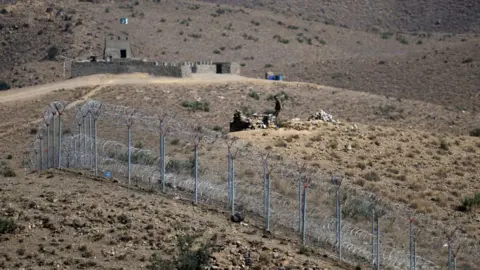
US-Iran negotiations face significant uncertainty following President Donald Trump's decision to cancel his envoys' planned trip to Pakistan.[1][4] Pakistani officials reported that the country's top political and military leadership are urgently working to salvage the talks, which were set for Islamabad this weekend.[1] Trump dismissed the discussions as unproductive, stating there was no point "sitting around talking about nothing," a move that has left international mediation efforts in the balance.[4]
Pakistan's role as a potential host underscores its diplomatic maneuvering to bridge divides between Washington and Tehran.[1] Two Pakistani officials highlighted the scramble within their leadership to reignite dialogue, reflecting the high stakes for regional stability.[1] Compounding the tension, Iran revised its negotiating position within minutes of Trump's announcement, suggesting a quick tactical shift in Tehran's approach.[4] This development indicates ongoing fluidity in the standoff, where concessions or escalations could pivot outcomes.[4]
Trump's cancellation disrupts a channel that Pakistani intermediaries viewed as viable for de-escalation.[1] The envoys' aborted travel plan signals a hardening U.S. posture, potentially prolonging impasse on key issues like nuclear restrictions and sanctions.[4] As Pakistan races to revive momentum, the interplay of these decisions illustrates the fragility of multilateral diplomacy involving adversarial powers.[1][4]
Historical Context of Political Violence
The recent shooting incident fits into the United States' long history of political violence, including assassinations of four presidents while in office and attacks on prominent figures.[3] From John F. Kennedy's fatal shooting to the attempted assassination of Ronald Reagan, such events have repeatedly tested the nation's resilience.[3] The latest attack on Donald Trump marks a recurrence, described as the third such incident targeting him amid a pattern of violence against political leaders.[3]
This chronicle of aggression spans decades, with Kennedy's 1963 assassination in Dallas standing as a pivotal tragedy that reshaped Secret Service operations.[3] Reagan's 1981 shooting by John Hinckley Jr. similarly exposed gaps, leading to fortified protections for the executive branch.[3] Now, the White House Correspondents' Dinner event echoes these precedents, where armed assaults on security near the president evoke historical vulnerabilities.[3] The United States' experience with four presidential assassinations—Lincoln, Garfield, McKinley, and Kennedy—provides stark context for contemporary threats.[3]
These episodes have prompted enduring reforms, from enhanced motorcades to intelligence fusion centers, yet persistent incidents reveal challenges in eradicating political violence.[3] Terrorism in the United States, often manifesting through lone actors or ideologically driven assailants, continues to intersect with electoral and ceremonial settings.[3] Understanding this backdrop is essential for gauging the shooting's implications beyond the immediate response.[3]
Immediate Aftermath and Official Responses
Following the shooting, President Trump and all federal officials were confirmed safe approximately an hour after the incident.[5] The Secret Service's swift evacuation of Trump and First Lady Melania Trump ensured no harm came to them or other dignitaries.[5] An FBI official detailed to Reuters that the suspect's shotgun fire hit the agent's protective gear, averting serious injury.[5]
Official statements emphasized the effectiveness of security measures, with the suspect taken into custody promptly.[5] This resolution allowed the focus to shift to investigations into the perpetrator's background and intent.[5] The White House Correspondents' Association dinner, cut short by the chaos, saw attendees dispersed under controlled conditions.[5] Federal agencies coordinated to secure the perimeter and preserve evidence, underscoring a unified response protocol.[5]
The lack of injuries among principals has been a key reassurance in public communications, though the event has prompted reviews of venue security for future gatherings.[5] Officials' rapid confirmation of safety helped mitigate panic, aligning with strategies honed from past crises.[5]
What to watch next: Developments in the suspect's custody and investigation could reveal motives linked to the shooting,[5] while Pakistan's efforts to revive US-Iran talks and security for King Charles' visit remain critical focal points.[1][2]