
Tensions Flare in West Bank and Jerusalem Amid Ongoing Israeli-Palestinian Friction
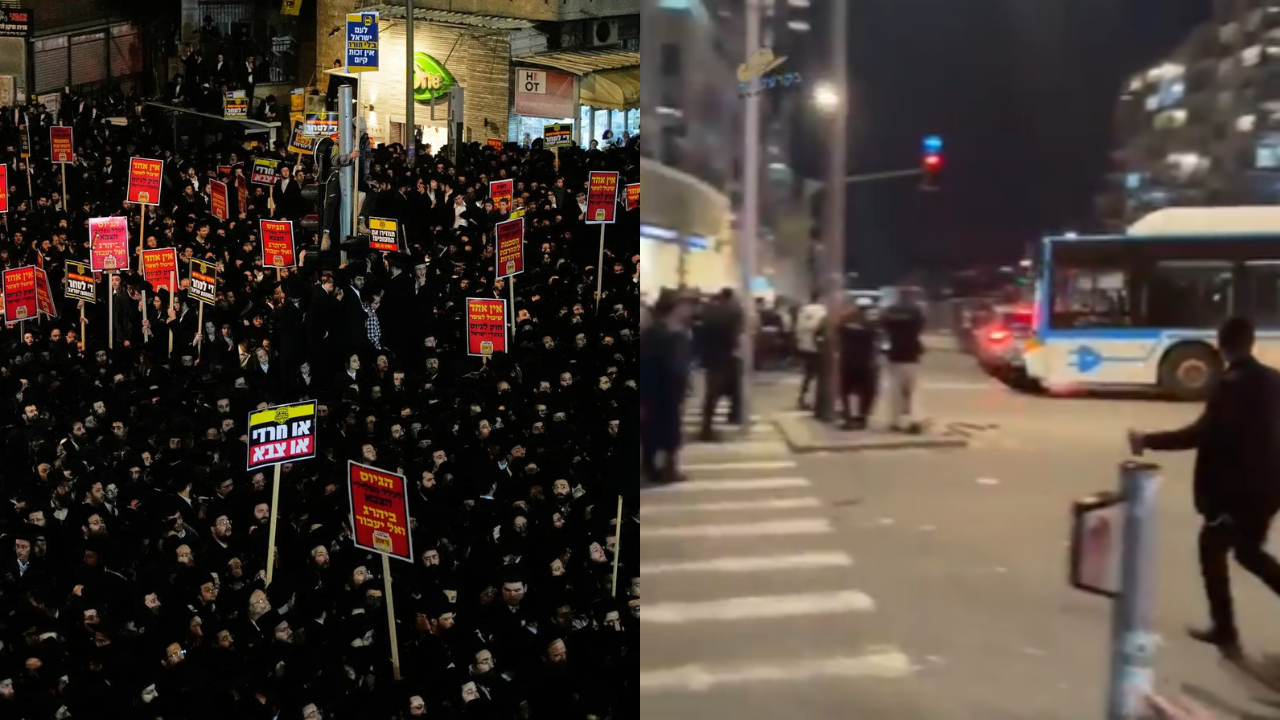
JERUSALEM/WEST BANK — Israeli forces detained at least 50 Palestinians and demolished two homes in the occupied West Bank on January 1, 2026, adding to a year-to-date total exceeding 7,000 arrests amid heightened military operations. In a separate incident days later, a bus plowed into a crowd of ultra-Orthodox Jewish protesters in Jerusalem on January 7, killing a 14-year-old boy and injuring three others during an anti-military conscription rally, underscoring parallel unrest in the region.
The West Bank raids, described by observers as high-severity civil unrest, reflect a surge in Israeli military activity in Palestinian territories. According to reports, the operations targeted multiple locations, resulting in the arrests and the destruction of residential structures, which Palestinian authorities and rights groups often cite as punitive measures. This single day's actions contribute to a broader pattern: over 7,000 Palestinians have been detained by Israeli forces in 2025 alone, many without formal charges under administrative detention policies. Such operations have intensified since the October 7, 2023, Hamas attacks on Israel and the subsequent war in Gaza, with the Israeli military stating they aim to counter militant activities by groups like Hamas and Palestinian Islamic Jihad.
In Jerusalem, the violence erupted during a demonstration by ultra-Orthodox (Haredi) Jews protesting efforts to end long-standing exemptions from mandatory military service. Protesters blocked traffic, set fires, and surrounded a public bus, prompting the driver to accelerate into the crowd, according to police accounts. "Rioters surrounded and attacked the bus driver," Israeli police stated, describing how demonstrators obstructed roads and engaged in disruptive acts. The driver claimed he acted out of fear for his personal safety after being pelted and threatened. Video footage circulating online showed the chaotic scene, with the bus striking protesters amid shouts and flames.
The Jerusalem incident highlights internal divisions within Israeli society. Haredi communities, which make up about 13% of Israel's population, have historically received exemptions from the country's compulsory military draft to focus on religious studies. However, following heavy casualties in the Gaza conflict and reservist burnout, the Israeli government under Prime Minister Benjamin Netanyahu has faced mounting pressure to enforce conscription equally. Protests have escalated, with previous demonstrations involving road blockades and clashes with police, though fatalities remain rare.
Background on Regional Dynamics
The West Bank, home to roughly 3 million Palestinians and 500,000 Israeli settlers, has been a flashpoint since Israel's 1967 occupation. International law, including UN resolutions, deems the settlements illegal, while Israel maintains security control. Arrest raids have become routine, with human rights organizations like B'Tselem documenting over 10,000 detentions annually in recent years, often linked to stone-throwing, alleged militancy, or family ties to attackers. Home demolitions, typically justified by Israel as responses to unpermitted construction or attacks, displaced hundreds in 2024-2025, per UN data.
Parallel to Palestinian-Israeli tensions, Israel's domestic debates over military service have fueled unrest. The Supreme Court in June 2024 ruled against Haredi exemptions, prompting coalition crises for Netanyahu's government, which relies on ultra-Orthodox parties. Protests peaked in 2025 amid Gaza operations, where over 45,000 Palestinians have been killed according to Gaza health authorities, and 1,200 Israelis on October 7.
These incidents occur against a backdrop of stalled peace talks. The Oslo Accords framework has eroded, with settlement expansion reaching record levels—over 24,000 new units approved in 2024-2025, per Peace Now. U.S. mediation efforts under the Biden administration yielded little, and incoming policies post-2024 election have shifted focus.
Outlook Amid Volatility
No immediate de-escalation is evident. In the West Bank, Palestinian Authority President Mahmoud Abbas condemned the raids as "collective punishment," while Hamas called for resistance. Israeli Defense Minister Israel Katz affirmed continued operations to "uproot terror infrastructure." In Jerusalem, police vowed investigations into both protester violence and the driver's actions, amid calls from Haredi leaders for dialogue.
As 2026 unfolds, analysts monitor for spillover effects: West Bank violence often correlates with Gaza flare-ups, while internal Israeli protests could strain military readiness. International observers, including the EU and UN, urge restraint, but prospects for calm remain dim amid entrenched divisions.
(Word count: 612)