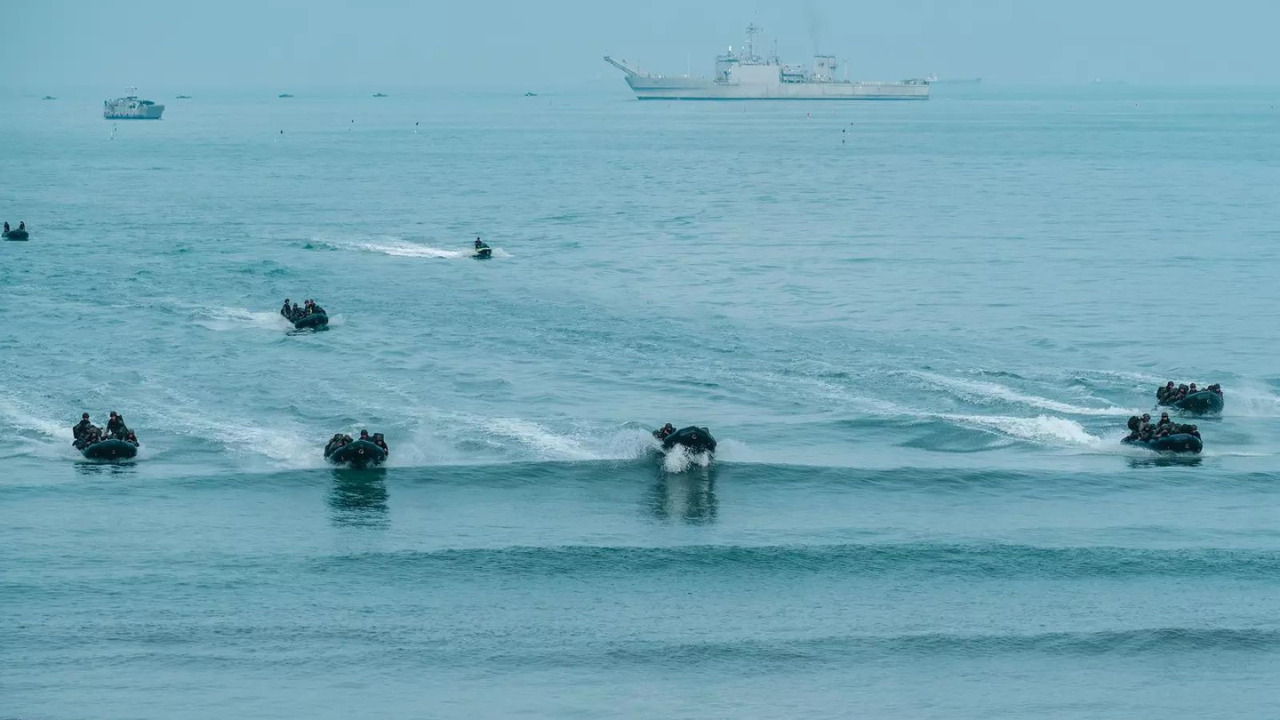

Taiwan President Vows to Defend Sovereignty Amid Increased Chinese Military Activity
Taipei, Taiwan – In a bold statement reflecting rising tensions in the Taiwan Strait, President Tsai Ing-wen reaffirmed Taiwan's commitment to defend its sovereignty following a surge in military activity by China in the region. The pledge comes in response to China's recent maneuvers, which included multiple sorties of aircraft and an increased naval presence near Taiwan.
President Tsai's declaration, made on January 2, 2026, emphasizes Taiwan's determination to safeguard its territory against what it perceives as escalating threats from Beijing. "We will not back down in the face of intimidation," Tsai stated during a public address. "Taiwan's sovereignty is non-negotiable, and we are prepared to defend our nation and our democratic way of life."
China's military activities have intensified in recent weeks, with reports indicating the deployment of four sorties of aircraft and the presence of six naval vessels in waters surrounding Taiwan. Analysts suggest that these actions may be part of a broader strategy by Beijing to assert its claims over Taiwan, which it views as a breakaway province.
The Times of India reported that this increase in military presence follows a series of provocative maneuvers by China, aimed at testing Taiwan's military readiness and political resolve. The heightened tensions are seen as a continuation of China's long-standing policy of using military pressure to influence Taiwan's political landscape.
Taipei has responded by reinforcing its defense capabilities, with President Tsai emphasizing the importance of international support in maintaining stability in the region. "We are grateful for the solidarity shown by our allies, and we will continue to work closely with them to ensure peace and security in the Taiwan Strait," she added.
While Taiwan remains resolute in its defense posture, the situation poses significant risks for regional stability. Both the United States and other allies have expressed concern over China's military assertiveness, urging for a peaceful resolution to cross-strait tensions. The U.S. has reiterated its commitment to Taiwan's defense, maintaining a policy of strategic ambiguity while providing military assistance.
The backdrop of this conflict is a complex historical relationship between China and Taiwan. The civil war that led to the establishment of the People's Republic of China in 1949 resulted in the Nationalists retreating to Taiwan, where they established a separate government. Since then, Beijing has viewed Taiwan as part of its territory, leading to decades of cross-strait tensions.
In conclusion, Taiwan's commitment to defending its sovereignty amid increased Chinese military activity highlights the fragile balance of power in the region. As both sides continue to navigate this precarious situation, the international community watches closely, aware that any misstep could lead to a significant escalation of hostilities in the Taiwan Strait.






