
Strike Palestine: Activists Break into Israeli Weapons Factory Leading to Arrests
In a bold escalation of the strike Palestine campaign, UK pro-Palestine activists broke into an Israeli weapons factory, leading to arrests as police intervened at the scene.[2] This incident highlights ongoing tensions surrounding activism against companies linked to Israel, with significant public backing from prominent figures.
Overview of Palestine Action and Public Support
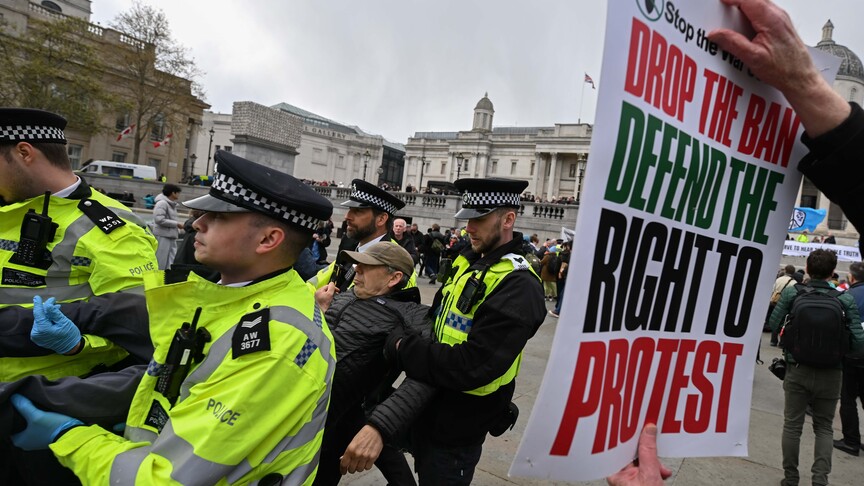
Palestine Action, a pro-Palestine activist group, has garnered notable attention through recent expressions of solidarity from influential individuals across various fields. A letter supporting the group was signed by 132 public figures, including climate activist Greta Thunberg and author Sally Rooney.[1] This collective endorsement underscores a growing wave of vocal support for the organization's campaigns, which often target entities perceived as contributing to the Israeli military apparatus.
The backing extends beyond high-profile names, with dozens of scholars and other public figures also expressing solidarity with Palestine Action.[5] These signatories have taken a firm stance by authoring an open letter directed to the Court of Appeal, demonstrating their willingness to align publicly with the group's methods. Such support comes at a time when legal scrutiny is intensifying, as these individuals explicitly acknowledge the potential consequences of their involvement.[5]
This level of endorsement from diverse sectors—ranging from environmental activism to literature and academia—illustrates the breadth of appeal that Palestine Action holds within certain progressive circles. The letter's signatories, numbering 132 in one instance,[1] signal a coordinated effort to legitimize the group's direct action tactics. Reports indicate that this public backing is not isolated but part of a pattern where intellectuals and celebrities lend their platforms to amplify the message.[1][5]
Furthermore, the involvement of figures like Thunberg, known for her global climate advocacy, and Rooney, celebrated for her literary contributions, adds layers of visibility to Palestine Action's cause. Their signatures on the supportive letter[1] reflect a convergence of causes, where environmental and literary voices intersect with pro-Palestine activism. Meanwhile, the scholars' open letter ahead of an appeal hearing[5] positions them as active participants in the narrative, framing their support as a moral imperative despite the legal landscape.
This overview reveals how Palestine Action has transitioned from fringe operations to receiving mainstream-adjacent validation, with public figures leveraging their influence to bolster its profile.[1][5]
Recent Activist Actions in the UK
Pro-Palestine activists breaking into an Israeli weapons factory. — Source: newsmax
The strike Palestine actions reached a dramatic peak when UK pro-Palestine activists broke into an Israeli weapons factory, executing a high-risk operation that culminated in arrests.[2] The activists gained entry by breaking through the roof of the facility before abseiling down into the premises, showcasing a level of tactical planning and commitment to their cause.[2]
Police response was swift, resulting in six arrests at the scene as authorities secured the area.[2] This break-in represents one of the most direct confrontations by Palestine Action against targets associated with Israeli defense interests, specifically an Elbit Systems facility. The method of ingress—breaching the roof and descending via ropes—highlights the physical demands and risks undertaken by the participants in this strike Palestine effort.[2]
Such actions align with Palestine Action's broader strategy of non-violent direct action, though the legal ramifications classify them as criminal under UK law. The factory, linked to Israeli weapons production, became a focal point for activists aiming to disrupt operations symbolically and practically.[2] Eyewitness accounts and reports detail the activists' descent, which allowed them temporary access before law enforcement intervened decisively.[2]
This incident in the UK underscores the escalating nature of pro-Palestine activism, where symbolic gestures evolve into property incursions. The six arrests serve as a immediate consequence, setting the stage for subsequent legal battles.[2] The choice of an Israeli weapons factory as the target emphasizes the group's focus on supply chains perceived to fuel conflict, marking this as a pivotal moment in their campaign trajectory.[2]
Legal Proceedings Involving Palestine Action
Palestine Action defendants charged in connection with the break-in at an Elbit Systems factory appeared in court, where details emerged about their motivations.[4] The court heard that the defendants had targeted the Israeli arms company's use of artificial intelligence, described as "deadly AI" in proceedings.[4]
The individuals facing charges of criminal damage are Leona Kamio, 30, Charlotte Head, 29, Jordan Devlin, 31, Fatema Rajwani, 21, Zoe Rogers, 22, and Samuel Corner, 23.[4] This group, all linked to the August break-in at the factory in Filton near Bristol, presented a defense centered on Elbit Systems' AI applications.[4] The hearing on Friday provided a platform for these claims, framing the activism as a response to technological aspects of arms production.[4]
Criminal damage charges stem directly from the physical intrusion and any resultant harm to the facility, tying back to the rooftop entry and abseil documented in reports.[4] The court's examination of the AI targeting adds a modern dimension to the case, highlighting activists' concerns over emerging technologies in weaponry.[4] Each defendant's age and name, now public record, personalize the proceedings, ranging from early 20s to early 30s.[4]
This legal scrutiny occurs amid broader charges under UK frameworks, with the Filton incident serving as a key example. The articulation of motives in court—focusing on AI—offers insight into the intellectual underpinnings of Palestine Action's strategy, positioning it as ethically driven rather than merely disruptive.[4] As proceedings continue, these details will likely influence public and judicial perceptions of the strike Palestine actions.[4]
Related Events at Educational Institutions

Pro-Palestine activists break into Israeli weapons factory, leading to arrests. — Source: aljazeera
UC Berkeley has faced criticism following an event hosted by an anti-Israel group, which featured a video appearance by a convicted attempted car bomber.[3] The UC Berkeley Law Students for Justice Palestine organized this as part of Palestinian Political Prisoners Day, drawing sharp rebukes labeling the campus environment a "cesspool."[3]
The event capped off the observance with the video presentation, providing a platform for the speaker despite their criminal history involving an attempted car bombing.[3] This choice of content has sparked backlash, questioning the standards of discourse at the prestigious institution.[3]
The involvement of law students in curating such programming ties into wider campus activism trends, where pro-Palestine groups host controversial figures.[3] The "failed suicide bomber" reference in reports amplifies the controversy, as the individual's past conviction contrasts with the academic setting.[3] Critics' use of "cesspool" reflects the intensity of the debate surrounding these events.[3]
This UC Berkeley incident parallels global patterns of institutional engagement with pro-Palestine narratives, extending the strike Palestine discourse into educational spaces.[3] The video format allowed remote participation, broadening reach while intensifying scrutiny.[3]
Broader Context of Support and Risks
Public support for Palestine Action continues to build, with 132 public figures, including Greta Thunberg and Sally Rooney, signing a letter in its favor.[1] This endorsement coincides with dozens of scholars and public figures risking arrest under the Terrorism Act through their open letter to the Court of Appeal.[5]
The Terrorism Act implications loom large, as signatories position themselves vulnerably ahead of next week’s appeal hearing in London.[5] This calculated risk underscores the high stakes for supporters, blending moral advocacy with potential legal jeopardy.[5]
The convergence of celebrity, literary, and academic voices[1][5] amplifies Palestine Action's message, framing it within a tapestry of global justice movements. Risks under anti-terrorism laws highlight the contentious legal terrain navigated by backers.[5]
Key Developments and Ongoing Endorsements
Recent key facts reveal deepening involvement: 132 public figures backed Palestine Action via a signed letter,[1] while court testimony addressed targeting of Elbit's AI by defendants.[4] Dozens of scholars expressed support, explicitly risking Terrorism Act charges.[5]
Additionally, UC Berkeley's event with a convicted attempted car bomber's video marks institutional extensions of this activism.[3] These elements collectively paint a picture of multifaceted engagement, from direct actions to intellectual solidarity.
The appeal hearing looms as a focal point,[5] with public figures' letters signaling sustained momentum.[1] This synthesis of facts positions Palestine Action at the intersection of protest, law, and celebrity influence.
What to watch next: The Court of Appeal hearing in London next week, where signatories' open letter could influence proceedings amid Terrorism Act risks.[5]