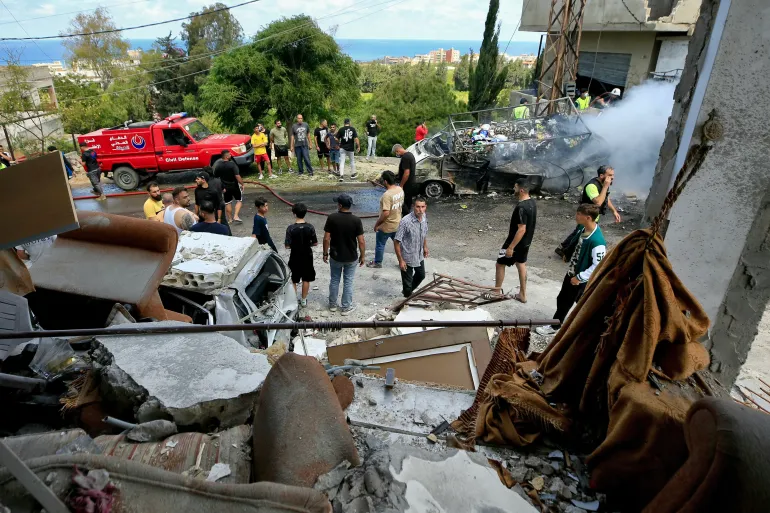

Strike in Lebanon: Israeli Airstrike Hits Car in Southern Region as Ceasefire Violation
An Israeli airstrike targeted a car in southern Lebanon, marking a new ceasefire violation.[1] This strike in Lebanon incident occurred along a road linking Nabatieh and Shoukine, as reported by the state news agency.[1] Amid escalating tensions, five UN peacekeepers have been killed since March 2, when Israel launched an offensive in Lebanon.[2] A second French peacekeeper has died from wounds sustained in an ambush blamed on Hezbollah.[3] Israel and Lebanon are scheduled to hold talks in Washington,[4] while an Orthodox Archbishop has stated that Israel's attacks on religious sanctities in Lebanon are not surprising due to a history of such violations.[5] These developments highlight the precarious security situation in the region, with ongoing violations and casualties drawing international concern.
Recent Airstrikes and Ceasefire Violations
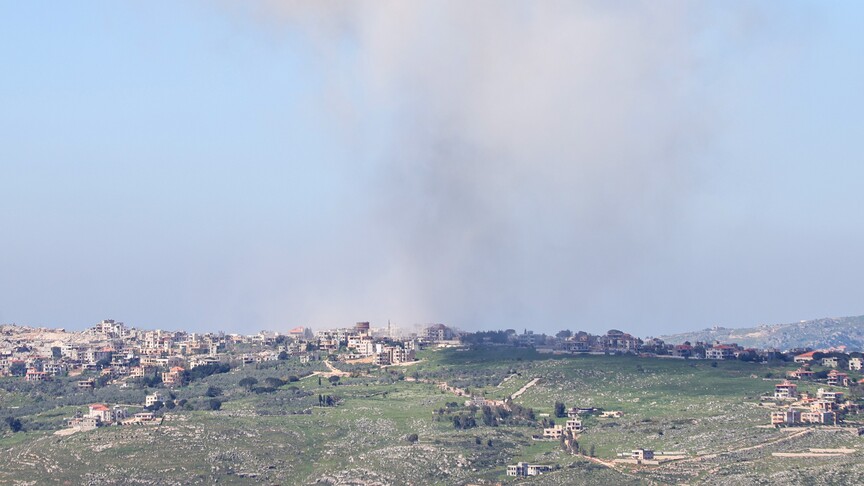
The recent Israeli airstrike in southern Lebanon represents a significant breach in the fragile truce between the involved parties.[1] Specifically, the strike targeted a car traveling along a road that connects the towns of Nabatieh and Shoukine.[1] This location, situated in the southern part of the country, has been a focal point for military activities in recent months. Reports from Anadolu Agency detail how the Israeli forces carried out this operation, which state media in Lebanon has confirmed as hitting the vehicle directly.[1]
Described explicitly as a "new ceasefire violation," this event underscores the challenges in maintaining the agreed-upon cessation of hostilities.[1] The timing of the airstrike comes at a moment when diplomatic efforts are underway, yet such actions continue to erode trust between Israel and Lebanon.[1] The precision of the target—a moving car—suggests an intelligence-driven operation, though the full context of why this particular vehicle was selected remains tied to the immediate reporting.[1]
In the broader pattern of military engagements, this strike in Lebanon fits into a series of incidents that have tested the ceasefire's durability.[1] Lebanon's state news agency was quick to report the event, emphasizing its implications for regional stability.[1] Such violations not only heighten immediate risks to civilians and infrastructure along key roads like the one between Nabatieh and Shoukine but also complicate efforts by international observers to monitor compliance.[1] The road itself serves as a vital link in southern Lebanon, making disruptions particularly impactful for local movement and logistics.[1]
Analysts monitoring the situation note that airstrikes of this nature often occur in response to perceived threats, but the designation as a ceasefire violation by local reports points to a deviation from established boundaries.[1] This incident, while isolated in its specifics, contributes to a narrative of repeated encroachments that have characterized the post-offensive period.[1] The Anadolu Agency's coverage provides a clear timeline, positioning this as the latest in a sequence of aerial operations that challenge the truce.[1] As southern Lebanon remains a hotspot, events like this airstrike demand close scrutiny from all stakeholders invested in de-escalation.[1]
Incidents Involving UN Peacekeepers
{IMAGE_2}
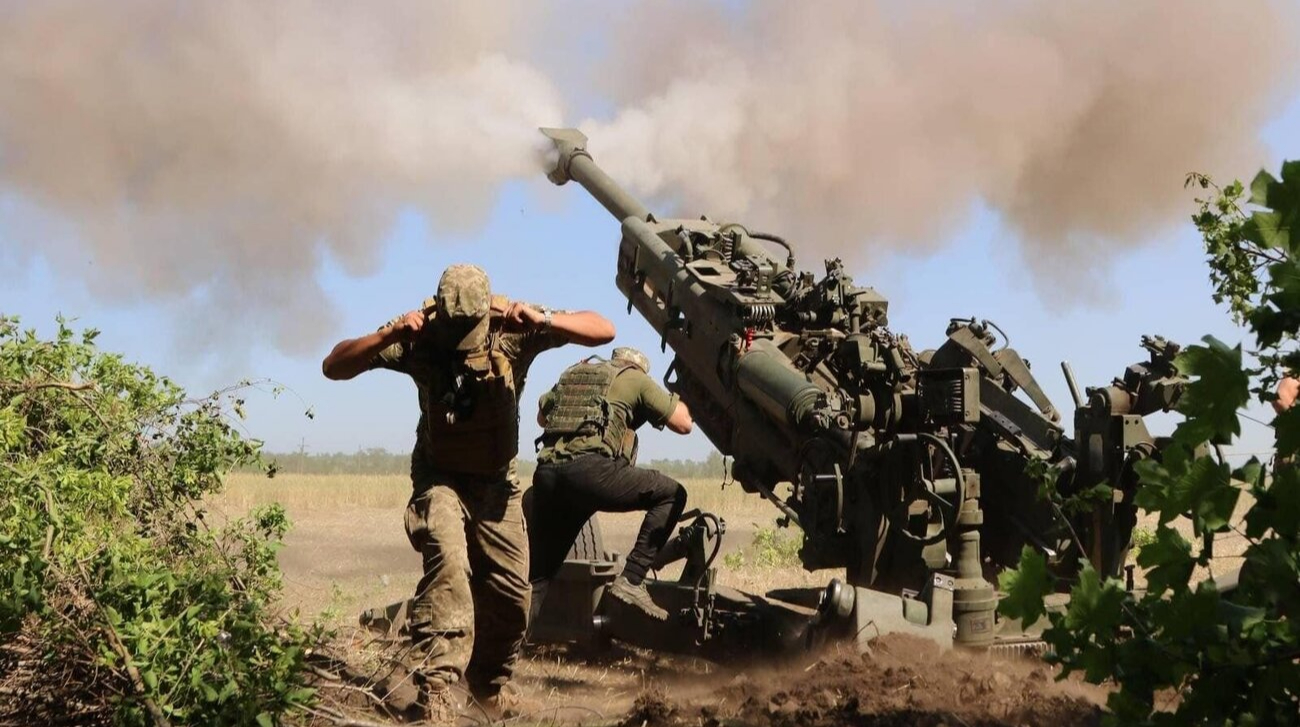
The deaths of UN peacekeepers in Lebanon have intensified calls for a more robust resolution to the conflict.[2][3] Since March 2, when Israel initiated an offensive in Lebanon, a total of five UN peacekeepers have been killed.[2] This figure highlights the perilous environment faced by the United Nations Interim Force in Lebanon (UNIFIL), which operates in the area to maintain stability along the border regions.[2]
In a detailed interview, UNIFIL representatives described the current dynamics as a "dangerous escalation."[2] They emphasized that the force recognizes only the Blue Line—the internationally acknowledged boundary between Israel and Lebanon—as the relevant demarcation for their mandate.[2] This stance comes amid repeated incidents that have endangered their personnel. UNIFIL has explicitly called for a permanent ceasefire to address these threats and allow for sustainable peacekeeping operations.[2]
A particularly tragic development involved French peacekeepers. A second French soldier died on Wednesday from wounds suffered during a weekend ambush against UN forces in Lebanon.[3] This ambush has been attributed to Hezbollah, though the group has denied any responsibility.[3] The first casualty in this incident was staff sergeant Florian Montorio, who was shot dead on Saturday.[3] President Emmanuel Macron confirmed the second death, bringing attention to the human cost borne by international troops.[3]
These events illustrate the multifaceted risks to UNIFIL, ranging from direct combat engagements to ambushes in contested areas.[2][3] The loss of five peacekeepers since the offensive began on March 2 serves as a stark reminder of the offensive's lingering effects.[2] The French cases, in particular, have prompted national-level responses, with Macron's statement underscoring the ambush's severity.[3] Hezbollah's denial adds a layer of complexity, as attribution remains contested.[3]
UNIFIL's insistence on the Blue Line and plea for a permanent ceasefire reflect a strategic position aimed at clarifying operational boundaries and preventing further casualties.[2] The ambush's location and timing—over a weekend—further expose vulnerabilities in peacekeeping patrols.[3] Collectively, these incidents involving UN peacekeepers have amplified global attention on the need for enhanced protections and diplomatic breakthroughs.[2][3]
Upcoming Diplomatic Developments
Diplomatic channels remain active despite the ongoing military tensions, with Israel and Lebanon preparing for key discussions.[4] A second round of talks between the two nations is set to commence on Thursday in Washington.[4] This meeting represents a continuation of prior negotiations, signaling a commitment to dialogue even as field-level violations persist.[4]
The Washington venue underscores the involvement of U.S. facilitation in mediating the Israel-Lebanon dynamic.[4] Scheduled amid reports of ceasefire breaches, such as the recent airstrike, these talks carry heightened urgency.[1][4] The agenda is likely to address border security, ceasefire enforcement, and broader de-escalation measures, though specifics are not detailed in available reports.[4]
Parallel developments in regional diplomacy provide context for the Israel-Lebanon discussions. Prospects for Iran-U.S. talks in Pakistan appear uncertain, with Iran accusing the U.S. of a "lack of good faith" in negotiations.[4] This impasse contrasts with the progressing Israel-Lebanon channel, potentially influencing the Washington talks' outcomes.[4] Additionally, reports note Iran firing on three ships, adding to the volatile maritime environment in the region.[4]
The timing of the second round—starting Thursday—positions it as a critical juncture following recent peacekeeper deaths and airstrikes.[2][3][4] Successful engagement could pave the way for reinforced ceasefire mechanisms, while stalemates might exacerbate on-the-ground frictions.[4] As delegations prepare, the focus remains on tangible steps toward stability.[4]
Statements on Attacks
Religious leaders have weighed in on Israel's military actions in Lebanon, providing perspective on historical patterns.[5] Orthodox Archbishop Elias Kfoury stated that Israel's attacks on religious sanctities in Lebanon are "not surprising."[5] In an interview with Anadolu Agency, he highlighted the Israeli army's "long record of violations of religious sanctities."[5]
Kfoury's comments frame current incidents within a broader historical context of alleged desecrations.[5] He emphasized that such actions align with past behaviors, diminishing the element of shock in recent events.[5] This statement from a prominent Orthodox figure adds a moral and cultural dimension to the discourse on military operations.[5]
The archbishop's remarks were made in direct response to ongoing attacks, tying them to a pattern that he describes as established.[5] By telling Anadolu Agency of this record, Kfoury calls attention to the repeated nature of these violations.[5] His position as an Orthodox leader lends weight to criticisms of actions impacting sacred sites in Lebanon.[5]
These statements resonate amid reports of ceasefire violations and peacekeeper casualties, offering a viewpoint rooted in institutional memory.[1][2][3][5] Kfoury's assessment suggests that without addressing historical precedents, similar incidents may persist.[5]
{IMAGE_3}
Overall Situation Summary
The convergence of recent events paints a picture of strained relations and fragile truces in Lebanon.[1][2][3][4][5] The Israeli airstrike targeting a car on the Nabatieh-Shoukine road stands as a clear ceasefire violation, reported by state media and Anadolu Agency.[1] This strike in Lebanon has occurred against the backdrop of an Israeli offensive launched on March 2, which has resulted in the deaths of five UN peacekeepers.[2]
Compounding these losses, a second French peacekeeper succumbed to wounds from a Hezbollah-blamed ambush, following the killing of staff sergeant Florian Montorio.[3] UNIFIL has labeled the escalation dangerous, adhering strictly to the Blue Line and advocating for a permanent ceasefire.[2] Diplomatic momentum persists with the second round of Israel-Lebanon talks slated for Thursday in Washington.[4]
Religious commentary from Orthodox Archbishop Elias Kfoury frames Israel's actions on sanctities as unsurprising, citing a long history of violations.[5] Together, these elements—airstrikes, peacekeeper fatalities, diplomatic scheduling, and critical statements—illustrate a multifaceted crisis.[1][2][3][4][5] The interplay of military actions and negotiation efforts highlights the delicate balance required for de-escalation.[1][4] Casualties among international forces underscore operational risks,[2][3] while historical critiques add depth to accountability discussions.[5]
This synthesis reveals implications for regional stability: violations erode confidence,[1] deaths demand protection,[2][3] talks offer hope,[4] and statements urge reflection.[5] The situation demands vigilant monitoring as interconnected threads evolve.
What to Watch Next
Key developments to monitor include the outcomes of the second round of Israel-Lebanon talks starting Thursday in Washington,[4] UNIFIL's push for a permanent ceasefire amid the dangerous escalation,[2] and any further responses to the recent airstrike and peacekeeper incidents.[1][3] Progress in these areas could signal shifts toward stability or highlight persistent challenges.[2][4]