
Strike in Colombia: Bomb Attack Kills 14 Ahead of Presidential Election
A bomb attack on a highway in Colombia killed 14 people and injured 38 others ahead of the presidential election.[1][2][4] This strike in Colombia underscores the rising tensions in the region, as reported by international media, with a roadside bomb targeting vehicles on a key thoroughfare.[2]
Overview of the Incident
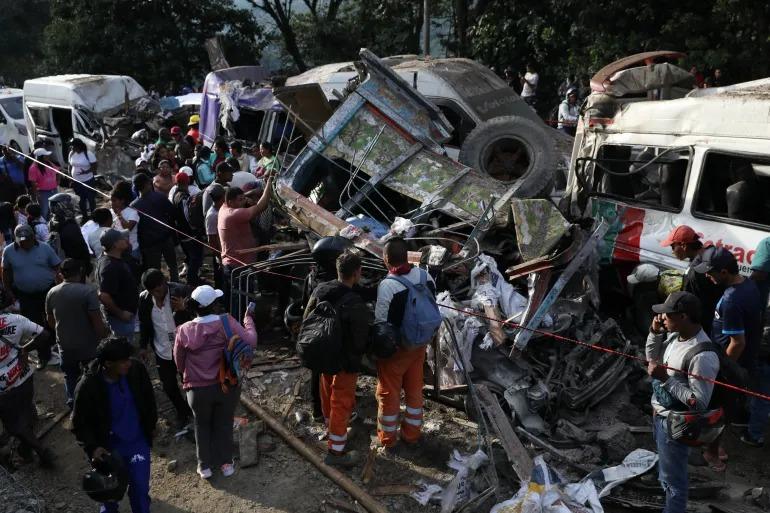
The bomb attack in southwest Colombia represents a significant escalation in violence, striking at a critical moment just before the presidential election.[1][2][3][4][5] Occurring on Saturday evening, the incident involved an explosion on the Pan-American Highway, a major route in a restive area known for ongoing security challenges.[2] International media outlets quickly reported the event, confirming the destruction of buses and the heavy toll on travelers.[2] Authorities responded swiftly, attributing the strike in Colombia to organized groups amid a broader pattern of unrest.[4] This overview draws from multiple reports that align on the core details: a highway bombing that claimed lives and disrupted transportation in a strategically important corridor.[1][2][4] The timing, just weeks from the election, amplifies its impact, as noted in coverage from global news aggregators and outlets.[3][5] Detailed accounts emphasize how the roadside device was detonated in a manner that maximized casualties among civilian vehicles, highlighting vulnerabilities in rural infrastructure.[2] Such incidents have become focal points in discussions of national security, with this event standing out for its scale and proximity to the electoral calendar.[4]
Details of the Attack
The bombing unfolded on the Pan-American Highway in southwest Colombia, where a roadside bomb was placed and detonated, leading to the destruction of buses carrying passengers.[2][4] This method of attack—employing an improvised explosive device hidden along the roadway—exploited the highway's role as a vital artery for travel and commerce in a conflict-prone zone.[2] Eyewitness accounts and initial reports describe the explosion ripping through multiple vehicles on Saturday evening, scattering debris and igniting fires that compounded the chaos.[2] The location in a restive region of the country made it a plausible target for insurgent activity, as the highway traverses areas with historical guerrilla presence.[4] Immediate effects included the halting of traffic, emergency evacuations, and a rush of security forces to secure the site and pursue leads.[2][4] France 24's reporting specifies the attack's mechanics, noting how the blast's force was sufficient to cause widespread structural damage to public transport.[4] Khaama Press further details the tactical choice of the Pan-American Highway, underscoring its exposure to such threats due to limited patrols in remote stretches.[2] These elements paint a picture of a calculated operation, with the bomb's placement ensuring high visibility and disruption.[2][4]
Casualties and Injuries
Confirmed figures from multiple sources report at least 14 people killed and 38 injured in the highway bombing.[1][3][4][5] These numbers, corroborated across international media, reflect the attack's devastating impact on civilians traveling by bus.[2][4][5] GDELT event monitors logged the casualties early, with updates specifying 14 fatalities and 38 wounded, many requiring hospitalization for severe injuries from shrapnel and blast trauma.[1][3][5] France 24 confirmed the toll, stating "at least 14 people were killed and 38 injured," attributing the precision of these counts to official statements from Colombian authorities.[4] The injuries ranged from critical to stable, overwhelming local medical facilities and prompting reinforcements from nearby cities.[2][4] Khaama Press noted "dozens" injured alongside the 14 deaths, aligning with the precise 38 figure from other reports, and highlighted how buses bore the brunt, trapping passengers in the wreckage.[2] This convergence of data from diverse sources—news wires, global aggregators, and on-the-ground coverage—provides a reliable baseline for the human cost, emphasizing the vulnerability of ordinary commuters in such strikes.[1][3][4][5]
Context and Attribution
Authorities have directly blamed dissidents of the former FARC guerrilla army for the bomb attack, framing it within a spate of violence across Colombia.[2][4] These dissident factions, who rejected the 2016 peace accord, continue to operate in southwest regions, using roadside bombs as a signature tactic against infrastructure and security forces.[4] The incident fits a pattern of escalating attacks, with Khaama Press describing how violence has intensified as political stakes rise.[2] France 24 provides the clearest attribution, linking the highway strike to FARC dissidents amid broader unrest that has included ambushes and bombings nationwide.[4] This context reveals a fragmented security landscape, where peace process holdouts exploit rural highways for propaganda and disruption.[2][4] Reports indicate that such groups aim to undermine government control ahead of key political events, with this bombing serving as a stark reminder of unresolved conflicts.[4] The attribution by officials, echoed in media analysis, underscores the challenges in fully demobilizing former combatants.[2][4]
Election Timing
The attack occurred amid rising violence ahead of next month's presidential election, as violence escalates across the country.[1][2][4] Published reports timestamp the event on April 26, 2026, placing it in the critical pre-electoral period.[1][3][5] France 24 explicitly ties the bombing to this timeline, noting it as part of a "spate of violence" just before voters head to the polls.[4] Khaama Press reinforces this, headlining the strike's proximity to the election and its role in heightening national anxieties.[2] GDELT's real-time tracking captured the story's emergence early that morning, amplifying its electoral implications through global dissemination.[3][5] The presidential vote, slated for the following month, has seen increased militant activity, with highways like the Pan-American becoming flashpoints.[1][2][4] This timing suggests an intent to influence public perception and security deployments, as authorities scramble to reassure the electorate.[4]
What to watch next: As Colombia approaches its presidential election, continued monitoring of FARC dissident activities and highway security measures will be crucial amid the reported escalation in violence.[2][4]