South Korea's Finance Minister and Central Bank Vow to Stabilize Weakening Won Amid Economic Uncertainty

Latest from X
South Korea's Finance Minister and Central Bank Vow to Stabilize Weakening Won Amid Economic Uncertainty
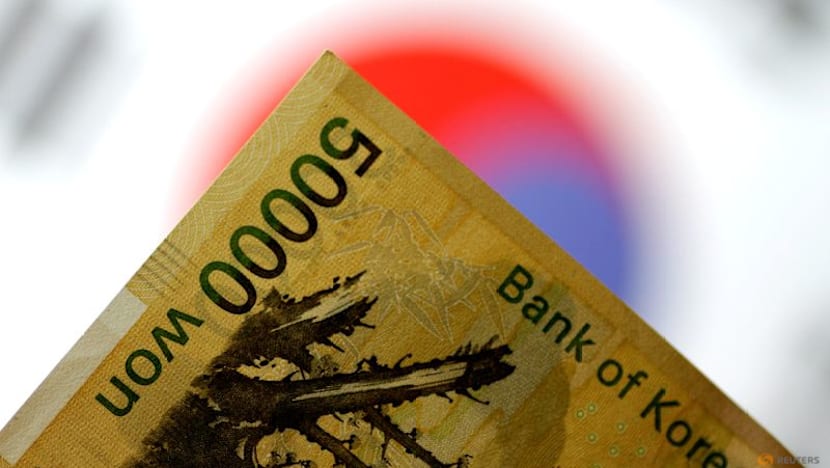
South Korea's financial authorities are ramping up efforts to shore up the weakening South Korean won, as global economic pressures continue to weigh on the currency. On January 5, 2026, Finance Minister [Name] and Bank of Korea Governor Rhee Chang-yong announced a series of measures aimed at stabilizing the won, which has faced significant depreciation due to external factors such as U.S. interest rate hikes and geopolitical tensions. This development underscores ongoing challenges in Asia's fourth-largest economy, where currency volatility could exacerbate inflation and impact export-driven industries.
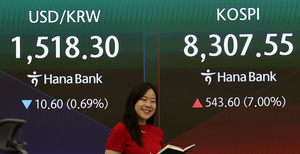
The won has been under pressure in recent months, with its value against the U.S. dollar slipping to multi-year lows. According to the Channel News Asia report, the finance minister and central bank governor held a joint briefing to outline their strategy, emphasizing the use of foreign exchange reserves and potential market interventions to prevent further declines. The officials highlighted the currency's role in maintaining economic stability, warning that unchecked depreciation could lead to higher import costs and inflationary pressures. This response comes amid broader global market jitters, including uncertainties tied to U.S. monetary policy and slowing growth in key trading partners like China.
In their statements, the officials reiterated a commitment to deploy "all available tools" to support the won. The finance minister specifically pointed to coordinated actions with the central bank, such as injecting liquidity into the market and monitoring capital flows. Governor Rhee noted that a weak won could disproportionately affect domestic businesses, potentially increasing costs for energy and raw material imports, which are critical for South Korea's manufacturing sector. These assurances follow a period of heightened volatility, with the won breaching the 1,400 mark against the dollar earlier this week—a level not seen since late 2025.
Posts on X from verified news organizations and financial experts have echoed these official commitments, adding to the narrative of urgency. For instance, sentiments from sources like newswire accounts indicate that South Korean authorities are actively addressing the issue, with one post summarizing the finance minister's vow to stabilize the currency through comprehensive measures. However, these posts also reflect mixed reactions, with some users suggesting that past efforts have not fully curbed the won's decline, treating such information as inconclusive amid ongoing market fluctuations. This online discourse highlights the broader sentiment of caution among investors and analysts, who are closely watching for tangible outcomes.
To provide context, South Korea's economy has long been vulnerable to external shocks due to its heavy reliance on exports, particularly in semiconductors, automobiles, and electronics. The won's weakening can be traced to several factors, including the U.S. Federal Reserve's aggressive rate hikes in 2025, which strengthened the dollar and prompted capital outflows from emerging markets. Additionally, domestic challenges such as subdued consumer spending and inflationary pressures from rising energy prices have compounded the issue. Historically, South Korea has managed currency crises effectively, as seen during the 1997 Asian financial crisis and the 2008 global recession, when swift interventions helped stabilize the economy. As of early 2026, the country's foreign exchange reserves stand at approximately $400 billion, providing a buffer for potential interventions, though experts caution that prolonged volatility could strain these resources.
The current efforts build on earlier initiatives, including those discussed in late 2025, where the government explored options like interest rate adjustments and fiscal support. While the central bank has maintained a cautious stance on monetary policy, Governor Rhee's recent comments, as referenced in financial discussions, underscore the risks of inflation if the won continues to slide. This situation is not isolated; similar currency pressures are affecting other Asian economies, such as Japan and Indonesia, amid a stronger dollar and global trade uncertainties.
Looking ahead, the success of these stabilization measures will depend on both domestic actions and international developments. If the U.S. eases its monetary tightening or if global demand for South Korean exports rebounds, the won could stabilize. However, persistent geopolitical risks, including tensions in the region, might prolong the challenges. Economists anticipate that the government's proactive approach could help mitigate short-term risks, but ongoing monitoring will be essential to safeguard economic growth, which is projected to hover around 2% for 2026 according to recent forecasts from international organizations like the International Monetary Fund.
In conclusion, South Korea's finance minister and central bank governor's vow to stabilize the won represents a critical step in addressing immediate economic vulnerabilities. As the situation evolves, the interplay of global and local factors will shape the currency's trajectory, with potential implications for inflation, trade, and overall financial stability in the region. Authorities remain vigilant, signaling a commitment to proactive measures in the face of uncertainty.
Track this story live
Live World Map
Monitor global events in real time with a live activity map and hotspot summaries.
Markets
Connect live events to Catalyst market signals across crypto, commodities, indices, and forex.
Stock Market Prediction
AI-powered stock market forecasts for S&P 500, Nasdaq, and Dow Jones with geopolitical analysis.
Recession Risk
Track recession risk indicators with AI-powered macro stress and market behavior analysis.
Original Sources
- •
Editorial process: This article was synthesized from the original sources cited above using The World Now's AI editorial system, with byline accountability from our editorial team. We grade every story for source grounding, factual coherence, and on-topic match before publication. Read more about our editorial standards and contributors. Spot something inaccurate? Let us know.
Last updated: March 7, 2026