South Korean Probe Labels Jeju Air Crash a Potential 'Man-Made Disaster' After Simulation Reveals Survivable Impact

Latest from X
South Korean Probe Labels Jeju Air Crash a Potential 'Man-Made Disaster' After Simulation Reveals Survivable Impact
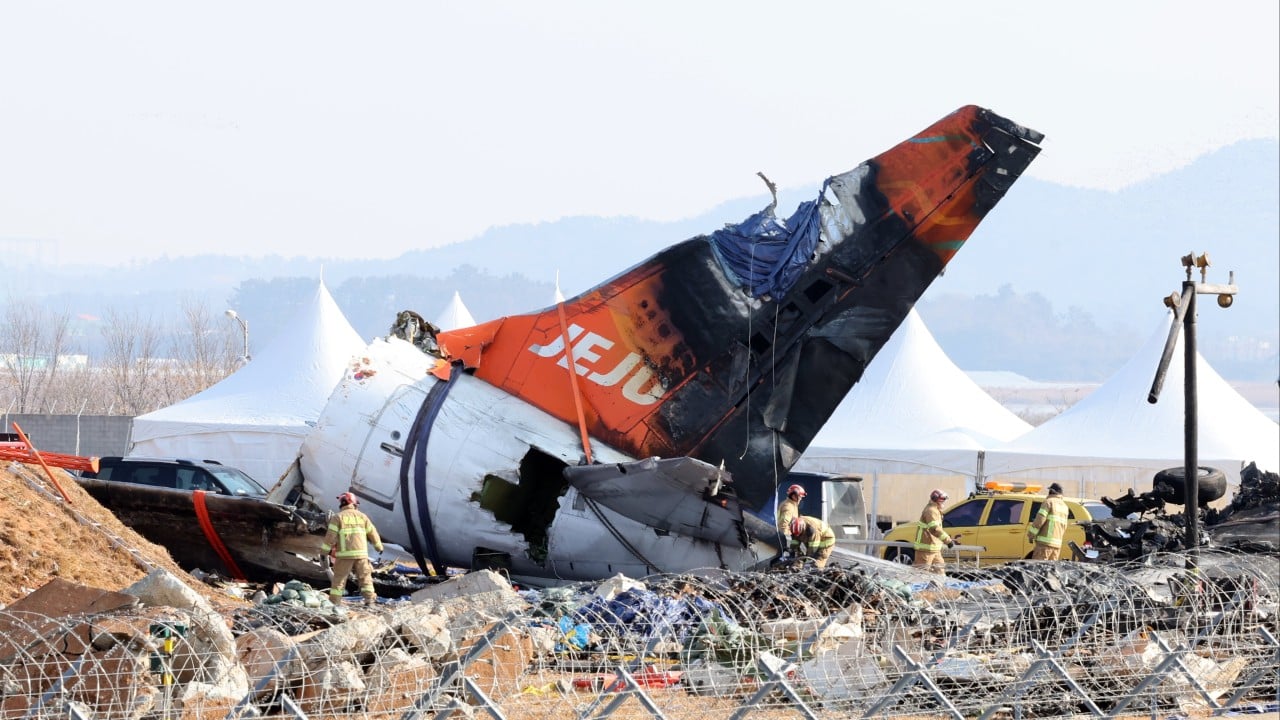
Muan, South Korea – A government-commissioned simulation report has cast new light on the deadly Jeju Air crash at Muan International Airport in December 2024, suggesting that the 179 fatalities might have been prevented absent a concrete structure at the runway's end, prompting accusations of a "man-made disaster" from political figures.
The report, revealed on January 8, 2026, analyzed the Boeing 737-800's final moments during flight 7C2216 from Bangkok. The aircraft belly-landed without its landing gear deployed, skidded off the runway, and collided with a concrete mound supporting a localiser antenna. The impact triggered a fireball that claimed nearly all lives aboard, with only two flight attendants in the tail section surviving with injuries.
According to details shared by an opposition lawmaker, the simulation—conducted by a South Korean structural engineering institute—determined that the plane's initial runway contact was not forceful enough to cause severe injuries or fatalities. Had the concrete embankment not been present, the aircraft might have come to a stop with all passengers surviving, the report concluded. This finding has intensified scrutiny on airport infrastructure and safety protocols at the relatively new Muan International Airport, which opened in 2007 to serve the southwestern Jeolla region.
The crash occurred on December 29, 2024, amid reports of a possible bird strike shortly before landing. Flight data and video footage captured by local broadcaster MBC News showed the jet approaching with retracted flaps and no visible landing gear, veering dramatically before bursting into flames upon hitting the barrier. Of the 181 passengers and six crew members on board—mostly South Korean nationals returning from Thailand—179 perished, marking the deadliest aviation disaster in the country's history.
South Korea's Ministry of Land, Infrastructure and Transport has been leading the investigation since the incident, with support from the U.S. National Transportation Safety Board (NTSB) and Boeing. Preliminary findings pointed to a bird ingestion event damaging both engines, leading to a loss of thrust and the pilots' decision for an emergency gear-up landing. The direction of approach—south to north, followed by a north-to-south landing—placed the plane perilously close to the runway's southern barrier, as noted in aviation tracking data from Flightradar24.
Posts circulating on X (formerly Twitter) have amplified public outrage, with users referencing the simulation and labeling the concrete structure a fatal flaw. Some highlighted that standard airport safety features, such as an engineered materials arrestor system (EMAS)—a soft, crushable bed designed to halt overruns—were absent at Muan. These discussions reflect growing sentiment that preventable design choices exacerbated the tragedy, though such claims remain unverified pending official confirmation.
Background on the Crash and Airport Safety
Muan International Airport, located 220 kilometers south of Seoul, was built to alleviate congestion at larger hubs like Incheon. However, critics have long questioned its runway safety features, particularly the placement of the localiser antenna support—a rigid concrete structure just beyond the runway overrun area. International aviation standards from the International Civil Aviation Organization (ICAO) recommend "clear zones" free of unyielding obstacles at runway ends, often supplemented by barriers like EMAS or deformable structures.
The Jeju Air incident echoes past overruns worldwide, such as the 2022 LATAM Airlines crash in Peru, where a similar lack of overrun protection contributed to fatalities. In South Korea, aviation safety has faced prior tests, including the 2014 crash of Asiana Airlines Flight 214 in San Francisco, which killed three due to pilot error during landing.
Opposition lawmakers have seized on the report to demand accountability. "This is a clear man-made disaster," one figure stated, calling for a review of all regional airports. Posts on X from aviation enthusiasts and locals have echoed this, speculating on the simulation's details, including the plane's low-impact skid speed.
Ongoing Investigation and Implications
Authorities have not yet publicly released the full report, but its leak has spurred calls for immediate infrastructure upgrades. Jeju Air, a low-cost carrier popular for domestic and short-haul routes, grounded its fleet temporarily post-crash and faces lawsuits from victims' families. Boeing has cooperated fully, with no evidence yet implicating aircraft defects.
The Ministry of Land, Infrastructure and Transport announced on January 9, 2026, that it would expedite safety audits at Muan and similar facilities. "We are committed to preventing such tragedies through rigorous standards," a spokesperson said.
As families mourn and investigators probe deeper—examining maintenance records, pilot training, and bird control measures—the simulation's revelations underscore a harsh reality: what began as a survivable emergency may have been turned catastrophic by human oversight. With South Korea's aviation sector booming amid tourism recovery, this probe could reshape regional airport designs for years to come.
(Word count: 712)
Track this story live
Original Sources
- •Jeju Air crash ‘man-made’: 179 deaths may have been avoided, report finds— South China Morning Post (SCMP)
Editorial process: This article was synthesized from the original sources cited above using The World Now's AI editorial system, with byline accountability from our editorial team. We grade every story for source grounding, factual coherence, and on-topic match before publication. Read more about our editorial standards and contributors. Spot something inaccurate? Let us know.
Last updated: January 19, 2026