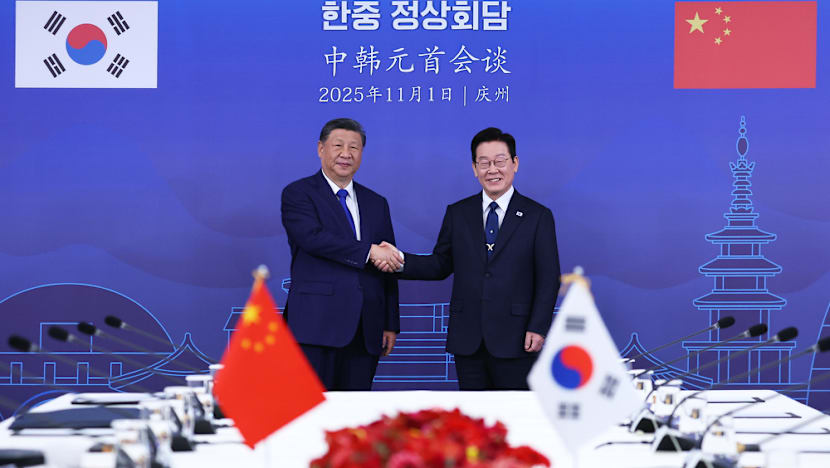
South Korean President Lee Meets Xi in Beijing Amid Regional Tensions

Latest from X
South Korean President Lee Meets Xi in Beijing Amid Regional Tensions
Beijing, January 4, 2026 – South Korean President Lee Jae Myung arrived in Beijing on Sunday for a significant second summit with Chinese President Xi Jinping, marking the first visit by a South Korean leader to the Chinese capital in six years. The four-day state visit, which began just hours after North Korea launched ballistic missiles, underscores Seoul’s efforts to bolster diplomatic ties with Beijing while navigating complex regional challenges, including escalating tensions over Taiwan and the Korean Peninsula.
Lee’s arrival comes less than a week after China conducted large-scale military drills around Taiwan, an island Beijing claims as part of its territory. While the South Korean delegation has expressed a desire to focus on bilateral cooperation and peace initiatives, the shadow of regional instability looms large over the discussions. According to Channel News Asia, Lee hopes to sidestep the contentious Taiwan issue during the talks, prioritizing economic partnerships and stability on the Korean Peninsula.
Strengthening Ties Amid Shifting Alliances
Analysts view this summit as a signal of Beijing’s intent to reinforce relations with Seoul at a time of shifting regional alliances. As reported by Al Jazeera, China sees South Korea as a key partner in counterbalancing tensions with Japan and the United States, particularly over issues like Taiwan. Beijing’s outreach to Seoul is also seen as a strategic move to maintain influence in Northeast Asia amid growing geopolitical rivalries.
The agenda for the summit includes discussions on trade, technology, and cultural exchanges, with both leaders expected to explore ways to deepen their strategic cooperative partnership. However, the timing of North Korea’s latest missile launches adds urgency to the talks. Reuters reported that Lee is keen to promote peace initiatives for the Korean Peninsula, seeking China’s support in addressing Pyongyang’s provocations.
Regional Instability and North Korea’s Role
The latest ballistic missile launches by North Korea, which occurred just hours before Lee’s arrival in Beijing, have heightened concerns about stability in the region. North Korea’s actions are widely interpreted as a message to both Seoul and its international partners, complicating Lee’s diplomatic mission. China, as North Korea’s closest ally and largest trading partner, holds significant leverage in influencing Pyongyang’s behavior, and Lee is expected to press Xi for assistance in resuming dialogue with the reclusive state.
Background: A History of Diplomatic Engagement
South Korea and China have maintained a complex relationship since establishing formal diplomatic ties in 1992. While economic cooperation has flourished, with China being one of South Korea’s largest trading partners, political and security issues have occasionally strained relations. The deployment of the U.S. Terminal High Altitude Area Defense (THAAD) system in South Korea in 2016, for instance, led to economic retaliation from Beijing, highlighting the delicate balance Seoul must strike in its foreign policy.
Lee’s visit marks a continuation of efforts to mend and strengthen ties following his first summit with Xi in 2025. The exchange of high-level visits within months demonstrates a mutual commitment to dialogue, as noted by regional analysts. This second summit in Beijing is particularly significant as it reflects both nations’ recognition of the need for cooperation in addressing shared challenges, from economic recovery to regional security.
Outlook: Balancing Diplomacy and Regional Pressures
As the summit unfolds, observers are watching closely to see whether Lee and Xi can chart a path forward that prioritizes stability over conflict. While South Korea seeks to avoid entanglement in China’s disputes with Taiwan and Japan, it must also address domestic and international expectations to take a firm stance on security issues. For China, the summit offers an opportunity to reinforce its role as a regional leader while countering U.S. influence in Asia.
Posts on X from verified accounts, including news outlets like Reuters and The Japan Times, reflect the global attention on this meeting, with many highlighting the delicate balance of diplomacy amid tensions over Taiwan and North Korea’s actions. The discussions in Beijing over the next few days could set the tone for Northeast Asian geopolitics in 2026, with implications for peace and cooperation across the region.
In a region fraught with uncertainty, Lee’s visit to Beijing represents a critical moment for South Korea and China to align on common goals. Whether this summit will yield concrete outcomes remains to be seen, but it is clear that both leaders are keenly aware of the high stakes involved.
Track this story live
Live World Map
Monitor global events in real time with a live activity map and hotspot summaries.
Markets
Connect live events to Catalyst market signals across crypto, commodities, indices, and forex.
Geopolitical Risk
Live geopolitical risk index tracking conflict zones, sanctions, and global threat levels.
Original Sources
- •South Korean president lands in China, hoping to sidestep Taiwan tensions— Channel News Asia
- •
- •
Editorial process: This article was synthesized from the original sources cited above using The World Now's AI editorial system, with byline accountability from our editorial team. We grade every story for source grounding, factual coherence, and on-topic match before publication. Read more about our editorial standards and contributors. Spot something inaccurate? Let us know.
Last updated: February 13, 2026






