South Korea Intensifies Efforts to Stabilize Wobbling Won Amid Economic Uncertainty

Latest from X
South Korea Intensifies Efforts to Stabilize Wobbling Won Amid Economic Uncertainty
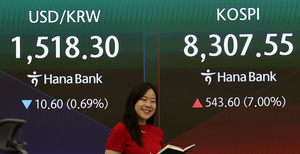
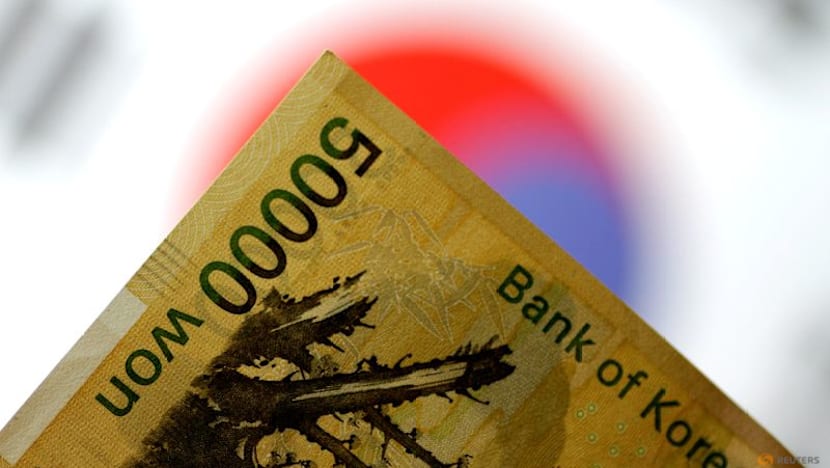
South Korea's finance minister and central bank governor have pledged comprehensive measures to shore up the weakening South Korean won, addressing growing economic concerns as of January 5, 2026. This response comes amid global market volatility and domestic challenges, highlighting the government's commitment to maintaining financial stability in a key Asian economy.
In a coordinated announcement on January 5, 2026, South Korea's finance minister and Bank of Korea governor outlined plans to implement targeted interventions to stabilize the won, which has faced depreciation pressures due to factors such as fluctuating global interest rates, trade tensions, and domestic policy shifts. The won has weakened against major currencies like the U.S. dollar in recent months, exacerbating concerns about inflation and export competitiveness. Officials emphasized a proactive approach, including potential liquidity injections and foreign exchange market operations, to prevent further erosion of the currency's value. This move is part of broader efforts to safeguard the economy, which has been a regional powerhouse driven by exports in sectors like semiconductors, automobiles, and technology.
The announcement follows a period of heightened economic scrutiny, with the won's value dipping to multi-month lows earlier in the week. According to reports from channelnewsasia, the finance ministry and central bank are prioritizing "all necessary steps" to restore market confidence, including close monitoring of currency fluctuations and readiness to deploy additional tools if needed. While specific details of the measures were not immediately disclosed, experts suggest this could involve increasing foreign reserves or coordinating with international partners. The government's stance underscores the won's role as a barometer of South Korea's economic health, particularly given its heavy reliance on trade with China, the U.S., and other partners.
Contextually, South Korea's economy has navigated a complex landscape in recent years. The country, with a GDP of approximately $1.7 trillion as of 2025 estimates, has rebounded from the COVID-19 pandemic but faces ongoing challenges such as slowing domestic demand, rising household debt, and geopolitical risks from tensions in the region. The won's instability is not isolated; it mirrors broader global trends, including U.S. Federal Reserve rate hikes and uncertainties in China's economy. Historically, South Korea has demonstrated resilience, as seen in its response to the 1997 Asian financial crisis and the 2008 global recession, where swift policy actions helped stabilize markets. This current effort builds on that legacy, with officials drawing from past experiences to mitigate risks.
Adding to the narrative, posts on X from verified financial analysts and news organizations have echoed sentiments of ongoing financial adjustments in South Korea. For instance, discussions among experts highlight potential expansions in policy finance and measures related to household loans, reflecting a broader push for stability. These online insights, while not official, suggest that the government's actions may extend to supporting low-income households and firms, potentially including loan freezes or enhanced credit facilities. Such commentary provides a window into market perceptions, though it remains inconclusive and should be viewed alongside official data.
In the background, South Korea's economic strategy has increasingly focused on innovation and digital transformation. The government's "Digital New Deal" initiative, launched in 2020, aims to bolster sectors like AI and green energy, which could indirectly support currency stability by fostering long-term growth. However, recent data from the Bank of Korea indicates that consumer spending and exports have slowed, with the won's weakness potentially impacting import costs for essential goods. Analysts from international bodies like the International Monetary Fund have noted that while South Korea's fundamentals remain strong, external shocks could amplify vulnerabilities.
Looking ahead, the success of these stabilization efforts will depend on both domestic execution and global conditions. If the measures effectively curb the won's decline, they could boost investor confidence and aid economic recovery. Conversely, persistent pressures might necessitate further interventions. As of January 5, 2026, the government's proactive stance signals a commitment to navigating these challenges, with close coordination between fiscal and monetary authorities expected to play a pivotal role in the coming months. South Korea's response will be closely watched by regional economies, given its influence in global supply chains and trade networks.
Track this story live
Live World Map
Monitor global events in real time with a live activity map and hotspot summaries.
Markets
Connect live events to Catalyst market signals across crypto, commodities, indices, and forex.
Stock Market Prediction
AI-powered stock market forecasts for S&P 500, Nasdaq, and Dow Jones with geopolitical analysis.
Recession Risk
Track recession risk indicators with AI-powered macro stress and market behavior analysis.
Original Sources
- •
Editorial process: This article was synthesized from the original sources cited above using The World Now's AI editorial system, with byline accountability from our editorial team. We grade every story for source grounding, factual coherence, and on-topic match before publication. Read more about our editorial standards and contributors. Spot something inaccurate? Let us know.
Last updated: January 17, 2026