
Singapore Businesses Grapple with Rising Costs and US Tariffs, Squeezing Profit Margins
Singapore, January 11, 2026 – Businesses across Singapore are increasingly citing rising operational costs and escalating US tariffs as their primary challenges, threatening profit margins and complicating expansion efforts in a volatile global trade landscape.
The concerns come amid a tougher international economic environment, where trade barriers and inflationary pressures are weighing heavily on the city-state's export-oriented economy. According to recent reporting, companies like skincare chain Kskin are feeling the pinch directly, with US tariffs driving up the costs of essential equipment and products. Kskin, which began its overseas expansion in 2023 by opening outlets in Malaysia, the Philippines, and the United States, has seen its financial pressures mount in recent months.
Brian Ng, director of Kskin, highlighted the impact in an interview with This Week in Asia, stating: “Our margins [at..." – a comment underscoring how these external factors are eroding profitability. The firm's experience exemplifies broader trends affecting Singaporean enterprises, which rely heavily on seamless global supply chains.
Mounting Pressures on Operations
Singapore's business community has identified rising costs – including energy, labor, and raw materials – alongside tariffs as top hurdles. These issues are not isolated but part of a confluence of global disruptions, including supply chain bottlenecks lingering from the post-pandemic recovery and geopolitical tensions influencing trade policies.
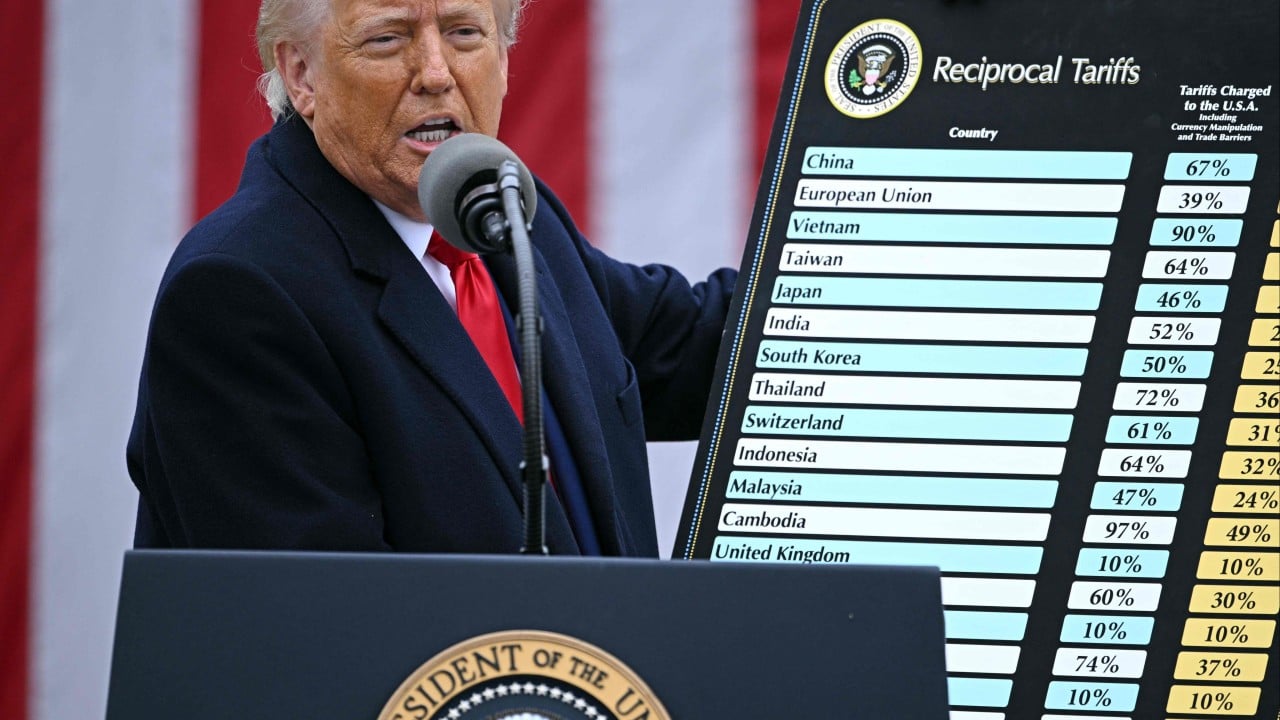
The US tariffs in question primarily target imports from key manufacturing hubs in Asia, affecting electronics, machinery, and consumer goods sectors where Singapore plays a pivotal role as a re-export hub. Singapore's trade ministry data indicates that the country handled over S$1 trillion (about US$745 billion) in total trade in 2024, with the US as one of its top partners. Any escalation in tariffs disrupts this flow, raising landed costs for importers and exporters alike.
Businesses report that fast-changing regulations compound the problem. For instance, compliance with varying tariff schedules and origin rules under agreements like the US-Singapore Free Trade Agreement (FTA) of 2004 demands constant vigilance. Ng's remarks reflect a sentiment echoed in surveys by local chambers of commerce, where members frequently flag cost inflation as a drag on competitiveness.
Economic Context and Singapore's Vulnerabilities
Singapore's economy, one of Asia's most open and trade-dependent, grew by 4.4% in 2024 according to advance estimates from the Ministry of Trade and Industry (MTI), driven by manufacturing and financial services. However, vulnerabilities persist. The nation-state imports nearly all its food, energy, and raw materials, making it acutely sensitive to global price swings. Inflation, which peaked at 6.1% in early 2023, has moderated but remains a concern, with core inflation hovering around 2-3% into 2025.
The reimposition or expansion of US tariffs – potentially under a new administration's protectionist agenda – revives memories of the 2018-2020 US-China trade war, which shaved 0.3-0.5 percentage points off Singapore's GDP growth, per MTI assessments. Singapore, while not directly targeted like China, suffered indirect hits through rerouted trade and supply chain shifts. Electronics and precision engineering firms, which account for about 20% of manufacturing output, were particularly affected.
In response, the government has rolled out support measures. The Enterprise Singapore agency offers grants for productivity enhancements and market diversification, while the 2025 budget allocated S$1 billion for SMEs to navigate trade disruptions. Recent MTI statements emphasize resilience-building through regional pacts like the Regional Comprehensive Economic Partnership (RCEP) and the Comprehensive and Progressive Agreement for Trans-Pacific Partnership (CPTPP), which Singapore champions to offset bilateral tariff risks.
Broader Implications for Businesses and Outlook
For firms like Kskin, the tariffs translate to higher procurement costs from US-bound supply lines, prompting reviews of pricing strategies and supplier bases. Ng's partial quote illustrates the margin squeeze: businesses must either absorb costs, risking viability, or pass them to consumers in a price-sensitive market.
Industry leaders anticipate further challenges if US policy hardens post-2024 elections, with potential Section 301 tariffs on tech and green energy products rippling through ASEAN supply chains. The Singapore Business Federation's latest pulse check, conducted in late 2025, found 62% of respondents viewing trade policy uncertainty as a top risk, surpassing domestic labor shortages.
Looking ahead, analysts expect Singapore's central bank, the Monetary Authority of Singapore (MAS), to maintain its appreciating Singapore dollar policy to combat imported inflation, even as growth forecasts for 2026 hover at 2-3%. Businesses are pivoting toward intra-ASEAN trade, which grew 8% year-on-year in 2025, and emerging markets in India and the Middle East.
While the severity of these challenges rates as medium-term, sustained adaptation will be key. As Ng's experience shows, Singapore's agile entrepreneurs are resilient, but prolonged trade frictions could test the limits of this small, open economy's famed adaptability.
(Word count: 712)