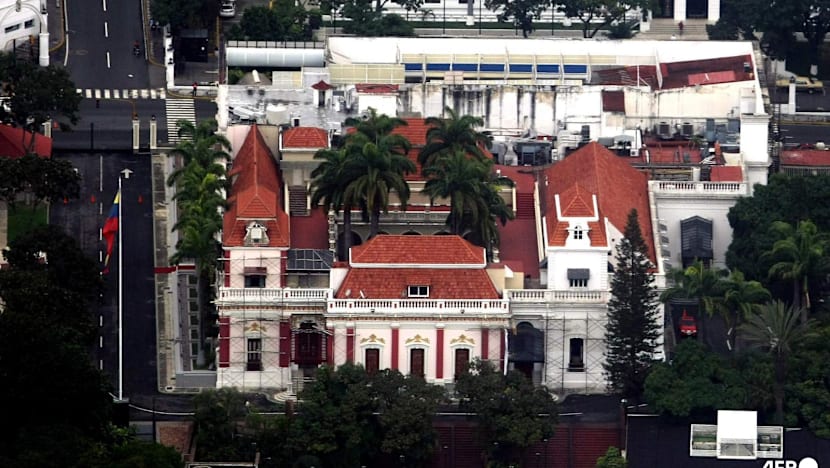
Shots Fired Near Venezuelan Presidential Palace Spark Security Fears in Caracas

Latest from X
Shots Fired Near Venezuelan Presidential Palace Spark Security Fears in Caracas
Caracas, Venezuela – Witnesses reported hearing shots fired near the Miraflores Presidential Palace in Caracas early Tuesday, heightening concerns over security in the Venezuelan capital amid persistent political tensions. The incident, which occurred around 1:53 a.m. GMT on January 6, 2026, has not been officially confirmed by authorities, but reports suggest the situation is now under control.
According to witnesses cited in initial reports, gunfire echoed close to the heavily fortified presidential compound, the longtime seat of power for President Nicolás Maduro's government. The Channel News Asia article, drawing from on-the-ground accounts, described the event as raising immediate alarms about potential threats to the palace and surrounding areas. No casualties or injuries have been reported, and details on the source of the shots remain unclear.
A source close to the presidency, referenced in dispatches from the Agence France-Presse (AFP) circulating on social media platforms, stated that the situation was quickly brought under control. Posts found on X (formerly Twitter) echoed these claims, with users sharing AFP updates noting that police and security forces responded promptly. However, these social media reports remain inconclusive and have not been independently verified by major outlets.
Eyewitness Accounts and Immediate Response
Eyewitnesses in the vicinity of the palace described hearing multiple shots, prompting a swift mobilization of security personnel. The Miraflores Palace, located in the heart of Caracas, is a symbol of Maduro's 26-year rule under the United Socialist Party of Venezuela (PSUV). It has long been a focal point for both government loyalists and opposition demonstrators.
While official statements from the Venezuelan government or the Bolivarian National Armed Forces (FANB) were not immediately available at the time of reporting, past incidents near the palace have involved pro-government paramilitary groups known as "colectivos." Historical context from 2024 protests saw similar reports of shots fired by these armed civilian units to disperse anti-Maduro crowds near key sites like the palace and central bank. Although no direct links have been established to those events, the recurrence underscores ongoing volatility.
Social media buzz intensified shortly after the reports surfaced, with users on X posting about "chaos near the regime's heart" and expressing fears of escalating unrest. One post highlighted prayers for Venezuelans amid claims of a crumbling grip on power, reflecting widespread public anxiety. These sentiments, while not evidentiary, capture the polarized atmosphere in a nation grappling with economic collapse and political deadlock.
Broader Context of Venezuelan Instability
Venezuela's political landscape remains deeply fractured following the disputed July 28, 2024, presidential election. Maduro was declared the winner by the government-controlled National Electoral Council (CNE), but opposition leaders, including exiled figurehead Edmundo González Urrutia and barred politician María Corina Machado, presented evidence of a landslide victory for the opposition. International observers, including the United Nations and governments from the U.S. to the European Union, criticized the process as lacking transparency, leading to renewed U.S. sanctions and diplomatic isolation for Maduro.
Protests erupted nationwide in the election's aftermath, met with crackdowns that rights groups like Human Rights Watch documented as resulting in over 2,000 arrests and at least 24 deaths. Maduro's January 10, 2025, inauguration further inflamed tensions, with the opposition boycotting proceedings and regional allies like Brazil and Colombia expressing skepticism.
Economically, Venezuela faces hyperinflation, mass emigration—over 7.7 million people have fled since 2014, per UN estimates—and oil production woes despite vast reserves. The U.S. Treasury's recent sanctions on Maduro allies, including those tied to gold trafficking and corruption, add pressure. Amid this, security incidents near government strongholds like Miraflores amplify fears of attempted coups or internal dissent, reminiscent of a failed 2019 uprising led by opposition lawmaker Juan Guaidó.
The palace itself has witnessed dramatic moments, including a 2018 drone attack allegedly targeting Maduro, which the government blamed on opposition plotters. Investigations pointed to dissident military elements, resulting in arrests and heightened palace fortifications.
Outlook and International Reactions
As of early January 6, 2026, no group has claimed responsibility for the shots, and Venezuelan authorities have yet to issue a formal statement. Security around Miraflores has been visibly bolstered, with reports of increased police presence on Caracas streets.
The international community is monitoring closely. The U.S. State Department, which does not recognize Maduro's legitimacy post-2024, issued general travel warnings for Venezuela citing arbitrary arrests and violence. Neighboring countries and the Organization of American States (OAS) have called for dialogue, though Maduro dismisses such overtures as foreign interference.
This incident, while contained, risks reigniting protests in a population weary of shortages and repression. With Maduro's term extending into 2031 under contested electoral reforms, stability hinges on fragile balances between regime forces, opposition resilience, and external pressures. Analysts warn that any perceived weakness could embolden factions, but the government's iron grip on security apparatuses suggests short-term containment.
Further details are awaited from official channels and independent verifications. The World Now will continue updating as events unfold.
(Word count: 728)
Track this story live
Original Sources
- •Shots fired near Venezuela presidential palace: Witnesses— Channel News Asia
Editorial process: This article was synthesized from the original sources cited above using The World Now's AI editorial system, with byline accountability from our editorial team. We grade every story for source grounding, factual coherence, and on-topic match before publication. Read more about our editorial standards and contributors. Spot something inaccurate? Let us know.
Last updated: March 8, 2026






