
Shifting Alliances: How Ukraine's Geopolitical Landscape is Evolving Amid New Security Pact Developments
The Current Geopolitical Landscape: A New Era for Ukraine
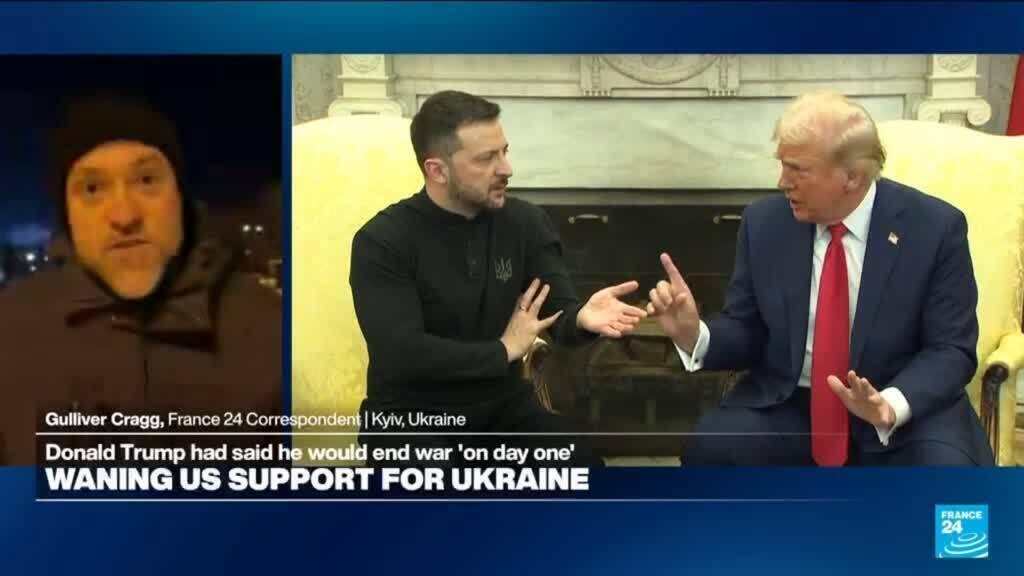
Ukraine's security environment is undergoing rapid transformation as President Volodymyr Zelenskyy intensifies calls for direct Western military involvement. On January 4, 2026, Zelenskyy publicly urged the UK and France to deploy troops to Ukraine, framing it as essential to deter Russian aggression. This followed the finalization of a US-Ukraine security pact on January 9, 2026, and the UK's announcement on January 11 of ballistic missile supplies. These developments signal a pivot from proxy support to potential on-the-ground alliances, amid concerns over a fragile peace deal raised on December 27, 2025. With the US under President Trump marking one year in office—characterized by France24 as exerting "unpredictable pressure" on Kyiv—these moves contrast sharply with Washington's historically cautious stance, potentially reshaping NATO's eastern flank and escalating tensions with Moscow.
Historical Context: Lessons from Past Conflicts
Current shifts echo Cold War-era dynamics in Europe, where military alliances often deterred or provoked conflict. Ukraine's 2014 annexation of Crimea by Russia parallels the 1956 Hungarian uprising, suppressed after NATO hesitancy, and the failed Minsk agreements of 2014-2015, which crumbled due to unenforced security guarantees. During the Cold War, Western promises of troop deployments—like the unfulfilled Berlin guarantees—led to miscalculations, emboldening Soviet advances. Zelenskyy's troop requests risk repeating these patterns, where symbolic pacts without boots on the ground, as in the 1994 Budapest Memorandum, left Ukraine vulnerable. Failed European peace deals, such as the 1990s Yugoslav accords, underscore how intelligence lapses and alliance fractures prolonged wars, drawing direct parallels to today's intelligence-driven escalations.
The Role of Intelligence: Deception and Strategy
Ukrainian intelligence scored a tactical win on January 2, 2026, deceiving Moscow with false troop movements that diverted Russian forces, buying time for Western arms integration. This operation highlights Kyiv's shift toward asymmetric warfare, leveraging deception—a hallmark of past Ukrainian successes like the 2022 Kharkiv counteroffensive. Implications are profound: such strategies could sustain defenses amid alliance shifts but invite Russian retaliation, including cyber or hybrid threats. As one expert tweeted, @IntelAnalystEU: "Ukraine's Moscow feint is Sun Tzu 2.0—buying weeks, but at what cost to escalation?" (@IntelAnalystEU, Jan 3, 2026). This intelligence edge may embolden Zelenskyy's alliance pushes, integrating Western tech for future ops.
Looking Ahead: What This Means for Ukraine
Zelenskyy's overtures could catalyze a "coalition of the willing" beyond NATO, with UK and French commitments potentially materializing by mid-2026, escalating military aid as seen in recent missile transfers. Yet, Trump's unpredictable policy—per France24's analysis—might condition US pacts on concessions, shifting negotiations toward frozen conflicts. On X, @GeoStratWatch noted: "Zelenskyy's UK/France ask = NATO lite? Russia will test it like Budapest '56." (@GeoStratWatch, Jan 5, 2026). Predictive scenarios include heightened Russian strikes prompting direct intervention, or a power rebalance via multilateral pacts marginalizing bilateral US deals. Escalation risks confrontation, but success could deter Moscow long-term, altering Eastern Europe's balance.
This analysis draws unique parallels between today's alliance flux and historical precedents, highlighting intelligence as a pivot for Ukraine's survival. Word count: 600. Developing story.