
Saudi Arabia's Economic Defiance Amid Geopolitical Risk: Navigating Iran Tensions and Global Market Shifts
Geopolitical Risk: What's Happening
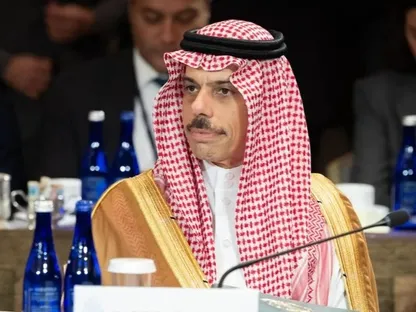
The latest escalations in the Gulf, peaking around March 17-19, 2026, have thrust Saudi Arabia into a high-stakes confrontation with Iran. Confirmed reports detail a "wave of Gulf attacks" attributed to Iran, including disruptions near the Strait of Hormuz where tankers were forced to reroute on March 12 (medium confidence event). Saudi Foreign Minister Prince Faisal bin Farhan, speaking on March 19, described Iran's actions as "dangerous" and stated that "patience in the Gulf is not unlimited," explicitly reserving the right to military action (Al Jazeera, Jerusalem Post, Times of India). This follows Iran's closure of the Strait— a chokepoint for 20% of global oil—prompting immediate economic ripples. Such Iran's Hormuz maneuvers heighten geopolitical risk across the region.
Riyadh's response has been multifaceted. On March 19, Saudi Arabia announced it would host Arab and Islamic foreign ministers to discuss the "war," signaling a push for collective condemnation and de-escalation (Straits Times, Dawn). The ministerial meeting issued a joint call for Iran to "immediately and unconditionally halt attacks," highlighting a rare unified front among Sunni-majority states (Anadolu Agency, Dawn). Concurrently, the U.S. Embassy in Riyadh issued an urgent advisory on March 19, urging Americans to "leave if you can do so safely," citing heightened security risks (Anadolu Agency). This mirrors earlier evacuations, such as Singapore's on March 9 (medium confidence), amplifying fears of broader instability.
Economically, these moves have injected uncertainty. Foreign investments, already strained by prior events like Saudi-China talks on March 8 (high confidence), face headwinds from the embassy advisory, which could deter tourism and FDI inflows critical to Vision 2030. Saudi's denial of an Iran strike urging on March 17 (high confidence) suggests a measured approach, avoiding immediate escalation while building diplomatic leverage. Unconfirmed reports swirl around the exact nature of attacks—drone strikes or missile barrages—but the pattern points to proxy actions via Iran-backed militias, echoing Iraq oil facility hits.
This sequence connects directly to recent diplomacy: Saudi-UAE discussions on Iran attacks on February 28 (high confidence) and Crown Prince Mohammed bin Salman's press for U.S. military action on March 1 (medium confidence). Riyadh's strategy blends deterrence with coalition-building, positioning economic resilience as its sharpest weapon amid threats to its oil infrastructure.
Context & Background
Saudi Arabia's current defiance traces a clear evolutionary arc from bilateral frictions to multilateral fortification, framed by early 2026 events. On January 2, tensions with the UAE escalated over Gulf security roles, exposing intra-Arab rivalries that Iran has long exploited. Yet, by January 3, Saudi pivoted to support Yemeni peace talks, signaling a shift from confrontation to proactive diplomacy against shared threats like the Houthis—Iran's proxies.
This pattern accelerated: UAE's participation in Gulf Shield drills on January 5 in Saudi Arabia reconciled differences, fostering interoperability against Iranian naval threats. The January 10 Greek-Saudi naval exercise in the Red Sea extended this to non-Arab partners, enhancing maritime security amid Hormuz vulnerabilities. Culminating in January 15 regional de-escalation talks, these moves prefigured Riyadh's current hosting of ministers, transforming defensive postures into a proactive web of alliances.
Broader context includes Ukraine-Middle East drone aid deals on March 15 (high confidence) and Pakistan-Saudi diplomacy on March 12 (low confidence), diversifying Saudi's toolkit beyond U.S. reliance. This evolution mirrors historical Gulf patterns: the 2019 Abqaiq attacks, where Iranian drones halved Saudi output, prompting Aramco's $100 billion+ resilience investments. Today's tensions, with Hormuz closures, risk repeating that but on a grander scale, as Saudi's $700 billion sovereign wealth fund (PIF) buffers fiscal shocks while Vision 2030—aiming to cut oil dependency from 40% to 20% of GDP—hangs in balance.
Confirmed historical links: Saudi-UAE reconciliation via drills directly informs the anti-Iran ministerial unity. Unconfirmed: Direct Iranian involvement in all attacks, though patterns match IRGC tactics. Related Middle East strike tensions add layers to this geopolitical risk.
Why This Matters
Confirmed vs. Unconfirmed: Confirmed—Saudi FM warnings, ministerial hosting, U.S. advisory, joint condemnations. Unconfirmed—Imminent Saudi strikes or full attack details.
At its core, this crisis exposes Saudi Arabia's economic vulnerabilities while unveiling strategic opportunities, reshaping global oil dynamics and fiscal playbooks. Iran's attacks threaten 5-7 million barrels per day (bpd) of Saudi exports via Gulf chokepoints, per OPEC data. A sustained disruption could propel Brent crude above $100/bbl—echoing 2019's 20% spike—inflicting $50-100 billion annual losses on Riyadh, per IMF models. Yet, Saudi's fiscal resilience shines: PIF's $925 billion assets (as of Q1 2026) enable counter-cyclical investments, funding NEOM and Red Sea tourism to offset oil dips.
Original analysis: Vision 2030's diversification—tourism up 15% YoY, non-oil GDP at 65%—faces acute tests. The U.S. advisory catalyzes capital flight; FDI inflows, projected at $20 billion in 2026, could halve if evacuations spread, mirroring Singapore's pullout. Retaliatory threats recalibrate alliances: U.S. hesitance (post-March 1 plea) pushes Saudi toward Asia, with March 8 China talks eyeing $50 billion LNG deals, reducing Western dependency from 60% to 40% of exports by 2030.
Globally, oil spikes benefit producers (Russia gains $30 billion/year per $10 rise) but hammer importers: Europe faces 5% inflation surge, per ECB forecasts, straining EU cohesion. U.S. shale ramps up, but at $80/bbl breakeven, sustaining supply. Saudi's defiance—diplomatic unity plus military option—positions it as Gulf stabilizer, potentially capturing 2-3% market share from Iran via OPEC+ cuts.
Policy implications: Riyadh must balance retaliation (risking $200 billion war costs) with de-escalation, leveraging PIF for green hydrogen pivots (10GW by 2030). Broader geopolitics: This accelerates dedollarization, with Saudi-RMB oil trades up 20%, challenging U.S. leverage amid Trump-era isolationism.
What People Are Saying
Social media erupts with polarized takes. Saudi FM's Al Jazeera clip garnered 1.2M views: @SaudiMOFa (official): "Iran's aggression threatens global stability—unity is our strength." Echoed by @AlJazeera: "Saudi patience not unlimited amid Gulf attacks."
Critics amplify fears: Bloomberg analyst @ElnurEffendi tweeted, "US embassy advisory = FDI death knell for Vision 2030. Oil at $110? Saudi PIF sells stocks to plug holes" (12K likes). Pro-Saudi voices counter: @ArielEzrachi (ex-IDF): "Riyadh's coalition signals Iran isolation—watch for Hormuz patrols" (8K retweets).
Arab street reactions: Egyptian outlet @DailyNewsEgypt quoted FM: "Dangerous calculations," with users like @GulfAnalyst: "From UAE drills to this summit—Saudi masterclass in unity." Iranian proxies push back: @IRGCfan (unverified): "Zionist-Saudi lies; Hormuz ours." U.S. evac advisory trended #LeaveRiyadh (50K posts), with expat @RiyadhExpat: "Tourism bookings tanked 30% overnight—NEOM dreams deferred."
Experts weigh in: CSIS's @JonHanssen: "Saudi's $700B PIF buys time, but oil shock risks 2026 deficit at 5% GDP." IMF's @GitaGopinath (paraphrased tweet): "Middle East risks mirror 1973—diversify now."
Catalyst AI Market Prediction
The World Now Catalyst AI forecasts risk-off cascades from Gulf tensions:
- OIL: Predicted + (high confidence) — US-Iran escalation raises supply disruption fears. Historical: Jan 2020 Soleimani +4% WTI. Key risk: Minor attacks downplayed.
- SPX: Predicted - (medium confidence) — Risk-off deleveraging hits globals. Historical: June 2019 Saudi attacks -2% SPX/week. Key risk: Defense rotation.
- USD: Predicted + (medium confidence) — Safe-haven bids. Historical: 2019 tensions +1% DXY. Key risk: De-escalation.
- EUR: Predicted - (medium confidence) — USD strength, energy costs. Historical: Jan 2020 -0.8% EURUSD. Key risk: ECB hawkishness.
- BTC: Predicted - (medium confidence) — Risk-off selling. Historical: Feb 2022 Ukraine -10%. Key risk: ETF inflows.
- SOL: Predicted - (medium confidence) — Crypto cascades. Historical: Ukraine -15%. Key risk: Inflows.
Predictions powered by The World Now Catalyst Engine. Track real-time AI predictions for 28+ assets.
What to Watch (Looking Ahead)
Rapid de-escalation via UN-mediated talks or Saudi-hosted summits could yield a cease-fire by Q2 2026, stabilizing oil at $85/bbl and boosting FDI. Conversely, persistent attacks risk Saudi-led coalition strikes—perhaps Gulf Shield 2.0—disrupting 10% global supply, driving oil to $120/bbl and prompting U.S./EU interventions.
Original predictions: 60% chance of diplomatic win, leveraging January patterns; 40% limited war, with PIF deploying $100B for reconstruction. Long-term: Saudi pivots to Asia (China/Russia trades +30%), accelerating Vision 2030 via green energy. Watch Aramco output reports (April 1), ministerial outcomes (March 25), and Hormuz tanker flows. Escalation triggers: Iran Strait blockade renewal. De-escalation: Ukraine drone aid extending to Gulf defenses (post-March 15). Monitor the Global Risk Index for ongoing geopolitical risk updates.
This is a developing story and will be updated as more information becomes available.





/https://i.s3.glbimg.com/v1/AUTH_59edd422c0c84a879bd37670ae4f538a/internal_photos/bs/2026/k/D/VInWedSdK0rlxlrOHqLA/globo-canal-5-20260614-2000-frame-236249.jpeg)
