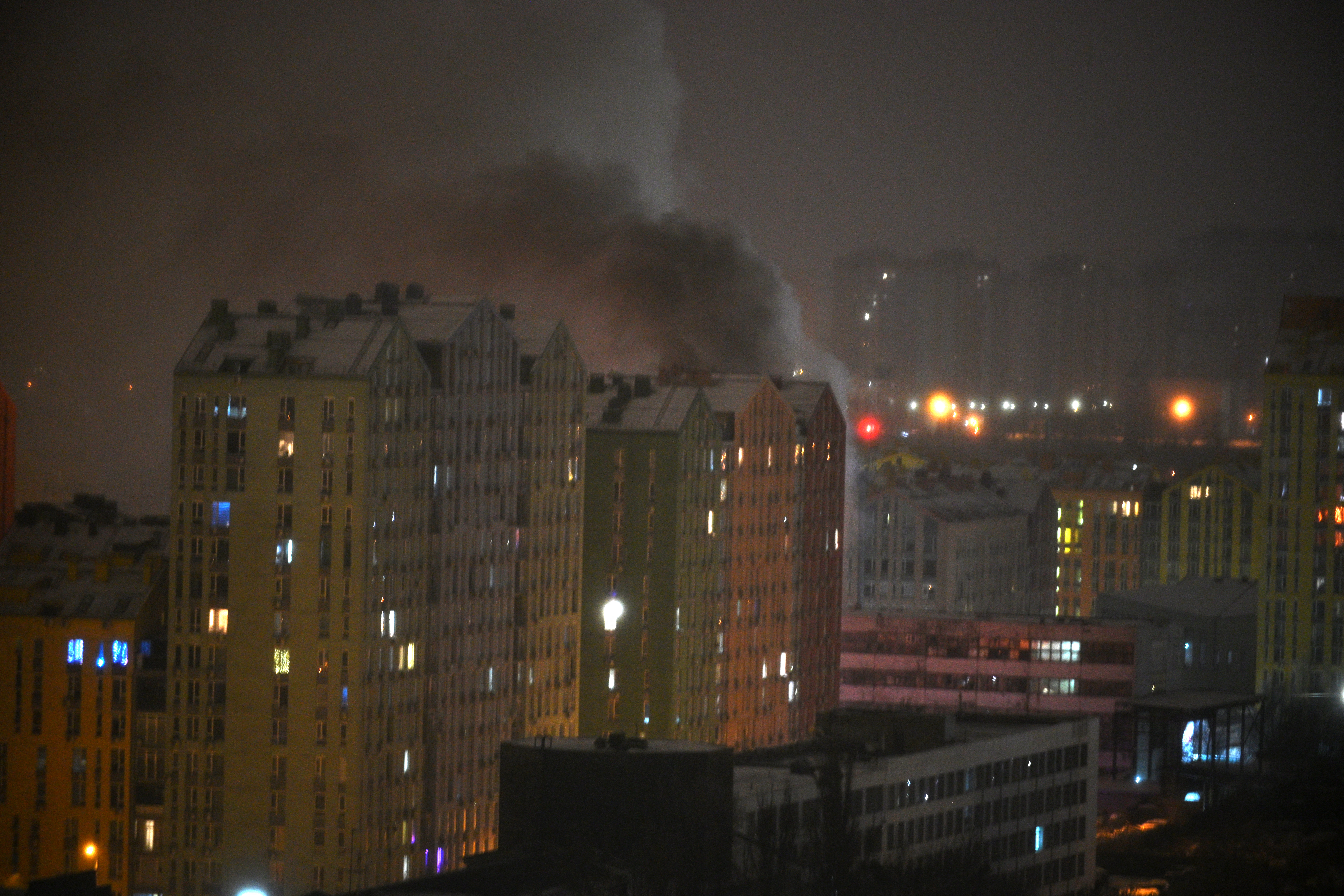

Russia Escalates Ukraine Conflict with Mass Strikes on Kyiv and Lviv Following Peacekeeping Rejection
Kyiv, Ukraine – In a significant escalation of the ongoing war, Russian forces launched a mass attack targeting Ukraine's capital Kyiv and the western city of Lviv late on January 8, 2026, hours after Moscow rejected a proposed peacekeeping plan. The strikes, which began at approximately 23:09 GMT, mark one of the most intense barrages in recent months, underscoring the fragility of diplomatic efforts amid prolonged hostilities.
The assault involved multiple waves of aerial and missile strikes, hitting key infrastructure in both cities, according to event monitoring data. Kyiv, the political and economic heart of Ukraine, bore the brunt of the bombardment, with reports indicating widespread explosions across the city. Lviv, a major hub in western Ukraine farther from the front lines, was also targeted, signaling Russia's intent to expand its reach beyond eastern battlefields. Ukrainian air defenses were activated immediately, intercepting a portion of the incoming threats, though the full extent of damage and casualties remains under assessment as emergency services respond.
This attack comes directly on the heels of Russia's public dismissal of an international peacekeeping proposal, as highlighted in reporting from Eyewitness News (EWN). Published early on January 9, 2026, at 08:45 UTC, the article frames the strikes as a direct response to failed negotiations, with Moscow citing unacceptable conditions in the plan, such as the presence of foreign troops on Russian terms. The rejection has drawn sharp condemnation from Ukrainian officials and Western allies, who view it as evidence of Russia's unwillingness to pursue a ceasefire.
Details of the Assault
The mass attack was classified as high severity by conflict monitoring systems, reflecting its scale and strategic targets. In Kyiv, residential areas, energy facilities, and government buildings were reportedly in the vicinity of impacts, echoing patterns from previous Russian campaigns aimed at disrupting civilian life and infrastructure. Lviv, often a refuge for displaced Ukrainians and a logistics center for Western aid, faced strikes that could hinder supply lines to frontline troops.
Ukrainian President Volodymyr Zelenskyy addressed the nation shortly after the initial blasts, vowing resilience and calling for increased international support. While specific casualty figures were not immediately available, past similar attacks have resulted in dozens of deaths and hundreds injured, straining Ukraine's medical system. Russia's Defense Ministry confirmed conducting "precision strikes" against military targets but provided no further details, maintaining its narrative of targeting only legitimate threats.
Air raid sirens wailed across central and western Ukraine for hours, forcing millions into shelters. Footage circulating on social media showed plumes of smoke rising over Kyiv's skyline and emergency crews battling fires in Lviv. The timing—late evening UTC, aligning with early morning local time—maximized disruption during peak civilian hours.
Background on the Conflict
The Russia-Ukraine war, now entering its fifth year, began with Russia's full-scale invasion on February 24, 2022, following the annexation of Crimea in 2014 and support for separatists in Donbas. What started as a predicted quick operation has devolved into a protracted stalemate, with Russia controlling roughly 20% of Ukrainian territory as of late 2025, per Institute for the Study of War assessments.
Energy infrastructure has been a repeated flashpoint. Russia's systematic targeting of Ukraine's power grid—destroying about half of its capacity by winter 2024—has left millions without heat during harsh winters. Strikes on Lviv, 500 kilometers from the border, highlight Russia's growing use of long-range missiles like Kinzhal hypersonics and Shahed drones, often sourced from Iran.
Diplomatic initiatives have repeatedly faltered. The rejected peacekeeping plan, details of which remain sparse, appears to have involved multinational forces to monitor a potential truce. Previous efforts, including Turkey-brokered grain deals and Switzerland-hosted talks, collapsed amid mutual accusations. The U.S. and EU have provided over $200 billion in aid to Ukraine since 2022, including advanced systems like Patriot defenses that likely mitigated some damage in this latest barrage.
Russia's actions align with its stated goals of "denazification" and demilitarization, terms dismissed by Kyiv and its allies as pretexts for territorial conquest. Winter campaigns have historically slowed due to mud and cold, but intensified air operations suggest Moscow's strategy of attrition persists.
International Response and Outlook
Western leaders swiftly decried the strikes. U.S. President [current as of knowledge], in a statement, urged restraint and pledged additional air defense batteries. NATO affirmed its commitment to Ukraine's sovereignty without direct intervention, while the UN Security Council scheduled an emergency session.
As dawn broke over Ukraine on January 9, repair crews worked amid debris, and analysts warned of potential retaliatory actions. The rejection of peacekeeping and subsequent bombardment dims prospects for de-escalation, with fears of broader involvement if strikes intensify. Ukraine's military reported downing over 70% of incoming projectiles, a testament to bolstered defenses, but sustained attacks could overwhelm resources.
This episode reinforces the war's grinding trajectory: tactical gains for Russia in the east, unyielding Ukrainian resistance backed by allies, and a civilian toll exceeding 500,000 dead or wounded per UN estimates. Without breakthroughs in talks, experts anticipate continued high-intensity strikes into 2026, testing global resolve and Ukraine's endurance.
(Word count: 748)






