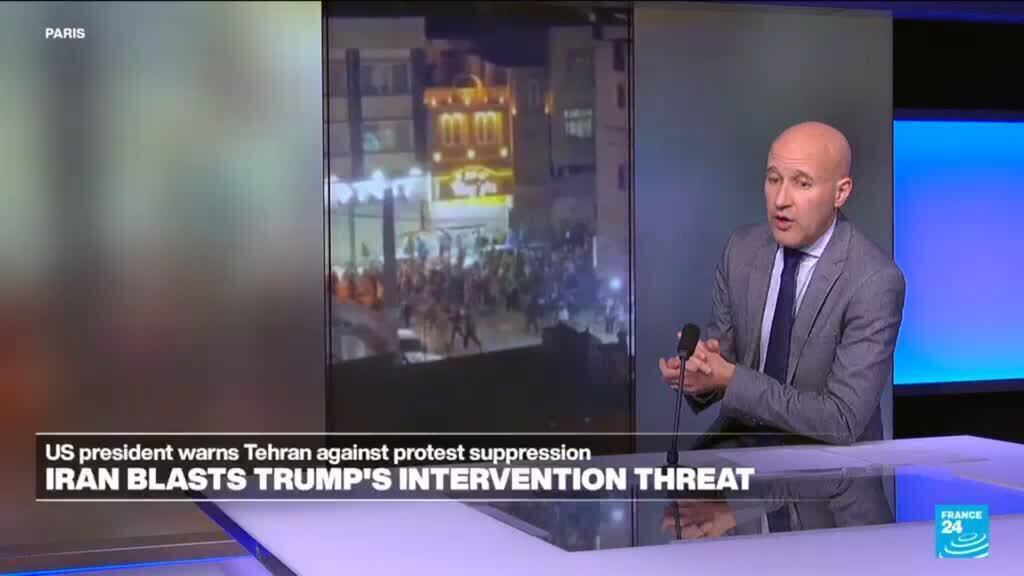

Rising Tensions: Iran Warns of Harsh Response to U.S. Threats Amid Economic Unrest
Iran's President Masoud Pezeshkian has issued a stern warning of a "harsh response" in reaction to threats from U.S. President Donald Trump, marking a significant escalation in tensions between the two nations. The warning follows a series of confrontational exchanges that began on December 30, 2025, and has intensified in the context of ongoing economic protests within Iran.
Escalating Threats and Protests
In the backdrop of increasing protests across Iran, which have reportedly resulted in at least seven deaths, President Trump has reiterated the United States' readiness to intervene should Iran threaten U.S. interests or allies. This statement appears to be a response to the Iranian government's efforts to suppress dissent amid widespread economic grievances. Demonstrators have taken to the streets, chanting anti-government slogans, as frustrations mount over economic conditions exacerbated by ongoing sanctions and a faltering economy.
According to France 24, the protests represent a significant challenge to the Islamic Republic, with security forces clashing with demonstrators. The situation has further deteriorated since a U.S. airstrike on Iranian nuclear sites in June 2025, which has been a point of contention in U.S.-Iran relations.
Iran's Response and Regional Implications
President Pezeshkian's warning indicates that Iran may be preparing to respond vigorously to any perceived aggression from the U.S. government. “Any attack against our sovereignty will be met with a proportionate response,” Pezeshkian stated in a press conference, emphasizing Iran's commitment to defending its territorial integrity and sovereignty.
The Iranian leadership's rhetoric comes at a time when the country is exploring alternative avenues for economic transactions, including the use of cryptocurrencies to circumvent Western sanctions. Reports have surfaced that Iran is considering accepting Bitcoin for the export of military equipment, a strategy that could have significant implications for international trade and sanctions enforcement.
Background on U.S.-Iran Relations
The recent escalation occurs against a backdrop of strained U.S.-Iran relations characterized by decades of hostility, particularly since the U.S. withdrawal from the Joint Comprehensive Plan of Action (JCPOA) in 2018. Economic sanctions have severely impacted Iran's economy, leading to high inflation and widespread discontent among the populace. In recent months, these economic pressures have ignited protests, placing additional strain on the Iranian government as it navigates both domestic unrest and external threats.
Outlook
As the situation unfolds, the potential for further confrontation remains high. The international community is closely monitoring developments, with calls for de-escalation from various global leaders. Analysts warn that any miscalculation by either side could lead to a wider conflict, particularly given the volatile nature of the region and the longstanding tensions that exist.
In conclusion, the current geopolitical landscape between Iran and the United States remains precarious. With President Pezeshkian's stark warning and ongoing protests within Iran, the coming weeks will be crucial in determining the trajectory of U.S.-Iran relations and stability in the Middle East.






