Radio Failure Paralyzes Greek Airspace, Disrupting Flights Nationwide

Latest from X
Radio Failure Paralyzes Greek Airspace, Disrupting Flights Nationwide
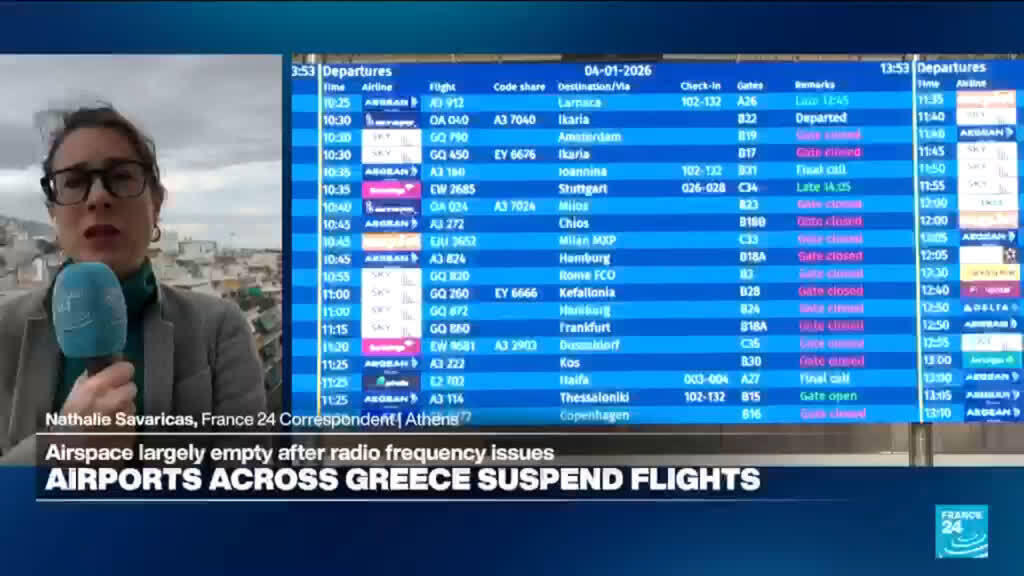
Athens, Greece - A major radio frequency failure has brought Greek airspace to a standstill on Sunday, January 4, 2026, grounding departures and causing widespread flight diversions across the country. The technical malfunction, which began early in the morning, has affected all major airports, including Athens International Airport, leaving thousands of passengers stranded during the final weekend of the holiday travel period. Authorities are scrambling to resolve the issue, prioritizing safety while offering little clarity on the cause of the disruption.
The Hellenic Civil Aviation Authority confirmed that the problem lies within the Athens Flight Information Region (FIR), a critical control center responsible for managing all aircraft entering and exiting Greek airspace. According to reports from France24, the suspension of arrivals and departures was implemented as a precautionary measure, with only overflights—aircraft passing through Greek airspace without landing—being permitted under limited conditions. Flight tracking data shows Greek airspace as largely empty, a stark contrast to the usual bustle of holiday travel.
Passengers at Athens International and regional airports have been left in limbo, with many waiting in crowded departure halls as delays ripple across the network. “We’ve been here for hours with no clear information,” said one traveler interviewed by France24 correspondent Nathalie Savaricas in Athens. “It’s frustrating, especially since we’re trying to get home after the holidays.” Reports from Reuters indicate that some flights have begun to resume as technicians work to restore communication systems, though full operations are not yet restored.
The exact cause of the radio frequency failure remains under investigation. Preliminary assessments, as noted in posts on X from sources familiar with the situation, suggest a possible circuit failure in the central radio systems at the Athens and Macedonia control centers. However, officials have not confirmed these speculations, emphasizing that safety protocols will remain in place until the issue is fully resolved. The lack of official communication has fueled uncertainty among travelers and aviation experts alike.
Background on Greek Airspace Management
The Athens FIR is a vital component of Greece’s aviation infrastructure, overseeing one of the busiest air corridors in the eastern Mediterranean. It serves as the primary point of contact for all aircraft operating in Greek airspace, coordinating with neighboring countries and international aviation bodies. Technical disruptions in this region can have cascading effects, not only within Greece but also for international flights routed through the area. Past incidents, such as strikes by air traffic controllers, have similarly disrupted travel in Greece, though today’s event appears to be purely technical in nature.
Greece’s role as a popular tourist destination, especially during holiday seasons, amplifies the impact of such disruptions. January marks the tail end of the winter holiday period, with many travelers returning home or visiting the country’s historic sites and islands. The timing of this failure has thus compounded its severity, affecting both domestic and international passengers.
Outlook and Ongoing Response
Authorities have assured the public that resolving the radio frequency issue is their top priority. Teams of technicians are working around the clock to identify and repair the fault, with intermittent updates suggesting gradual progress. Some flights have resumed, as reported by Reuters, though a full restoration of normal operations may take additional time. Airlines have been advised to reroute flights to neighboring countries where possible, with airports in Bulgaria, Turkey, and Albania receiving diverted aircraft.
For now, travelers are urged to check with their airlines for the latest updates and to anticipate further delays. The Hellenic Civil Aviation Authority has promised to provide more detailed information once the root cause of the failure is determined. As the situation unfolds, the focus remains on ensuring the safety of all aircraft and passengers, even as the disruption casts a shadow over Greece’s aviation reliability at the start of the new year.
This incident serves as a reminder of the fragility of critical infrastructure in modern air travel. As investigations continue, the global aviation community will be watching closely to see how Greece addresses this challenge and what measures are implemented to prevent similar disruptions in the future.
Track this story live
Original Sources
- •Airports across Greece suspend flights— France24
- •
Editorial process: This article was synthesized from the original sources cited above using The World Now's AI editorial system, with byline accountability from our editorial team. We grade every story for source grounding, factual coherence, and on-topic match before publication. Read more about our editorial standards and contributors. Spot something inaccurate? Let us know.
Last updated: January 11, 2026