
Protests Grip Minneapolis After ICE Officer Fatally Shoots Woman in Traffic Stop
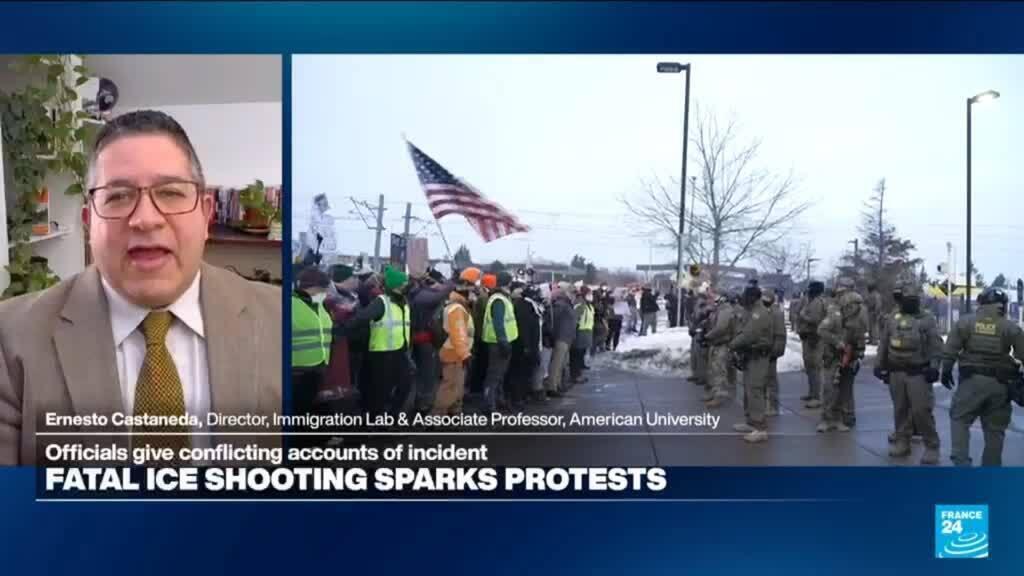
Minneapolis, Minnesota – Demonstrations erupted in the streets of Minneapolis overnight following the fatal shooting of a 37-year-old woman by a U.S. Immigration and Customs Enforcement (ICE) officer during a routine traffic stop on Wednesday evening. The incident, which occurred amid heightened federal immigration enforcement in the city, has drawn sharp condemnation from local leaders and reignited debates over aggressive federal policies under the Trump administration.
The shooting took place around 10:14 p.m. GMT on January 7, 2026, local time in Minneapolis, transforming a standard traffic stop into a flashpoint for public outrage. According to reports, the ICE officer opened fire on the driver, killing her at the scene. Details surrounding the circumstances of the shooting remain limited as investigations are underway, but the event quickly escalated into widespread protests, with demonstrators flooding downtown streets into the early hours of Thursday.
Local residents and officials expressed fury over the incident, viewing it as emblematic of broader frustrations with intensified immigration operations in the area. Minneapolis, long a hub for immigrant communities and designated as a sanctuary city, has seen increased ICE activity in recent months as part of the Trump administration's push for large-scale deportations and stricter border enforcement. Protesters chanted slogans criticizing federal overreach, blocking intersections and clashing sporadically with law enforcement, though no major injuries or arrests were immediately reported from the demonstrations.
Minneapolis City Council members and community advocates were quick to denounce the shooting. "This tragedy underscores the dangers of unchecked federal immigration tactics in our neighborhoods," one local leader stated in initial reactions covered by international media. The city's history of civil unrest, including the massive protests following the 2020 killing of George Floyd by police, has left residents particularly sensitive to incidents involving law enforcement and communities of color, many of whom overlap with immigrant populations.
Ernesto Castañeda, Director of the Immigrant Lab and Associate Professor at American University in Washington, D.C., provided expert analysis on the unfolding situation. Speaking to France 24, Castañeda highlighted how the shooting amplifies existing tensions: "Residents and local officials were already upset by the Trump administration’s sweeping immigration enforcement operations in the city." He contextualized the event within a national pattern of escalated ICE raids, noting that such operations have strained relations between federal agents and local authorities in progressive strongholds like Minneapolis.
Background on ICE Operations and Minneapolis Tensions
U.S. Immigration and Customs Enforcement, a component of the Department of Homeland Security, is tasked with enforcing federal immigration laws, including deportations and workplace raids. Under the second Trump administration, which began in January 2025, ICE has ramped up operations significantly, targeting interior enforcement with promises of the "largest deportation operation in American history." This includes expanded traffic stops and collaborations with local law enforcement in some areas, though sanctuary policies in cities like Minneapolis limit such cooperation.
Minneapolis-St. Paul has a large immigrant population, including significant Somali, Hmong, and Latin American communities. The city council voted in 2016 to limit cooperation with ICE, a stance that has persisted despite federal pressure. Recent weeks have seen multiple ICE arrests in the Twin Cities metro area, fueling community fears and legal challenges. The fatal shooting marks a deadly escalation, drawing parallels to past controversies where ICE actions have led to violence or deaths during encounters.
Federal officials have not yet released body camera footage or an official statement on the incident, but ICE typically reviews such use-of-force cases through its internal affairs and the Department of Justice. The officer involved has been placed on administrative leave, per standard protocol.
Outlook Amid Rising National Tensions
As of Thursday afternoon, protests continued in pockets around the city, with organizers calling for transparency, the officer's prosecution, and a halt to ICE operations in Minnesota. Local police have urged calm while monitoring for escalation. Nationally, the event adds to a string of civil unrest markers in 2026, including immigration-related demonstrations in other cities like Los Angeles and Chicago, where similar enforcement actions have sparked backlash.
Immigration remains a polarizing issue, with Trump administration supporters praising the crackdowns as necessary for public safety and economic protection, while critics argue they sow fear and violate due process. Castañeda's insights suggest the Minneapolis shooting could galvanize further opposition, potentially influencing midterm political dynamics.
Investigations by the FBI and Minnesota Bureau of Criminal Apprehension are expected to provide more clarity in the coming days. For now, the city braces for continued unrest, a stark reminder of the fault lines dividing federal policy from local realities.
(Word count: 612)