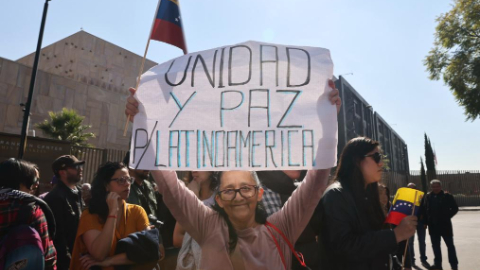

Protests Erupt Outside U.S. Embassy in Mexico City Amid Public Unrest
Protests have erupted outside the U.S. Embassy in Mexico City, reflecting growing public discontent over various domestic and international issues. The demonstrations began on January 4, 2026, and have drawn attention to the complexities of U.S.-Mexico relations and the broader socio-political climate in the country.
The protests are characterized by a diverse group of participants, including students, labor unions, and various civic organizations. Many demonstrators are voicing their frustrations regarding perceived U.S. interference in Mexican affairs, as well as local issues such as corruption, economic inequality, and violence. The demonstration outside the embassy serves as a platform for expressing grievances against both the Mexican government and its relationship with the United States.
Witnesses report that the atmosphere at the protest was charged but not violent, with a significant police presence ensuring the situation remained under control. As protesters chanted slogans and held signs, they called for greater accountability from their leaders and an end to what they view as detrimental policies influenced by the U.S. government.
"The people are tired of being ignored," one protester stated. "We want our voices to be heard, and we will not stop until there is change." The calls for reform resonate with a growing sentiment among Mexicans who feel disenfranchised and marginalized by both their own government and foreign powers.
The timing of the protests comes amid a backdrop of increasing tensions in the region, with various issues contributing to civil unrest. Factors such as economic challenges, rising crime rates, and a perceived lack of effective governance have fueled discontent among the populace. Additionally, the ongoing U.S.-Mexico dialogue surrounding immigration and trade policies has been a point of contention, leading many to question the direction of their country’s relationship with its northern neighbor.
Background context reveals that this unrest is not an isolated incident but rather part of a broader pattern observed in Mexico over recent years. Protests have become a common means for citizens to express dissatisfaction with government actions and policy decisions, especially in light of the ongoing issues of corruption and violence that plague the nation.
As the protests continue to unfold, the Mexican government has yet to release an official response to the demonstrations. Analysts suggest that how authorities handle the situation could significantly influence public sentiment moving forward. The government’s approach to addressing the protesters’ concerns will be crucial in either alleviating tensions or exacerbating the unrest.
In conclusion, the protests outside the U.S. Embassy in Mexico City represent a significant moment of civil unrest in the country, highlighting the complexities of U.S.-Mexico relations and the broader socio-political issues facing the Mexican populace. As citizens strive for their voices to be heard, the implications of these demonstrations may resonate far beyond the streets of Mexico City, potentially influencing policy discussions and diplomatic relations in the months to come.






