
Political Violence Escalates in the United States as 2026 Begins
As the new year unfolds, a warning from a former FBI agent highlights a troubling escalation of political violence in the United States. The warning comes in the wake of a series of incidents, including an alleged assassination attempt on a public figure and increased attacks on Immigration and Customs Enforcement (ICE) facilities. These developments signal a concerning trend in civil unrest as the nation grapples with deeply polarized political sentiments.
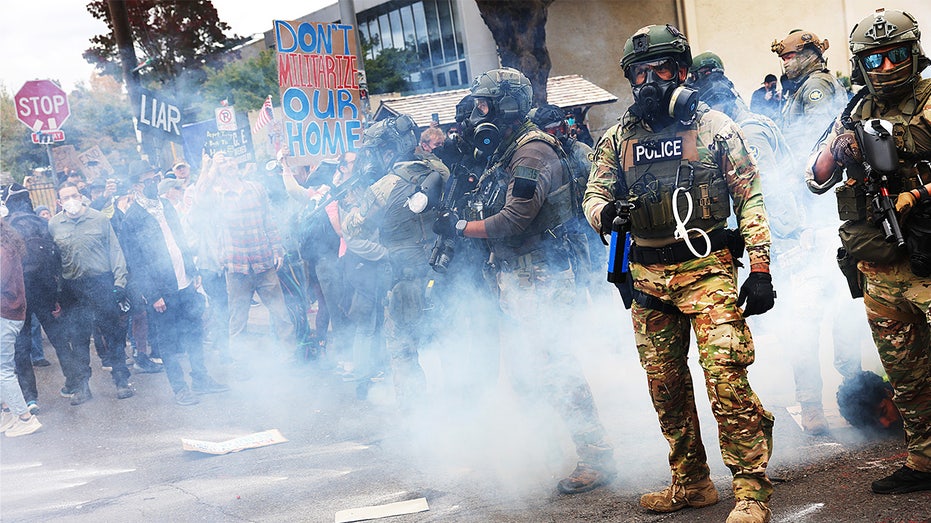
On January 2, 2026, a federal lawsuit was filed by Oregon residents against the Department of Homeland Security (DHS) following an incident where tear gas was deployed against anti-ICE protesters. The lawsuit seeks to prohibit the use of tear gas near an ICE facility in the state, citing harm to local residents, including families and children who live in the vicinity. This incident reflects a broader climate of tension surrounding immigration policies and enforcement actions, which have frequently sparked protests and counter-protests across the country.
The former FBI agent's remarks underscore growing fears of political violence as demonstrations become more intense and confrontational. Recent events indicate that such unrest is not isolated; rather, it is indicative of a larger pattern of societal discord, with polarization reaching alarming levels. The alleged assassination attempt, which details remain scarce on, raises serious concerns about the safety of public officials and the potential for further violence.
The lawsuit in Oregon highlights the intersection of local community concerns and federal immigration enforcement policies. Residents argue that the use of tear gas not only poses health risks but also exacerbates divisions within the community. As tensions simmer, the legal action aims to address what the plaintiffs describe as excessive and unnecessary force used by federal agents against peaceful protesters.
The escalation of political violence coincides with a period of increased scrutiny of ICE activities, as public opinion remains divided on immigration issues. Activists argue that aggressive enforcement tactics contribute to a hostile environment that incites further unrest. As the lawsuit unfolds, it may set a precedent for how federal law enforcement interacts with local communities, particularly in high-stakes situations involving immigration enforcement.
As 2026 progresses, the potential for further incidents of political violence looms large. Experts warn that without proactive measures to address underlying grievances, the cycle of violence may continue to spiral. The federal government, along with local authorities, faces the challenge of balancing law enforcement needs with the rights of citizens to peacefully assemble and protest.
In conclusion, as evidenced by the recent lawsuit and the warning from the former FBI agent, the United States is entering a critical period where political violence and civil unrest are increasingly prevalent. The need for dialogue, reform, and de-escalation strategies has never been more pressing as communities navigate the complex landscape of political expression and law enforcement. The coming months will be crucial in determining whether the nation can find a path toward greater stability and understanding amidst rising tensions.






