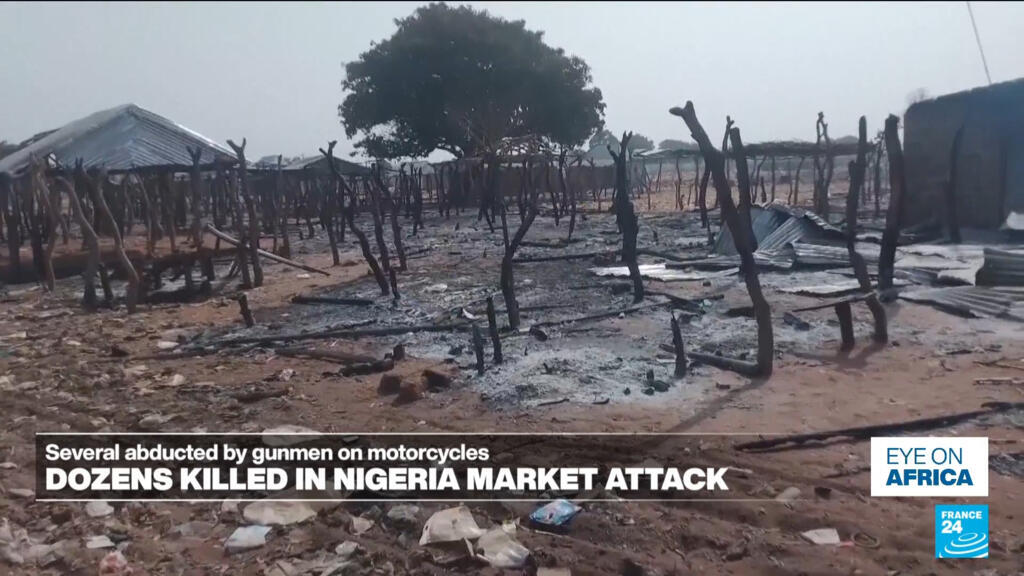

Nine Nigerian Soldiers Killed in Boko Haram Landmine Ambush in Borno State
Abuja, Nigeria – At least nine Nigerian soldiers were killed in northeastern Borno state on January 4 when their convoy struck a landmine, followed by gunfire from Islamist militants, highlighting the persistent security threats posed by groups like Boko Haram in the region.
The attack occurred in Borno, the birthplace and stronghold of Boko Haram, Nigeria's most notorious Islamist extremist group. According to reports from France 24, the soldiers were traveling in a convoy when the improvised explosive device (IED) detonated, crippling their vehicles. Militants then emerged from hiding to open fire on the survivors, underscoring the sophisticated ambush tactics increasingly employed by insurgents in the area. FRANCE 24 correspondent Sam Olukoya, reporting from Abuja, noted that this incident is part of a broader uptick in militant activities pressuring Nigeria's security forces amid the country's multifaceted security challenges.
Nigeria's military has been engaged in a protracted counter-insurgency campaign in the northeast since Boko Haram launched its insurgency in 2009. The group, whose name translates to "Western education is forbidden," has been responsible for thousands of deaths, mass abductions, and widespread displacement. Boko Haram pledged allegiance to the Islamic State (IS) in 2015, splintering into factions including the Islamic State West Africa Province (ISWAP), which has intensified operations in recent years. Borno state remains the epicenter, with remote rural areas providing ideal terrain for hit-and-run attacks on military convoys and civilian targets.
This latest strike adds to a string of deadly incidents in the region. In late 2025, similar ambushes and bombings have claimed dozens of lives, straining Nigeria's armed forces. The military's Joint Task Force, Operation Hadin Kai, has reported neutralizing hundreds of militants and rescuing hostages in ongoing operations, but roadside bombs and IEDs continue to inflict heavy casualties. Official statements from the Nigerian Army often highlight successes, such as the elimination of high-value targets, yet ground-level attacks like this one expose vulnerabilities in troop movements through insurgent-held territories.
The fragile security situation in Nigeria's northeast is compounded by humanitarian crises. Over 2.2 million people remain internally displaced, according to United Nations estimates, with malnutrition and lack of access to services exacerbating vulnerabilities. Boko Haram and its affiliates have exploited these conditions, recruiting from impoverished communities and launching attacks on aid convoys. International partners, including the United States, United Kingdom, and Chad, provide training, intelligence, and logistical support to Nigerian forces, though direct intervention remains limited.
Background on Nigeria's Insurgency
Boko Haram's campaign began with assaults on police stations and schools, evolving into a full-scale war by 2014 that saw the group seize territory the size of Belgium. A multinational coalition, led by Nigeria, pushed back the militants by 2016, but the group adapted, fragmenting and adopting guerrilla warfare. ISWAP, a more disciplined offshoot, has focused on economic targets like oil fields and military outposts, while retaining Boko Haram's core ideology.
Recent intelligence assessments indicate a resurgence, with attacks surging in late 2025. Factors include leadership losses creating power vacuums, influxes of foreign fighters, and local grievances over governance. Nigeria's government under President Bola Tinubu has prioritized security, allocating significant budgets to defense and launching initiatives like the Safe School Areas program to protect education. However, critics argue that military solutions alone are insufficient without addressing root causes like poverty and corruption.
FRANCE 24's Olukoya emphasized from Abuja that "Nigeria's myriad of security problems continues to pressure security forces," pointing to nationwide issues including banditry in the northwest, separatist agitation in the southeast, and oil theft in the Niger Delta. The Borno attack underscores how the northeast insurgency bleeds resources needed elsewhere.
No group immediately claimed responsibility for the January 4 blast, but the modus operandi aligns with Boko Haram tactics. The Nigerian military confirmed the deaths and stated that troops responded, killing several attackers, though independent verification is pending.
Outlook
As Nigeria grapples with these escalating threats, experts warn of potential spillover into neighboring Chad, Cameroon, and Niger. Enhanced regional cooperation through the Lake Chad Basin Commission Multinational Joint Task Force is crucial, alongside community-based deradicalization programs. The government vows intensified operations, but incidents like this serve as stark reminders of the human cost.
With elections not imminent and economic pressures mounting from inflation and subsidy removals, stabilizing the northeast remains a top priority. International donors urge a balanced approach integrating military action with development aid to prevent further radicalization. For now, Nigerian troops patrol precarious roads in Borno, bracing for the next strike in a conflict that shows no signs of abating.
(Word count: 612)






