Nicolás Maduro Indicted on Narco-Terrorism Charges in New York, Held in Brooklyn Detention Center

Latest from X
Nicolás Maduro Indicted on Narco-Terrorism Charges in New York, Held in Brooklyn Detention Center
In a dramatic turn of events, ousted Venezuelan President Nicolás Maduro has been captured, transported to the United States, and indicted on serious charges of narco-terrorism and drug trafficking in New York. Maduro, along with his wife Cilia Flores, arrived in New York on January 3, 2026, following a U.S. military operation in Venezuela. He is currently being held at the Metropolitan Detention Center in Brooklyn, marking a significant escalation in U.S. efforts to hold the controversial leader accountable for alleged criminal activities.
The indictment, announced by U.S. Attorney General Pam Bondi on January 3, 2026, accuses Maduro of conspiring in narco-terrorism, drug trafficking, and weapons-related offenses. These charges, which Maduro denies, stem from long-standing allegations of his involvement with drug cartels and the misuse of Venezuelan state resources to facilitate illicit activities. The unsealing of the indictment came hours after U.S. forces conducted strikes in Venezuela and apprehended both Maduro and Flores in Caracas, an operation that has drawn sharp criticism from Venezuelan officials who have labeled it as “military aggression.”
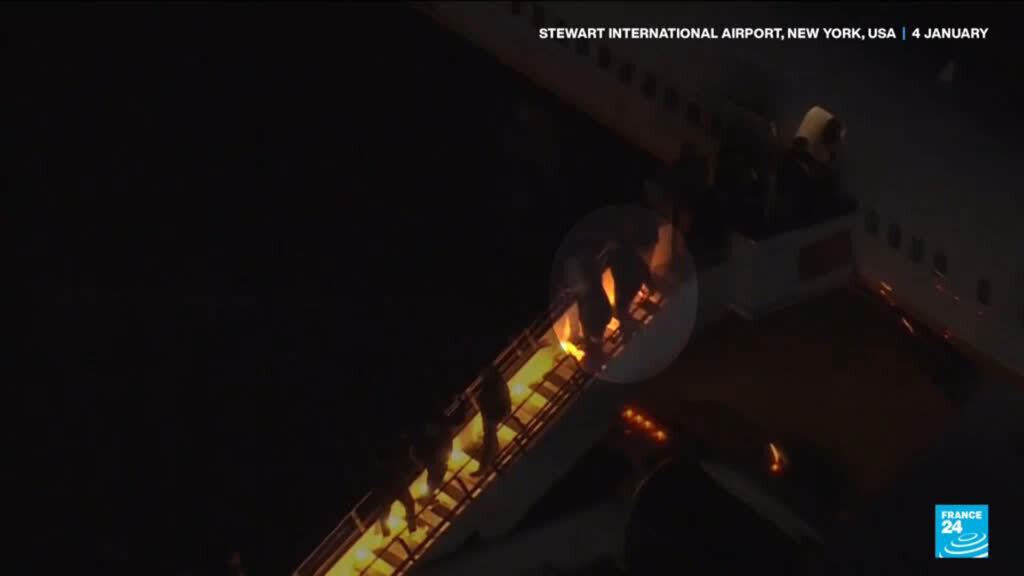
According to reports from France 24, Maduro was flown into Stewart Air National Guard Base in Newburgh, New York, before being transported by helicopter to New York City. Upon arrival at the Brooklyn detention facility, he was escorted in a van surrounded by police, as detailed by El País. In a surprising moment captured by onlookers, Maduro greeted those present with a casual “Happy New Year,” a remark that contrasted sharply with the gravity of his situation.
Details of the Capture and Charges
The operation to apprehend Maduro unfolded rapidly, with U.S. forces capturing him in Caracas on the morning of January 3 and transferring him to U.S. soil in less than 24 hours. This swift action has been met with mixed reactions, with some praising the U.S. for taking decisive steps against alleged criminal leadership, while others question the legality and geopolitical implications of such an intervention. The indictment, filed in the Southern District of New York, builds on previous accusations dating back to 2020, when Maduro was first charged with narco-terrorism by federal prosecutors.
Reports indicate that Maduro and his wife are being held separately at the Metropolitan Detention Center in Brooklyn, a federal facility known for housing high-profile inmates. The charges against them include conspiracy to commit narco-terrorism, a crime that carries severe penalties under U.S. law. U.S. officials have yet to release detailed statements on the next steps, but legal experts anticipate a high-profile trial that could further strain U.S.-Venezuela relations.
Background and Context
Nicolás Maduro has been a polarizing figure in international politics since assuming the presidency of Venezuela in 2013 following the death of Hugo Chávez. His tenure has been marked by economic collapse, widespread human rights abuses, and allegations of corruption and drug trafficking. The U.S. government has long accused Maduro of leading the “Cartel of the Suns,” an alleged drug trafficking network involving high-ranking Venezuelan military and government officials. These accusations led to a $15 million bounty on Maduro’s capture, announced by the U.S. Department of State in 2020.
The timing of Maduro’s capture and indictment coincides with renewed U.S. focus on Latin American policy under the current administration. President Donald Trump, in recent statements reported by BBC News, declared that the U.S. would “run” Venezuela following Maduro’s removal, a comment that has sparked intense debate over potential American intervention in the country’s governance.
International Reactions and Social Media Buzz
The capture of Maduro has ignited a firestorm of discussion on social media platforms like X, where posts from various users highlight the speed and audacity of the operation. Many note the rapid transfer from Caracas to Brooklyn, with some expressing shock at seeing a sitting head of state detained on U.S. soil. Others speculate on the political ramifications, though official statements from verified sources remain limited at this early stage.
Venezuela’s government has condemned the U.S. actions as an act of imperialism, vowing to resist what they describe as an illegal seizure of their leader. Meanwhile, opposition figures within Venezuela have expressed cautious optimism, hoping this development could pave the way for democratic reforms.
Outlook
As Nicolás Maduro awaits his legal proceedings in New York, the world watches closely to see how this unprecedented situation will unfold. The trial is expected to draw significant international attention, not only for its legal implications but also for its potential to reshape U.S.-Venezuela relations. For now, Maduro remains in custody at Brooklyn’s Metropolitan Detention Center, a stark symbol of the long arm of U.S. law enforcement reaching across borders to address allegations of global crime.
The coming weeks will likely reveal more about the evidence against Maduro and the broader geopolitical strategies at play. Until then, this high-profile case serves as a reminder of the complex interplay between international law, politics, and justice in addressing transnational crime.
Track this story live
Original Sources
- •
- •
Editorial process: This article was synthesized from the original sources cited above using The World Now's AI editorial system, with byline accountability from our editorial team. We grade every story for source grounding, factual coherence, and on-topic match before publication. Read more about our editorial standards and contributors. Spot something inaccurate? Let us know.
Last updated: March 7, 2026