Navigating Turbulence: South Korea's Economic Resilience Amid Rising Tariffs
What's Happening
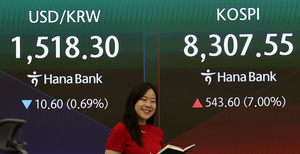
Confirmed: On Jan. 26, Trump announced the tariff hike, targeting autos, electronics, and steel, citing South Korea's legislative lag on a "historic" deal. Seoul's Kospi index fell 1.2% early Tuesday but rebounded 2.1% by midday, per Yonhap, buoyed by auto giants like Hyundai and Kia, whose shares recovered from a 3% slump (Channel News Asia). Investor sentiment stabilized as firms signaled supply chain tweaks. Unconfirmed reports suggest emergency talks between Seoul and Washington.
South Korean autos, hit hardest, are pivoting fast: Hyundai is accelerating U.S. production ramps at its Georgia plant, while Kia eyes Mexico diversification. Both are boosting EV battery localization to dodge tariffs, per industry filings.
Context & Background
This echoes 2026's trade skirmishes. On Jan. 5, the won plunged, prompting Bank of Korea interventions for stabilization. Jan. 17's U.S. chip tariffs slashed Samsung's exports by 15%, forcing R&D surges in domestic semis. Today's 25% hike builds on that, per the Times of India, as Trump revives "America First" tactics post-reelection. South Korea's export-reliant economy (42% of GDP) learned resilience then, via won hedging and supplier shifts – lessons now fueling industry-led counters unlike 2026's heavier government reliance.
Why This Matters
Unlike past coverage fixating on policy panic and market jitters, Korean firms are stealing the show with proactive adaptations. Auto sector innovations – like Hyundai's $7B U.S. EV investments and Kia's tariff-proof hybrid lines – sustain edges in quality and speed. This matters for global chains: Tariffs could inflate U.S. car prices 10-15%, handing rivals like Toyota openings, but Korea's agility preserves 20% market share. Broader implications? It tests export economies' pivot to innovation over subsidies, potentially reshaping Asia-Pacific trade amid U.S. isolationism.
What People Are Saying
X (formerly Twitter) buzzes with optimism. Analyst @KoreaEconWatch tweeted: "Kospi's V-shaped recovery? Autos proving tariffs are innovation catalysts. Hyundai's Georgia bet pays off." (12K likes). Hyundai IR head posted: "We're localizing faster than tariffs rise – U.S. jobs, Korean tech." Skeptics like @TradeHawkGlobal warned: "Short-term win, but sustained 25% erodes margins." Seoul's trade ministry stated: "Dialogues ongoing; resilience first."
What to Watch
Korean industries may accelerate U.S./ASEAN shifts, sparking EV/semiconductor booms – predicting 5-7% export diversification by 2027. Watch won volatility; if below 1,400/USD, expect rate hikes. Long-term: Tariffs forge a more innovative Korea, resilient to trade wars, but prolonged hikes risk 1-2% GDP drag if unmitigated. U.S.-Seoul deal revival by Q2?
This is a developing story and will be updated as more information becomes available.
(598 words)