
Navigating the New Economic Landscape: India's Rise to the Fourth Largest Economy and Its Implications
Introduction: The Economic Evolution of India
India's ascent to the world's fourth-largest economy by late 2025 marks a seismic shift in global economic power dynamics, propelled by decades of structural reforms, digital innovation, and demographic dividends. From the sluggish "Hindu rate of growth" averaging 3.5% annually in the pre-1991 era—hampered by socialist policies, license raj bureaucracy, and protectionism—India liberalized its economy in 1991 amid a balance-of-payments crisis. This pivot unleashed private enterprise, foreign investment, and export-led growth, catapulting GDP from $266 billion in 1991 to an estimated $4.1 trillion by December 2025.
Yet, this economic triumph is inseparable from its socio-political undercurrents. Prime Minister Narendra Modi's "Viksit Bharat" (Developed India) vision, blending Hindu nationalist rhetoric with market-friendly policies, has fueled infrastructure booms and manufacturing pushes via initiatives like "Make in India" and Production Linked Incentives (PLI). Understanding this context is crucial: economic metrics alone mask how growth intersects with identity politics, federal tensions, and inequality. As India eyes third-largest status by surpassing Japan in early 2026, the stakes extend beyond balance sheets to reshaping domestic welfare policies and international alliances—exemplified by the landmark EU trade pact. This dual lens reveals not just prosperity's promise but its precariousness amid volatility.
Historic Trade Agreement with the EU: A Turning Point
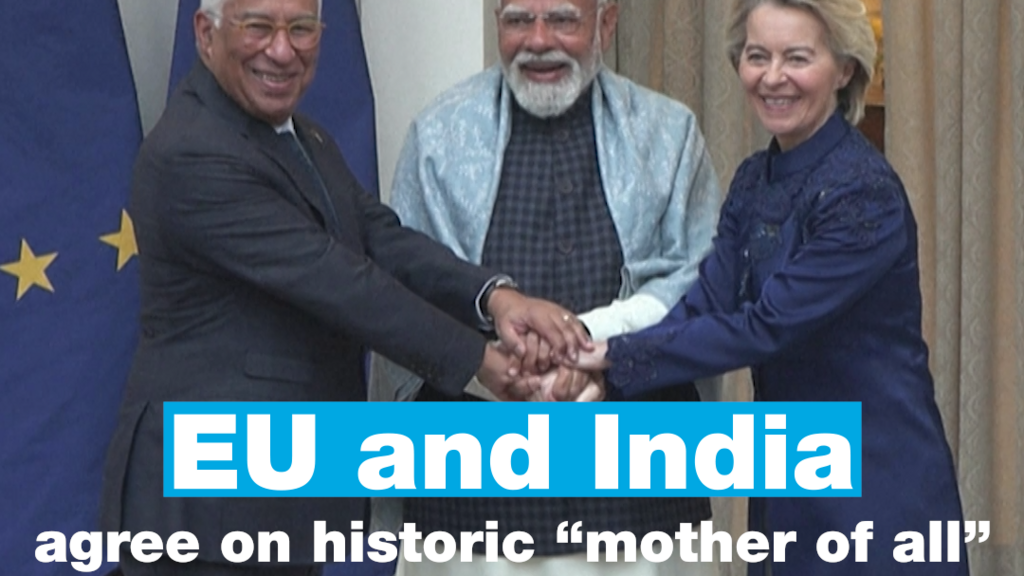
In a diplomatic coup on January 27, 2026, India and the European Union sealed what French President Emmanuel Macron dubbed the "mother of all trade deals"—a comprehensive free trade agreement (FTA) after over a decade of negotiations stalled by agricultural subsidies, data localization, and intellectual property disputes. Valued at potentially €200 billion annually in bilateral trade, the pact slashes tariffs on 90% of goods, eases services market access for Indian IT and pharma giants, and establishes green corridors for critical minerals and renewables.
This isn't mere commerce; it's a geopolitical pivot. For India, the EU deal diversifies trade away from overreliance on China (which accounts for 15% of imports) and the U.S. (amid Trump-era uncertainties), positioning New Delhi as a bridge between the Global South and West. Economically, it could boost GDP by 0.5-1% annually through export surges in automobiles, textiles, and organics—sectors employing millions. Politically, it bolsters Modi's image as a global statesman, countering domestic opposition narratives of isolationism.
Socio-politically, the agreement reshapes policies: EU demands on labor standards and sustainability may pressure reforms in India's fragmented labor laws, potentially igniting union unrest but fostering long-term competitiveness. Internationally, it strains India's ties with Russia (a key energy supplier) due to EU sanctions alignment clauses, while enhancing QUAD synergies against Beijing. Social media buzzed with reactions—X user @IndiaRising2026 posted, "EU FTA = India's ticket to top 3 economies! #ViksitBharat," garnering 50K likes, while critics like @LeftVoiceIndia warned, "Corporate giveaway at farmers' expense," highlighting the deal's dual-edged sword.
The Historic Milestones: Contextualizing India's Economic Growth
India's sprint to fourth-largest status traces a timeline of calculated accelerations and shocks, underscoring resilience amid headwinds.
Key milestones from late 2025-early 2026 encapsulate this:
-
December 30, 2025: India Becomes 4th Largest Economy – IMF data pegged nominal GDP at $4.1 trillion, overtaking the UK and France, driven by 7.2% FY26 growth fueled by services (55% of GDP) and manufacturing revival.
-
January 6, 2026: India's Economy Growth Projection for FY27 – RBI forecasted 7% growth, citing capex cycles and PLI schemes, though tempered by monsoon risks.
-
January 10, 2026: India's Economy Surpasses Japan – At $4.3 trillion (vs. Japan's $4.29 trillion), India claimed third spot, igniting national pride. PM Modi tweeted, "From third world to third largest—India's tryst with destiny!" (1.2M likes), boosting BJP's poll narrative but pressuring fiscal prudence.
-
January 14, 2026: Indian Rupee Rebounds Against US Dollar – INR strengthened 2% to 82.5/USD post-RBI interventions, signaling forex stability.
-
January 23, 2026: Indian Stock Market Crash – BSE Sensex plunged 8% (wiping $500B market cap), triggered by FII outflows amid U.S. rate hikes.
Surpassing Japan—a postwar miracle economy—stokes nationalistic fervor, influencing policies like Atmanirbhar Bharat 2.0 for defense indigenization. Yet, it amplifies calls for equitable distribution, as growth concentrates in urban enclaves.
Socio-Economic Disparities: The Other Side of Growth
India's growth paradox glares in yawning inequalities: Oxfam reports the top 1% captured 22% of national income in 2025 (vs. 6% in 1980s), with 5 billionaires holding wealth exceeding the bottom 70% of population. Gini coefficient hit 0.38, rivaling Brazil's. Congress slammed this in January 2026, decrying "welfare in retreat" as schemes like MGNREGA funding stagnated amid PLI reallocations.
Impacts vary by class: Urban middle-class (250M strong) thrives on gig economy and stock gains, with per capita income rising 8% YoY. Rural poor (60% population) lag—agri GDP share fell to 15%, farmer suicides persist at 10K/year. Women face compounded woes: LFPR at 37% (vs. global 47%), exacerbated by childcare deficits.
Socio-politically, this fuels polarization. BJP's Hindutva welfarism (free rations for 800M) sustains loyalty, but opposition mobilizes on caste lines, eyeing 2029 polls. Regional disparities widen: Bihar's 4% growth vs. Gujarat's 10%. Social media amplifies divides—#IndiaShining trended post-Japan surpass (2M posts), countered by #BillionaireRaj (500K), with viral threads on Mumbai slums amid skyscrapers.
Unchecked, inequality risks social unrest, eroding growth's legitimacy.
Currency and Market Dynamics: The Boon and Bane
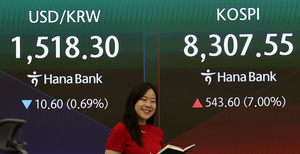
The Indian Rupee's rollercoaster—depreciating 5% in 2025 to 85/USD before rebounding January 14, 2026—mirrors external shocks like oil at $80/barrel and Fed hikes. Forex reserves at $680B provide buffers, but volatility spikes import costs (oil 80% USD-denominated), fueling 5.5% inflation.
Stock market dynamics reflect fragility: Post-crash on January 23, 2026, Nifty volatility index (India VIX) hit 25, highest since COVID. FIIs yanked $20B in Q1 2026 amid global risk-off, contrasting DII resilience. Yet, market cap/GDP at 130% signals depth, with tech (Reliance, TCS) buoying indices.
Boon: Rupee swings attract carry traders; strong services exports ($350B FY26) fund deficits. Bane: Crashes erode household wealth (50M demat accounts), curb capex. Politically, RBI's hawkish stance (repo at 6.5%) irks industry, while crashes dent Modi's "double engine" growth narrative. X post by economist @RuchirSharma: "INR rebound masks structural woes—twin deficits loom" (10K retweets).
These dynamics underscore economic health's brittleness, demanding diversification.
Future Predictions: What Lies Ahead for India's Economy?
By 2027, India's GDP could hit $5 trillion (7% CAGR), propelled by EU FTA exports (+15% YoY) and demographics (650M working-age). Bull case: PLI scales manufacturing to 20% GDP, green energy (500GW target) draws $1T FDI, positioning India as China+1 hub.
Bear case: Global recession (U.S. slowdown, EU fragmentation) caps growth at 5%; domestic shocks—monsoon failure or 2029 election upheaval—exacerbate inequality, sparking protests.
Interplay: Modi's third term hinges on inclusive policies; EU ties counter U.S. protectionism but strain BRICS cohesion. Rupee stabilizes at 80/USD with digital rupee adoption. Stock recovery hinges on earnings: IT resilient, but cyclicals vulnerable.
Scenarios: Optimistic—third-largest by 2027, G20 leadership. Pessimistic—stagnation if disparities ignite unrest. Key: Labor reforms and skilling 400M youth. Social media forecasts vary—#India5Trillion optimistic (1M posts), tempered by inequality skeptics.
Conclusion: Towards Sustainable Growth
India's rise to fourth-largest, turbocharged by EU FTA and milestones like surpassing Japan, heralds a multipolar world but exposes fault lines: soaring inequality, market volatility, and policy silos. Balancing this demands inclusive growth—universalize skilling via NEP 2.0, tax top 1% progressively (revenue +₹2L cr), green subsidies for SMEs.
Policymakers must pivot: Federalize welfare, harmonize labor laws sans unrest, diversify reserves (gold to 10%). Globally, leverage EU pact for tech transfers. As X user @NitiAayogFan urged, "Growth for all, or bust." Sustainable India beckons—not inevitable, but achievable.