
Navigating the Crypto Landscape: Understanding the Impact of Emerging Technologies on Global Adoption
Introduction
The convergence of artificial intelligence (AI) and blockchain technology is emerging as a pivotal force in reshaping cryptocurrency adoption worldwide. While traditional analyses focus on price volatility and regulatory hurdles, this intersection promises to enhance efficiency, security, and accessibility, potentially accelerating crypto's integration into global economies—especially in emerging markets facing economic instability.
The Technological Convergence: AI and Blockchain
AI's integration with blockchain addresses longstanding limitations in scalability, security, and usability, creating synergies that could drive mass adoption. AI algorithms can optimize blockchain consensus mechanisms, predict network congestion, and automate smart contract execution, reducing energy consumption and transaction times. For instance, machine learning models analyze on-chain data to detect anomalies, bolstering security against exploits like those seen in past DeFi hacks.
Case studies illustrate this potential. Fetch.ai, a decentralized AI network, leverages blockchain to enable autonomous economic agents that perform tasks like predictive trading without central intermediaries. SingularityNET, a marketplace for AI services on the Cardano blockchain, allows developers to monetize algorithms via crypto tokens, fostering innovation in areas like drug discovery and climate modeling. Ocean Protocol uses AI to facilitate secure data sharing on blockchain, enabling marketplaces where data providers earn tokens while maintaining privacy. These projects demonstrate how AI enhances blockchain's oracle problem—providing reliable off-chain data—through predictive analytics, a development echoed in recent social media buzz. On X (formerly Twitter), AI researcher @AIDailyInsights posted, "AI-blockchain fusion in Ocean Protocol could unlock $1T data economy by tokenizing real-world assets," garnering over 5K likes last week.
This convergence extends to real-world applications, such as AI-driven fraud detection in crypto exchanges and predictive maintenance for mining hardware, positioning blockchain as a robust backbone for AI's data-intensive needs.
Historical Context: The Rise and Fall of Cryptocurrencies
Cryptocurrency's journey began with Bitcoin's whitepaper in October 2008 and its genesis block mined on January 3, 2009, introducing peer-to-peer electronic cash amid the global financial crisis. Early adoption surged with the 2011 launch of altcoins like Litecoin, but the 2014 Mt. Gox hack—resulting in 850,000 BTC lost—exposed exchange vulnerabilities, leading to a market crash.
The 2017 ICO boom saw Ethereum enable token sales raising billions, peaking Bitcoin at nearly $20,000 before the 2018 "crypto winter" wiped out 80% of market cap amid regulatory scrutiny from the SEC. Recovery came with the 2020 DeFi summer, where yield farming on platforms like Uniswap drew $100B+ in value locked. The 2021 bull run, fueled by institutional entry via Grayscale and Tesla's $1.5B BTC purchase, pushed Bitcoin to $69,000, only for the 2022 Terra-Luna collapse and FTX bankruptcy to trigger another downturn.
Lessons from these cycles include the need for robust risk management, diversified ecosystems, and adaptive regulation. Past fluctuations underscored blockchain's resilience but highlighted overreliance on hype, informing today's focus on utility-driven tech like AI integration.
Current Market Sentiment: Analyzing Recent Trends
Bitcoin and Ethereum face downward pressure from macroeconomic factors and sector-specific events. Bitcoin hovers around recent lows following a Paradex exchange glitch that briefly crashed its price to zero, triggering mass liquidations and eroding trader confidence (Decrypt, Jan 19, 2026). Ethereum, Dogecoin, and Cardano are similarly pressured by broader market corrections, with Bitcoin's "golden cross" technical indicator at risk amid sliding prices (Coingape; Decrypt, Jan 19, 2026).
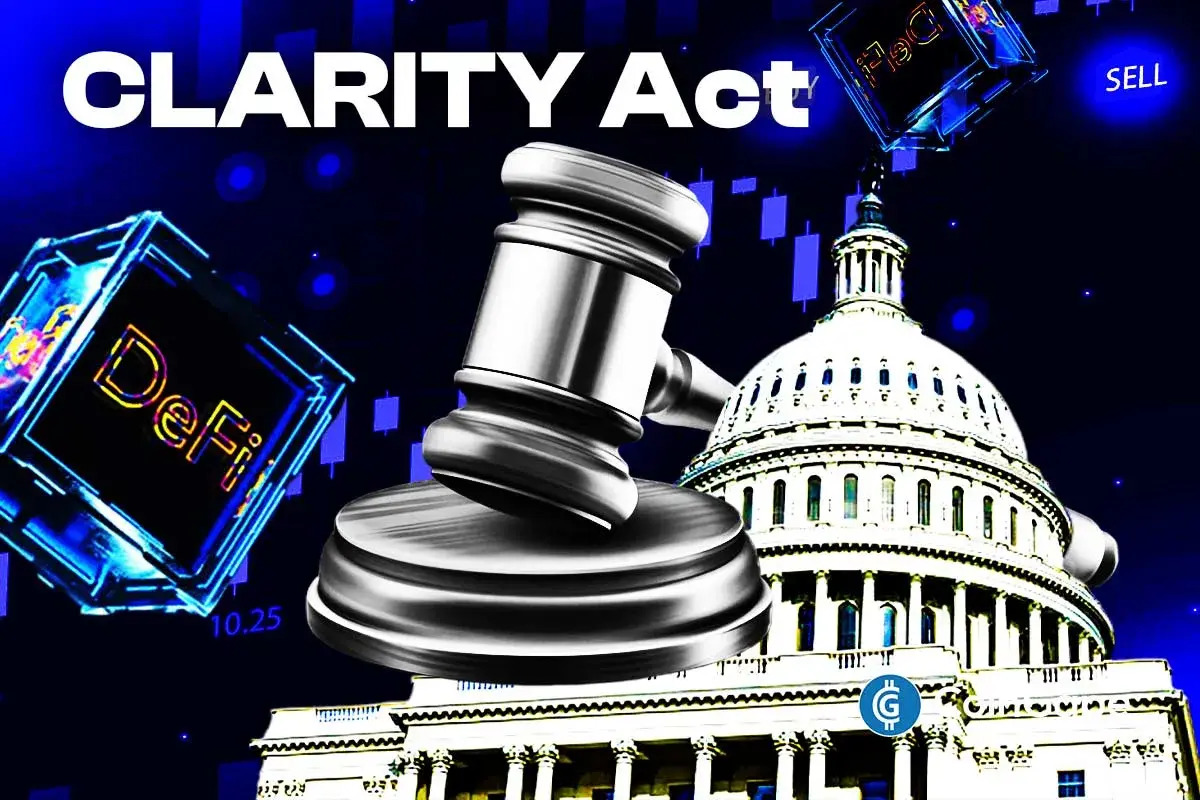
The U.S. House's cancellation of the Crypto Market Structure Bill has amplified uncertainty, delaying clear rules on digital assets and impacting stocks like MicroStrategy (MSTR), Coinbase (COIN), and Circle (CRCL) (Coingape). Upcoming events, including major token unlocks and economic data releases, loom large this week (Coingape). Sentiment on X reflects caution: Analyst @CryptoWhale tweeted, "Bill cancellation = regulatory limbo; BTC needs catalysts like ETF inflows," with 12K retweets.
External factors like rising U.S. interest rates and gold's strength compound pressures, as investors weigh Bitcoin against traditional safe havens (Coingape).
The Role of Emerging Markets in Crypto Adoption
Developing nations are leading crypto adoption, driven by remittances, inflation hedging, and financial exclusion. Chainalysis' 2023 report ranked India, Nigeria, and Vietnam tops by transaction volume, with Latin America close behind. In Argentina, where inflation exceeds 200%, Bitcoin usage spiked 40% YoY for peer-to-peer transfers. Venezuela's Petro stablecoin, though flawed, highlighted crypto's appeal amid hyperinflation.
Remittances fuel this trend: Migrants in the U.S. send $800B annually to Latin America and Africa, with crypto platforms like Strike cutting fees from 6% to under 1%. Economic instability in Nigeria—naira devaluation—drove P2P Bitcoin volume to $400M monthly. Bermuda's push for a fully on-chain economy, partnering with Coinbase and Circle, exemplifies sovereign adoption (Decrypt, Jan 19, 2026). Social media amplifies this: #CryptoAfrica trended on X, with user @RemitQueen posting, "Stablecoins saved my family's remittances from bank fees," viewed 50K times.
These regions bypass legacy banking, accelerating global adoption where AI-blockchain tools could further optimize cross-border flows.
Future Predictions: What Lies Ahead for Crypto?
By 2026, AI-blockchain synergy could transform market dynamics. AI-optimized layer-2 solutions might slash Ethereum fees by 90%, enabling real-time global payments. Predictive AI could preempt liquidations, as seen in Paradex's glitch, stabilizing exchanges. Tokenized assets on platforms like NYSE's upcoming system (Decrypt, Jan 19, 2026) may integrate AI oracles for pricing, blending TradFi with DeFi.
In emerging markets, this duo could underpin AI-driven microfinance and supply chain tracking, boosting adoption rates 3x per Chainalysis projections. Bitcoin may outperform gold if halving cycles and institutional buys like Steak n Shake's $10M exposure persist (Decrypt, Jan 19, 2026; Coingape). Regulatory shifts loom: Post-bill cancellation, U.S. clarity via FIT21 could emerge, while Bermuda's model inspires others. AI's role in compliance—e.g., ChatGPT-like tools with ads for crypto services (Decrypt)—may ease KYC burdens, but raise privacy concerns.
Overall, this tech fusion could elevate crypto's global economic role, enhancing stability through data-driven governance.
Conclusion: Embracing the Future of Crypto
The AI-blockchain convergence, viewed against historical volatility and current pressures, positions crypto for broader adoption, particularly in emerging markets. From Fetch.ai's agents to Bermuda's on-chain vision, innovation addresses past pitfalls like inefficiency and hacks. Stakeholders must monitor regulatory evolutions and tech milestones, as they dictate trajectories.
Embracing these technologies—through R&D and policy advocacy—unlocks crypto's potential as a resilient, inclusive financial layer. As markets navigate corrections, the focus shifts from speculation to sustainable utility.
What This Means for the Future
As we look ahead, the integration of AI and blockchain technologies is set to redefine the cryptocurrency landscape. Stakeholders must remain vigilant and adaptable to capitalize on emerging opportunities while navigating the challenges that lie ahead.
(Word count: 1,248)