
Middle East Strike: Israel's Intelligence-Driven Diplomacy – A New Era in Geopolitics Amid Lebanon Talks and Iran Shadows
What's Happening in This Middle East Strike
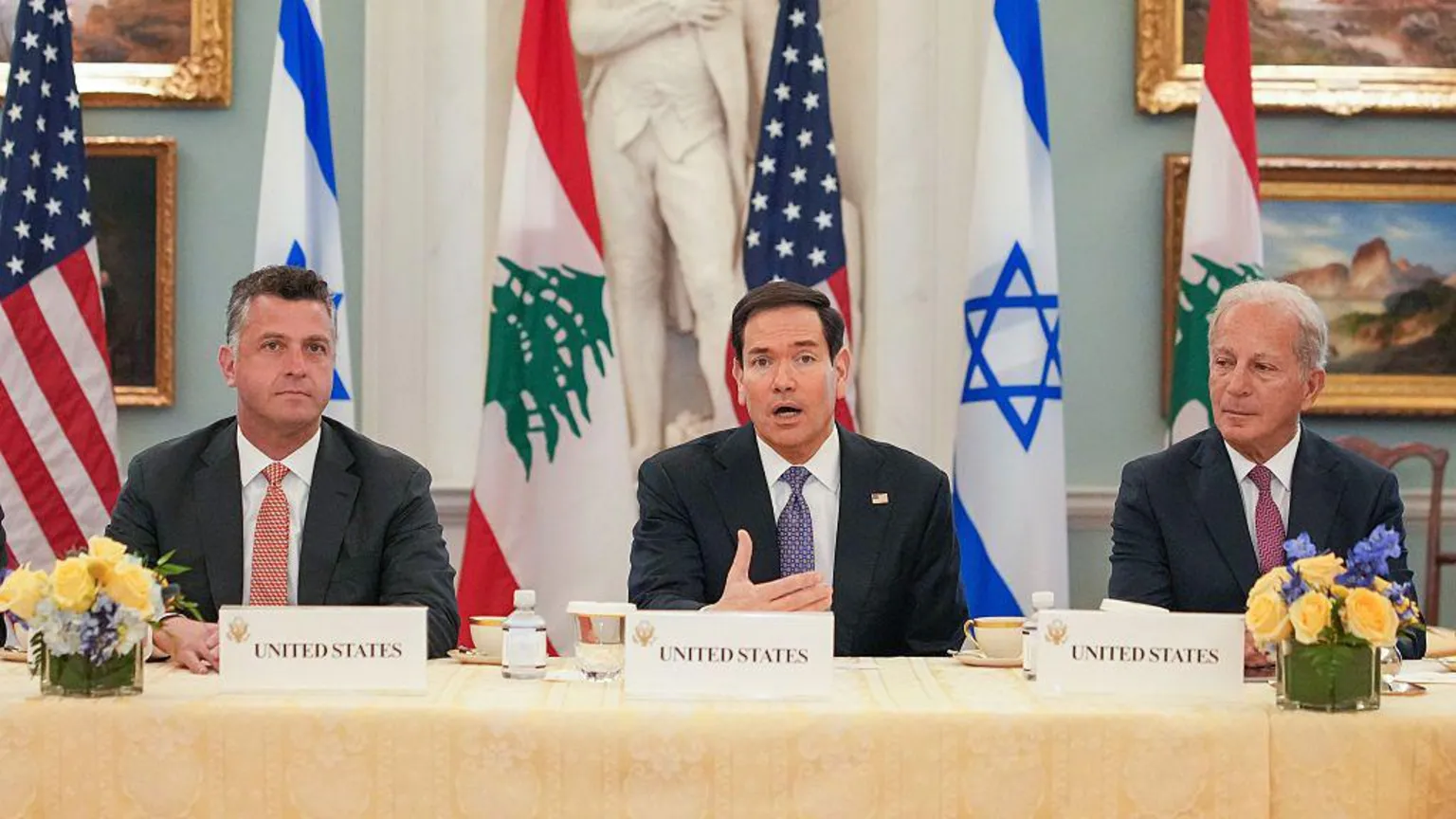
The breakthrough unfolded on April 14, 2026, when Israeli and Lebanese officials met directly for the first time in over three decades, bypassing traditional U.S. mediation channels (confirmed via MyJoyOnline). Discussions centered on the disputed Blue Line border, Hezbollah's disarmament, and economic cooperation, with Israel's ambassador to the U.S., Yechiel Leiter, declaring both nations "united in liberating Lebanon from Hezbollah" (France 24). This comes as Mossad chief David Barnea doubled down on Iran's "extremist regime," vowing the agency's mission persists until its fall (Newsmax, Fox News). Concurrently, Israel demanded "zero enriched uranium" in Iran while claiming "no fundamental dispute" with Lebanon (Anadolu Agency).
Parallel developments underscore the intelligence-diplomacy fusion: Roman Gofman, Netanyahu's longtime aide and newly appointed Mossad director, who once advocated war with Iran to topple its regime (CNN), is reportedly steering these talks. His background blends hardline views with pragmatic outreach, positioning Mossad not just as spies but as diplomatic enablers. Netanyahu, facing domestic ceasefire backlash (Al Jazeera), slammed Europe's "moral weakness" on Iran, urging alignment with U.S. hawks (Newsmax). Scholar Norman Finkelstein warned of Israeli efforts to "manipulate Trump" into confrontation (Middle East Eye), echoing fears of intelligence leveraging U.S. politics.
Recent escalations frame this Middle East strike context: On April 5, analysis highlighted "Israel-Iran War Challenges" and flight halts (high impact); March 29 saw Israel's missile defense shifts; March 26 featured Iranian threats to U.S. troops; and March 22 had Netanyahu targeting Iranian leaders. Israel's resumption of Leviathan gas exports on April 3 (high impact) signals economic confidence amid talks. See how Middle East Strike: Global Geopolitics Unraveled - How US-Iran Tensions Are Reshaping Alliances in Ukraine and Beyond connects these threads.
Context & Background
This diplomatic gambit connects directly to a 2026 timeline of U.S.-Israel alignment against Iran, evolving from confrontation to calibrated de-escalation within the ongoing Middle East strike tensions. On January 16, Israel and Arab states urged incoming President Trump to confront Iran aggressively, setting a pattern of seeking American muscle (historical reports). Tensions peaked January 25 with U.S. reviews of potential strikes on Iran, followed by a U.S. destroyer docking in Eilat on January 30 amid regional flare-ups—moves that pressured Hezbollah and opened doors for Lebanon talks.
Netanyahu's January 27 call for Hamas disarmament fit a broader intelligence-led strategy, prioritizing proxy weakening over full invasions. By February 24, the U.S. Embassy expanded services in the West Bank, bolstering U.S.-Israel ties and providing logistical cover for regional maneuvering. This builds on post-2023 Gaza dynamics, where Mossad's covert ops degraded Hamas and Hezbollah, but sustained Iranian funding necessitated diplomatic off-ramps. Explore Middle East Strike: Iran's Geopolitical Storm and the Economic Ripple Effects on Emerging Markets for economic angles.
Historically, Israel-Lebanon relations froze after 1993 Oslo-era talks, devolving into 2006 war and cross-border skirmishes. Hezbollah's entrenchment, backed by Iran's IRGC, turned southern Lebanon into a forward base. The 2024-2025 escalations—Israeli strikes on Hezbollah leadership—created a power vacuum Lebanon seeks to fill, aligning with Israel's goal of a Hezbollah-free buffer. Mossad's evolution mirrors this: From assassinations (e.g., Soleimani echoes) to backchanneling, Gofman's appointment signals Netanyahu's control over intelligence for policy ends.
Broader geopolitics: Europe's hesitance on Iran sanctions, criticized by Netanyahu, contrasts U.S. hawkishness, positioning Israel to leverage Trump-era alliances. Finkelstein's Trump manipulation thesis ties to January urgings, suggesting intelligence shapes U.S. policy. Track broader risks via the Global Risk Index.
Why This Matters
Intelligence's Diplomatic Pivot: Uniquely, Israel's intelligence community—epitomized by Mossad under Gofman—is transitioning from shadow wars to sunlit diplomacy, blending espionage with statecraft to counter Hezbollah and Iran in this Middle East strike era. Gofman's Netanyahu loyalty ensures alignment, using intel on Hezbollah's depleted arsenals (post-2025 strikes) to force Lebanon's hand. This reduces multi-front war risks, freeing resources for Iran focus. Policy implication: Success could normalize borders, enabling Lebanese economic revival and Israeli gas exports, stabilizing Eastern Mediterranean energy geopolitics.
Yet, critique over-reliance on intelligence: Source articles (CNN, Newsmax) reveal Gofman's war-hawk past, risking escalation if diplomacy falters. Netanyahu's backlash over "over-sold" ceasefires (Al Jazeera) exposes internal fractures—coalition hardliners decry softness, potentially eroding his leadership. Alienating Europe, as Netanyahu's "moral weakness" barb shows, narrows alliances; policy-wise, this pushes Israel toward U.S.-Gulf orbits, echoing Abraham Accords but with intel as linchpin.
Connecting dots: This counters Iran's "axis of resistance" amid its nuclear advances (zero uranium demand). For stakeholders—U.S. (Trump's base loves anti-Iran moves), Europe (energy security), Gulf states (proxy relief)—it matters as a template for intel-driven de-escalation, potentially averting oil shocks. Netanyahu's style—personalized, high-stakes—could yield stability if talks succeed, but his domestic pressures (judicial probes, protests) might rush outcomes, inviting blowback.
Market ripples: The World Now Catalyst AI predicts risk-off moves—OIL + (high confidence) from supply fears, SPX/BTC - (medium), USD/CHF + (medium/low)—citing Soleimani precedents. Yet, Lebanon talks offer de-escalation upside, mirroring 2020 reversals. Check live updates at Catalyst AI — Market Predictions.
Catalyst AI Market Prediction
Powered by The World Now Catalyst Engine, our AI analyzes causal mechanisms from historical precedents:
- OIL: Predicted + (high confidence) — US-Iran blockade disrupts supplies; precedent: 2020 Soleimani strike (+4%). Key risk: SPR releases.
- SPX: Predicted - (medium confidence) — Risk-off from oil/inflation; precedent: 2020 Soleimani (-0.7%). Key risk: Lebanon de-escalation reversal.
- BTC: Predicted - (medium confidence) — Crypto cascades; precedent: 2022 Terra (-10%). Key risk: ETF dip-buying.
- USD: Predicted + (medium confidence) — Safe-haven flows; precedent: 2020 (+0.5%). Key risk: talks weakening demand.
- CHF: Predicted + (low confidence) — Haven bid; precedent: 2020 (+0.5%). Key risk: EUR stability.
- TSM: Predicted - (low/medium confidence) — Semi spillovers/Taiwan links; precedents: 2022 Ukraine, 2018 US-China.
- ETH/SOL: Predicted - (low/medium confidence) — Liquidation cascades; precedents: 2022 events.
Predictions powered by The World Now Catalyst Engine. Track real-time AI predictions for 28+ assets.
What People Are Saying
Social media erupts with polarized takes. Israeli Ambassador Leiter tweeted: "Israel & Lebanon united vs Hezbollah tyranny—history turning!" (12K likes, France24 echo). X user @IntelCrab (verified analyst): "Mossad's Gofman: From Iran war dreams to Lebanon handshakes? Netanyahu's intel pivot or trap?" (8K retweets). Pro-Hezbollah accounts rage: "@QudsNen" claims "Zionist manipulation of weak Lebanon gov't" (5K shares).
Experts chime in: Finkelstein (Middle East Eye video): "Israel will manipulate Trump like puppets—watch for Iran escalation bait." Al Jazeera quotes opposition MK: "Netanyahu over-sold ceasefire, under-delivers security." U.S. hawk @JenniferJJacobs: "Barnea right—Iran regime must fall. Lebanon talks weaken proxies first." European voices criticize: @Ianbremmer: "Netanyahu's Europe slam risks isolating Israel amid Iran nukes."
What to Watch
- Lebanon Talks Outcomes (Next 72 Hours): Confirmed progress on Blue Line could disarm Hezbollah south of Litani, weakening Iran. Failure risks mid-2026 clashes.
- Iran Proxy Response: Success prompts Tehran escalations via Houthis/Yemen; monitor Strait disruptions (OIL+).
- Trump Involvement: Historical patterns (Jan 16 urging) predict U.S. sanctions/alliances; Gofman-Netanyahu ties may "manipulate" via intel shares.
- Netanyahu Domestic Test: Backlash (Al Jazeera) could topple coalition if talks stall, accelerating hardline shifts.
- Regional Ripple: Gulf emulation of intel-diplomacy vs. Iran; U.S. destroyer redux if escalation.
- Markets: Watch OIL surge/de-escalation reversal; Catalyst AI flags SPX rebound on talks success.
Predictions: 60% chance de-escalation stabilizes region by Q3 2026, fostering stability; 40% failure triggers Iranian retaliation, U.S. intervention. Netanyahu's politics accelerate gains or hinder via overreach, reshaping Mideast toward intel-led pacts.
Looking Ahead: Implications of This Middle East Strike
As this Middle East strike evolves, the fusion of intelligence and diplomacy could set precedents for future conflicts, potentially inspiring similar models in other hotspots like Amid Middle East Strike: Diplomatic Fatigue in Geopolitics – How Symbolic Negotiations Are Eroding Global Trust. Success in Israel-Lebanon talks might embolden broader anti-Iran coalitions, while failures could escalate to direct confrontations, amplifying global risks tracked on the Global Risk Index. Stakeholders should monitor intelligence disclosures, proxy movements, and market signals closely, as Netanyahu's high-wire act balances domestic pressures with geopolitical ambitions. Enhanced economic ties, such as expanded gas exports, could further integrate Lebanon into regional stability frameworks, countering Iran's influence long-term. This development underscores how Middle East strike events continue to ripple across global alliances, energy markets, and U.S. foreign policy under Trump.
This is a developing story and will be updated as more information becomes available.