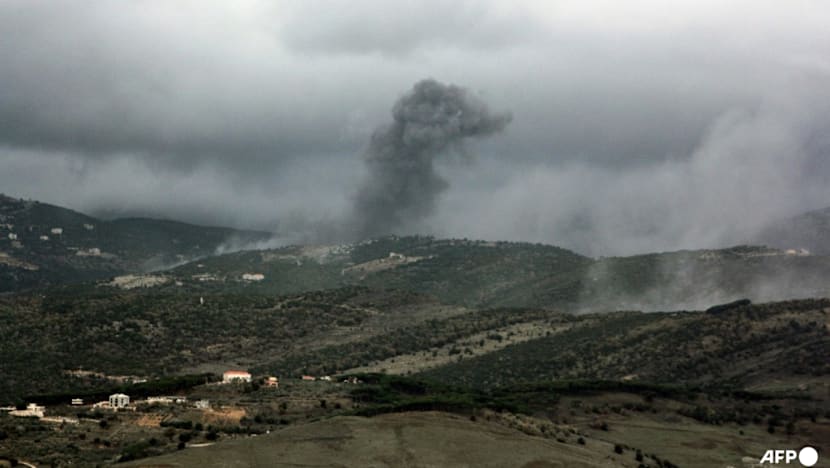

Israeli Airstrikes Target Hezbollah in Southern Lebanon, Killing Militant Amid Border Tensions
Beirut/Jerusalem – An Israeli airstrike in southern Lebanon on January 7, 2026, killed a Hezbollah member, as the Israeli military intensified operations against the Iran-backed group's infrastructure in the region. The strikes, described by the Israel Defense Forces (IDF) as targeting Hezbollah sites in "several areas" of Lebanon, mark a continuation of cross-border exchanges that have persisted for over two years.
The fatality occurred late on Wednesday, January 7, at 23:38 GMT, in southern Lebanon, a stronghold for Hezbollah near the Israeli border. This incident underscores the high severity of ongoing military actions, with the IDF confirming subsequent airstrikes across multiple locations. According to reports, Israeli warplanes conducted heavy raids focusing on Hezbollah infrastructure, prompting concerns over potential escalation along the volatile frontier.
The IDF stated that its forces struck Hezbollah targets in various parts of Lebanon, as reported by Channel News Asia on January 9. Anadolu Agency similarly detailed heavy airstrikes by Israeli warplanes across southern Lebanon, with the military asserting that the operations were aimed specifically at militant infrastructure. These actions follow a pattern of tit-for-tat strikes, where Israel responds to Hezbollah rocket fire or other provocations from Lebanese territory.
Eyewitness accounts and local reports from southern Lebanon described the sounds of explosions and low-flying jets during the raids. While casualty figures beyond the confirmed Hezbollah death remain unverified from the provided sources, the strikes highlight the persistent friction in the area. Hezbollah has not issued an immediate public response to the specific January 7 incident in the referenced reports, but the group has historically vowed retaliation for losses inflicted by Israeli forces.
Background on Israel-Hezbollah Border Clashes
The current round of hostilities traces back to October 2023, when Hezbollah began launching rockets and drones into northern Israel in solidarity with Hamas following the group's attack on southern Israel on October 7. This sparked a shadow war along the Blue Line – the UN-demarcated border between Lebanon and Israel – displacing tens of thousands of civilians on both sides.
By 2026, the conflict has seen intermittent escalations, including Israeli ground incursions into southern Lebanon in late 2024 and early 2025 to dismantle Hezbollah's border network of tunnels and observation posts. The United Nations Interim Force in Lebanon (UNIFIL) has repeatedly called for restraint, documenting over 10,000 cross-border incidents since 2023, resulting in hundreds of deaths, predominantly combatants.
Hezbollah, designated a terrorist organization by Israel, the United States, and several European nations, maintains a vast arsenal estimated at 150,000 rockets and missiles, according to Israeli intelligence assessments. Israel views the group as an existential threat, particularly due to its proximity to major cities like Haifa and Tel Aviv. Diplomatic efforts, including U.S.-brokered talks in 2025, have aimed to enforce a ceasefire and implement UN Security Council Resolution 1701, which calls for Hezbollah's withdrawal north of the Litani River. However, compliance has been limited, with both sides accusing the other of violations.
The January 7 strike fits into a broader Israeli campaign dubbed "Operation Northern Arrows," which intensified in mid-2025 to neutralize Hezbollah's capabilities ahead of potential wider conflict. Previous airstrikes have targeted weapons depots, command centers, and launch sites, often in remote villages like Nabatieh and Bint Jbeil.
Regional Implications and Outlook
These developments occur against a backdrop of strained regional dynamics. Lebanon's fragile economy, already crippled by a financial crisis since 2019, faces further pressure from military activity, with cross-border fire disrupting trade and agriculture. Israel, meanwhile, contends with security challenges on multiple fronts, including Gaza and the West Bank.
International observers, including the UN and European Union, have urged de-escalation to prevent a full-scale war, which analysts warn could draw in Iran and its proxies. As of January 9, 2026, no immediate Hezbollah counterstrikes were reported in the sources, but historical patterns suggest possible rocket barrages in response.
The IDF's proactive stance reflects a strategy of preemption, with military officials emphasizing the degradation of Hezbollah's operational capacity. Hezbollah leader Hassan Nasrallah, in prior statements, has framed the group's actions as defensive support for Palestinians, vowing persistence until a Gaza ceasefire.
While the immediate aftermath of the January 7 strike and subsequent raids remains calm, the cycle of retaliation poses risks to fragile ceasefires. Monitoring groups like the UN peacekeeping mission continue to track movements, but sustained diplomatic pressure will be crucial to avert broader confrontation in this powder-keg region.
(Word count: 612)






