
Israel Escalates Military Operations with New Strikes in Lebanon Amid Hezbollah Weapons Tensions
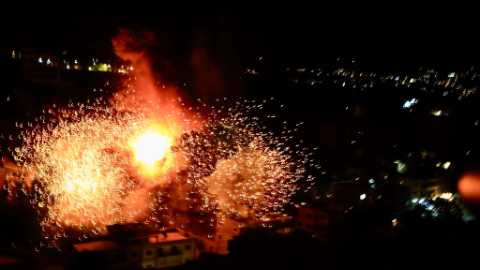
Beirut/Tel Aviv – The Israeli military has launched a fresh wave of airstrikes across Lebanon, intensifying an already volatile conflict with Hezbollah as disputes over weapons stockpiles and border security persist, according to statements from the Israeli army reported on January 6, 2026.
The attacks mark a significant escalation in hostilities that began intensifying around December 31, 2025, at approximately 20:06 GMT. Described as high-severity operations, the strikes are targeting areas linked to Hezbollah's military infrastructure amid ongoing tensions over the group's weapons capabilities. Lebanon's fragile security landscape has been further strained, with reports indicating impacts on civilian areas near southern border regions, though specific casualty figures remain unconfirmed from official channels at this stage.
Israeli army spokespersons confirmed the "new wave of attacks" in announcements covered by Xinhua, framing the operations as preemptive measures against Hezbollah's alleged arms smuggling and fortification efforts. The strikes follow a pattern of cross-border exchanges that have defined the Israel-Hezbollah frontier since late 2023, with both sides accusing the other of provocations. Hezbollah, backed by Iran, has long maintained a robust arsenal estimated at over 150,000 rockets and missiles, much of which Israel views as an existential threat.
Details of the Latest Strikes
The Xinhua report, published early on January 6, 2026, highlights the Israeli Defense Forces (IDF) initiating these operations as part of a broader campaign to degrade Hezbollah's capabilities. Targets reportedly include weapons depots, launch sites, and command centers in southern Lebanon, areas historically dominated by the militant group. The timing coincides with heightened Israeli concerns over Hezbollah's compliance with UN Security Council Resolution 1701, which calls for the demilitarization of south Lebanon following the 2006 war.
Lebanese officials and Hezbollah representatives have condemned the strikes as "aggressive violations of sovereignty," urging international intervention. While exact locations and damage assessments were not detailed in initial reports, the operations echo previous IDF actions, such as those in late 2024, which involved precision-guided munitions to minimize collateral damage. However, past incidents have resulted in civilian casualties, exacerbating humanitarian challenges in a country already reeling from economic collapse and political paralysis.
No immediate response from Hezbollah was detailed in the sourced reports, but the group's history suggests retaliatory rocket fire or drone incursions could follow. The IDF has placed northern Israeli communities on high alert, with shelters prepared in anticipation of counterattacks.
Historical Context and Ongoing Tensions
The current flare-up is rooted in decades of animosity between Israel and Hezbollah. The Shiite militant group emerged in the 1980s during Israel's occupation of southern Lebanon, evolving into a powerful political and military force. The 2006 Lebanon War, triggered by Hezbollah's cross-border raid and kidnapping of Israeli soldiers, resulted in over 1,200 Lebanese and 160 Israeli deaths, ending in a fragile ceasefire enforced by UNIFIL peacekeepers.
Tensions reignited in October 2023 amid the Israel-Hamas war in Gaza, with Hezbollah launching near-daily attacks in solidarity with Palestinian militants. Israel responded with airstrikes, gradually expanding ground operations into Lebanon by late 2024. A U.S.-brokered ceasefire in November 2024 aimed to halt hostilities, but violations persisted, particularly over weapons transfers via Syria.
Recent intelligence assessments, corroborated by global monitoring, indicate Hezbollah has been replenishing its arsenal despite sanctions. Israeli Prime Minister Benjamin Netanyahu's government has repeatedly stated that any weapons buildup south of the Litani River constitutes a red line, justifying preemptive action. Lebanon's government, weakened by Hezbollah's influence within its institutions, has struggled to enforce disarmament.
Broader Regional Implications
These strikes occur against a backdrop of shifting Middle East dynamics. Iran's support for Hezbollah remains a flashpoint, with Tehran facing its own pressures from Israeli operations in Syria and Yemen. The U.S., under a new administration in 2025, has called for restraint while reaffirming Israel's right to self-defense.
Humanitarian organizations warn of worsening conditions in Lebanon, where over 1.5 million people have been displaced since 2023 due to cross-border fighting. The World Food Programme and UN agencies report acute shortages, compounded by the strikes disrupting supply lines.
Outlook for De-escalation
As the new wave of attacks unfolds, diplomatic efforts intensify. UN Secretary-General António Guterres has appealed for an immediate halt to hostilities, while Egypt and Qatar mediate indirect talks. Analysts note that without addressing core issues—such as Hezbollah's disarmament and Israel's withdrawal from contested border points—sporadic violence risks spiraling into full-scale war.
Israel maintains its operations will continue until threats are neutralized, while Lebanon seeks Arab League backing for condemnation. The international community watches closely, aware that Lebanon remains a tinderbox in an interconnected regional conflict.
(Word count: 612)






