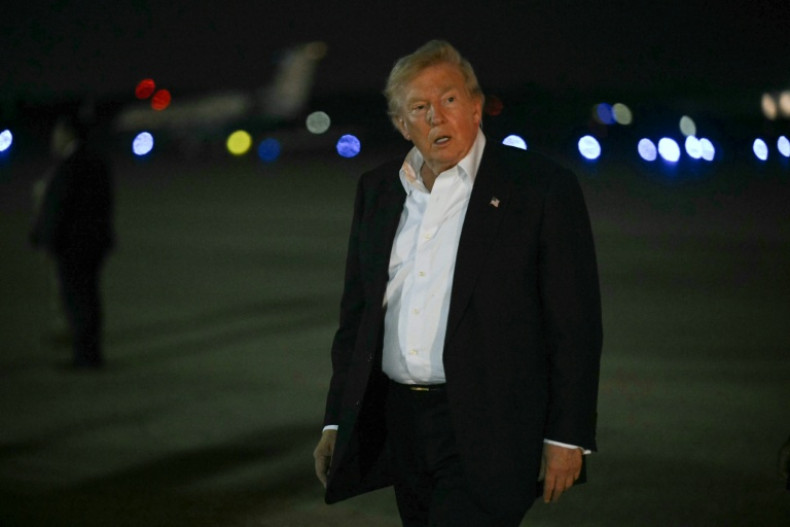
Iran Tensions Escalate as Trump Declares Ceasefire Over but Agrees to Talks
US President Donald Trump stated that Iran requested to resume negotiations, which the US has agreed to, but emphasized that the ceasefire between the two nations is over following renewed clashes in the Strait of Hormuz. [1] Iran tensions have risen sharply as both sides exchange accusations over the breakdown of prior agreements and recent strikes on vessels.
Trump Announces End of Ceasefire While Accepting Talks
US President Donald Trump claimed the US has accepted a request from Iran’s leadership to resume negotiations, but emphasized that the ceasefire between the nations is over in a post on Truth Social on Friday, after having previously declared that the Washington-Tehran Memorandum of Understanding (MoU) was also over. [1] “The Islamic Republic of Iran has asked us to continue 'talks.’ We have agreed to do so, but the United States has stated to them, in no uncertain terms, that the Cease Fire is OVER!” Trump asserted. [1] The president had already declared the end of the truce on Wednesday and criticized Iranian leaders while leaving open the possibility of continued talks by his negotiating team. [5]
Iran Denies Request and Warns of Reciprocal Action
According to Iranian state media reports, a spokesperson for Iran’s Foreign Ministry denied that any requests were made regarding the continuation of talks and stated that any US breaches of commitments would be met with “reciprocal action.” [1] Iran’s Foreign Ministry says any US breach of its commitments under the MoU will be met with “reciprocal action.” [4] The spokesperson noted that Iran had agreed to a visit by Qatari mediators. [1]
Qatar Mediates Amid Renewed Clashes in Strait of Hormuz
According to semi-official Iranian news outlet Tasnim, a Qatari delegation arrived in Iran on Friday to consolidate Doha’s role as a mediator between Tehran and Washington after clashes in the Strait of Hormuz reignited hostilities between the two nations. [1] Tasnim reported that Iranian officials will also discuss Doha’s condemnation of Iran’s recent strikes on commercial vessels transiting the strait. [1] Qatar’s Emir Sheikh Tamim bin Hamad Al Thani held a phone call with Pakistani Prime Minister Shehbaz Sharif on Friday, according to his office, to discuss the US-Iran situation and Pakistan’s role in negotiations. [1] According to a statement regarding the call, both leaders stressed the importance of continuing talks, reducing regional tensions, and resolving the disputes through diplomatic means. [1] The mediator Qatari hopes to allow the two parties to renew dialogue “following the events of Tuesday,” according to the Iranian news agency Tasnim. [5]
Trump Issues Warning Over Alleged Assassination Plots
In an interview with New York Post on Friday, Trump said he has made instructions ready for how the US should respond to a possible Iranian assassination attempt against him. [2] “I have left instructions, if something should happen, to bomb them at levels they have never seen before,” Trump told the newspaper. [2] When asked about reports of a possible Iranian assassination attempt, Trump himself replied that there are no “fresh plans” for this, according to New York Post. [2] He also appeared dismissive of claims that Israel shared intelligence about such an attack. [2] “No, no. Israel provided nothing. No, no,” Trump replied when asked about this, according to New York Post. [2] CNN reported on Friday that the plane change was due to general security concerns related to the recent escalation in the conflict between the US and Iran — and not a new, concrete threat. [2] The president says, however, that the regime in Iran has “wanted him dead” for years. [2] “I have been number one on their list for a long time, that’s just the way life is,” Trump said. [2]
Regional Reactions and Calls for De-escalation
Turkish Foreign Minister Hakan Fidan stated the truce can still hold despite Trump’s announcement that it was over. [3] He said there was miscommunication between the two sides over the navigation of ships in the Hormuz. [3] Egypt, which supports efforts toward a lasting resolution of the conflict, is also active behind the scenes. [5] Egyptian Foreign Minister Badr Abdelatty spoke with his Qatari counterpart, according to a statement from Cairo, with the two countries urging “all parties to prioritize the path of diplomacy […] and to resume negotiations.” [5]
Context of Recent Hostilities and Khamenei Funeral
Despite the resumption of hostilities this week between Iran and the United States, the American president stated that he had accepted to continue discussions with Iran, but reaffirmed that the ceasefire in force since April was indeed “over” after the resumption of hostilities this week. [5] The clashes resumed on Tuesday between the two enemy countries, which exchanged strikes in the Middle East, the most significant since the signing on June 17 of a protocol that formalized the April ceasefire. [5] The United States struck Iran two nights in a row after attributing to Tehran responsibility for attacks on three commercial vessels in the strategic Strait of Hormuz, which has become a major issue in the conflict. [5] In retaliation, Iranian armed forces targeted Gulf neighbors: Kuwait, where at least one person was injured, Bahrain, and Qatar, one of the mediators in efforts to settle the conflict. [5] This resurgence of tensions occurred during the funeral of Supreme Leader Ali Khamenei, killed on the first day of the war triggered on February 28 by Israeli-American bombings. [5] The homage to the Supreme Leader, in power for nearly four decades, gathered millions of people this week in Iran and neighboring Iraq before ending with his burial early Friday morning in his hometown of Mashhad (northeast). [5] His son and successor, Mojtaba Khamenei, invisible since his nomination in March, did not make a public appearance during these funerals. [5]
What to watch next: The Qatari delegation continues mediation efforts in Tehran while Egypt and Pakistan urge all parties to resume negotiations through diplomatic channels.