
Iran Strike Threatens Nuclear Stability: Unraveling the Risks to Global Non-Proliferation Efforts
The Story
The narrative of this crisis has unfolded with breathtaking speed, transforming rhetorical threats into lethal actions in a matter of days. Confirmed reports from multiple outlets, including AP News, Times of India, and Dawn, detail the assassination of Ali Larijani, Iran's national security chief and a figure widely believed to have been steering the country's wartime strategy since hostilities intensified. Iranian President Masoud Pezeshkian publicly offered condolences, marking the first official confirmation of Larijani's death in what Iran attributes to coordinated U.S.-Israeli strikes. Similarly, Israel's military announced the elimination of Basij commander Soleimani—distinct from the late Qasem Soleimani—in operations targeting high-value Iranian security figures.
Parallel to these high-profile killings, a U.S. strike on Iranian missile sites near the Strait of Hormuz was verified by Anadolu Agency on March 17, 2026, with President Trump boasting that U.S. forces had "knocked out" key Iranian military assets. This comes amid a flurry of recent events: explosions in Isfahan on March 15, attacks on Iranian oil facilities the same day, a U.S. strike on an Iranian oil hub on March 14, and a critical bomb strike in Tehran on March 13. Israel's direct hit on an Iranian nuclear site on March 12 further underscores the targeting of strategic infrastructure.
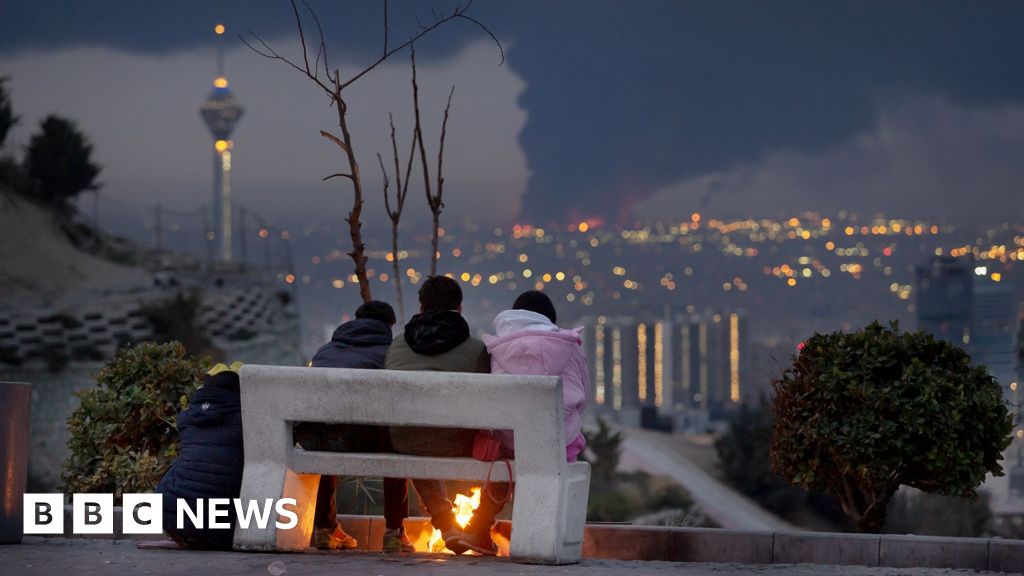
Most alarmingly, a strike near the Bushehr nuclear power plant—Russia's Rosatom-built facility operational since 2011—has emerged as a flashpoint. Anadolu Agency reports Rosatom's unprecedented condemnation, labeling it a "dangerous provocation" that endangers civilian nuclear infrastructure. While no radiation leaks are confirmed, the proximity to Bushehr exposes vulnerabilities in Iran's nuclear setup: the plant houses two VVER-1000 reactors fueled by Russian-supplied uranium, making it a symbol of Tehran-Moscow nuclear ties. Original analysis reveals how these strikes highlight systemic weaknesses—Bushehr's coastal location near the Persian Gulf renders it susceptible to precision munitions, while inadequate air defenses, strained by prior losses like the destruction of jets at Tabriz airport on March 1, leave it exposed. Unconfirmed reports of "total repression and air strikes" from BBC paint a picture of unrelenting dread among Iranians, with real-time humanitarian tracking underscoring the growing crisis, as detailed in Iran's geopolitical storms and overlooked humanitarian crisis. Channel News Asia noting Tehran's rejection of de-escalation, amid reports of Iran's economic inferno fueling civil unrest.
This blitz traces back to a compressed timeline: On February 21, 2026, Trump publicly mulled a military strike on Iran, citing its missile advancements and proxy attacks. By February 28, U.S. operations commenced, coinciding with Israeli attacks in Tehran. March 1 saw Israel destroy Iranian jets at Tabriz and ship attacks near Hormuz. This rapid progression—from threat to execution in under two weeks—mirrors historical Middle East flashpoints, such as the 1981 Osirak reactor bombing or the 2007 Syrian reactor strike, where preemptive actions aimed to curb nuclear ambitions but often spurred covert acceleration. Unlike those, today's involvement of Russia via Bushehr introduces a new multilateral layer, potentially drawing in UN veto powers and complicating non-proliferation enforcement.
The Players
At the epicenter is Iran, led by Supreme Leader Ali Khamenei and President Pezeshkian, whose regime views these strikes as existential threats. Motivations: survival through nuclear deterrence, proxy warfare via Hezbollah and Houthis, and defiance of Western sanctions. Larijani's death—a confirmed loss of a pragmatic hardliner—may harden resolve, pushing for faster enrichment.
Israel, under Prime Minister Benjamin Netanyahu, acts preemptively to neutralize threats, motivated by Iran's ballistic missile program and anti-Israel rhetoric. The assassinations echo the 2020 Soleimani killing, signaling zero tolerance for encirclement.
The United States, with Trump at the helm, prioritizes "maximum pressure" to dismantle Iran's capabilities, as per Anadolu reports. Motivations blend domestic politics—bolstering a strongman image—and alliance commitments to Israel and Gulf states.
Russia emerges as a pivotal, underemphasized actor. Rosatom's condemnation of the Bushehr strike positions Moscow as Iran's nuclear patron, motivated by countering U.S. hegemony, securing energy deals, and leveraging Bushehr for influence. Unlike past conflicts, Russia's deepened ties—supplying S-400 systems and fuel—could escalate to direct involvement.
Other players: China watches warily for oil supply disruptions; EU nations like Ireland urge diplomacy; and Gulf states (Saudi Arabia, UAE) quietly back strikes to check Iran.
The Stakes
Politically, these events imperil the tattered JCPOA (2015 nuclear deal), abandoned by Trump in 2018 and now at risk of total collapse. A Bushehr strike could force Iran to expel IAEA inspectors, mirroring 2021 threats, accelerating breakout to a bomb—potentially in months, per unconfirmed intelligence, as reflected in the latest Global Risk Index.
Economically, Hormuz chokepoint threats endanger 20% of global oil transit, with strikes on oil facilities (March 15) risking supply shocks, as analyzed in Iran's Israel strike economic fallout on global oil markets. Humanitarian stakes are dire: Civilian workers at Bushehr face radiation risks if defenses fail, while BBC reports widespread dread from repression. Broader non-proliferation erodes—the NPT regime weakens if Iran sprints ahead, inspiring Saudi or Turkish pursuits, unraveling decades of taboo against new nukes.
For Russia, stakes involve prestige: Defending Bushehr burnishes its nuclear exporter status but risks sanctions. Globally, a nuclearized Iran heightens miscalculation risks, from accidental launches to proxy escalations.
Market Impact Data
Geopolitical tremors from Iran strikes have ignited volatile reactions. Oil leads the charge: The World Now Catalyst AI predicts OIL + (high confidence), driven by Iranian attacks on Gulf facilities and Hormuz tensions disrupting supply. Historical precedents like the 2019 Abqaiq attacks (oil +15% intraday) and 2020 Soleimani strike (+4%) underscore spikes, with key risk of quick reversal if de-escalation holds.
Equities falter: SPX - (high confidence) amid Middle East war fears, algorithmic selling, and VIX surges—echoing 2006 Israel-Lebanon (-2%) and 2022 Ukraine (-2-3%). TSM - (low confidence) ties to broader Asia risks, per Feb 2019 India-Pakistan precedent (-1.5%).
Crypto splits: BTC + (high confidence) from ETF inflows and Metaplanet buys, overriding risk-off (like 2021 +20%), but BTC - (medium confidence) risks deleveraging (2022 Ukraine -10%). SOL - (medium confidence) faces altcoin liquidations (2022 -15-20%).
EUR - (medium confidence) from unrelated Reunion volcano but amplified by global risk-off.
Catalyst AI Market Prediction
- OIL: + (high confidence) — Iran-Hormuz disruptions; precedent: 2019 Abqaiq +15%.
- SPX: - (high confidence) — War fears, VIX spike; precedent: 2006 Lebanon -2%.
- BTC: Mixed (+ high / - medium) — ETF inflows vs. deleveraging.
- SOL: - (medium confidence) — Altcoin cascades.
- TSM: - (low confidence) — Asia spillovers.
- EUR: - (medium confidence) — Peripheral pressures.
Predictions powered by The World Now Catalyst Engine. Track real-time AI predictions for 28+ assets at the Catalyst AI — Market Predictions feature page.
Looking Ahead
Iran's retaliation looms: Enhanced uranium enrichment at Fordow or Natanz—potentially reaching 90% weapons-grade in weeks—or strikes on U.S. bases/Saudi oil. Russia may ramp arms flows, invoking mutual defense pacts. UN Security Council debates by March 20 could yield sanctions, but vetoes stall action.
Scenarios: (1) Diplomatic thaw via Oman/Qatar talks, freezing enrichment; (2) Tit-for-tat spirals into Hormuz blockade, oil at $150/barrel; (3) Nuclear dash—Iran tests a device by 2027, sparking arms race. Key dates: IAEA report March 25; Trump's Gulf summit March 28.
Long-term: Shifts see Russia-Iran axis deepen, eroding U.S. isolation; Middle East arms race with Sunni nukes. Proactive diplomacy—reviving JCPOA subsets—is essential.
*This is a developing story and will be updated as more information becomes available.*To further contextualize the broader implications of these Iran strikes on regional stability and humanitarian conditions, explore related coverage such as Lebanon's interfaith resilience amid Israeli strikes and Afghan strikes fueling youth radicalization, which highlight interconnected Middle East tensions.